
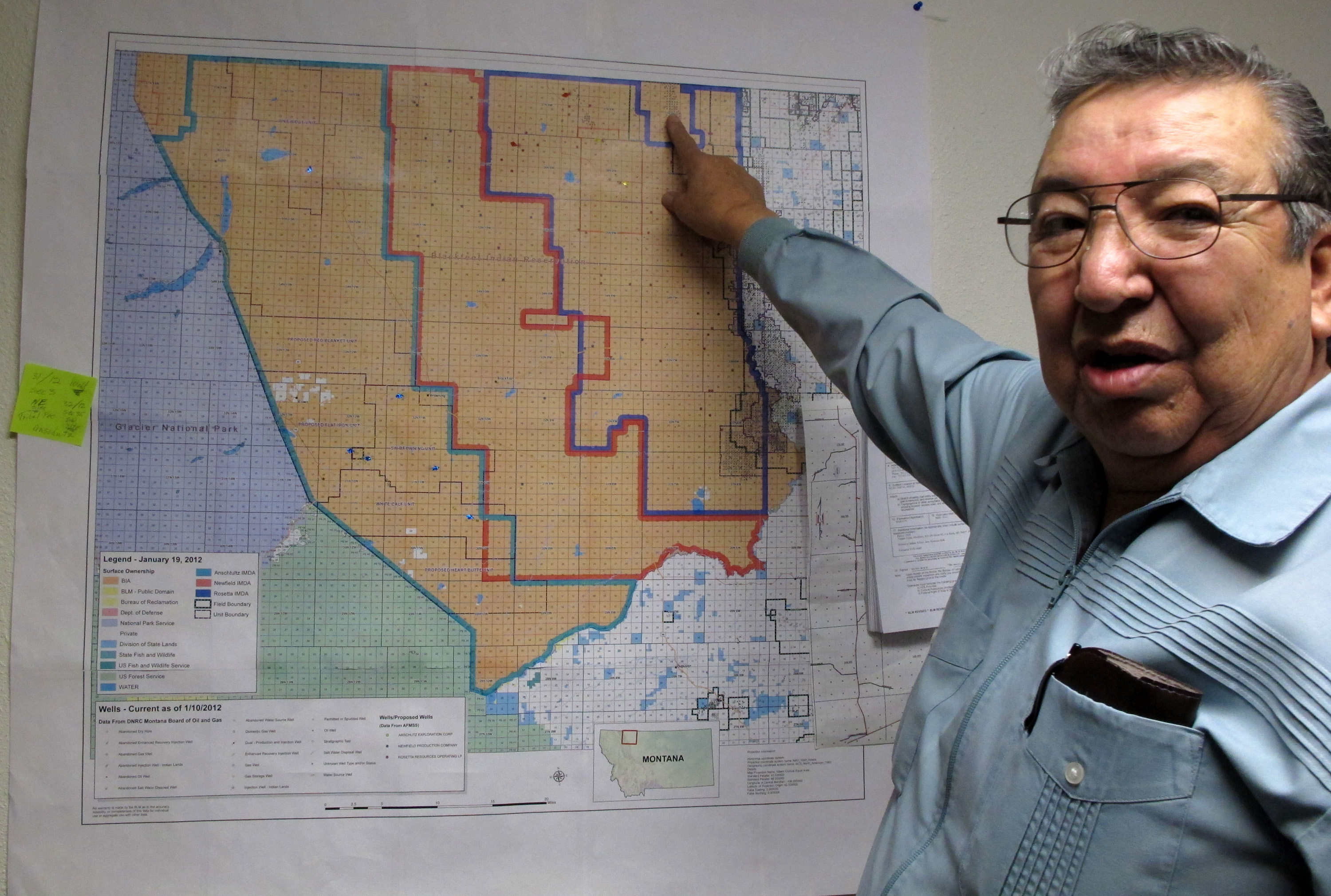
 Blackfeet assistant oil and gas director Ron Cross Guns points to a map showing oil and gas development on the reservation in Browning, Mont. Glacier National Park officials are concerned about the effects of development on the area, and are asking for an in-depth study on the environmental impacts. Blackfeet tribal officials say they are complying with all requirements before drilling and they bristle at the suggestion they can’t develop their resources safely.
BROWNING, Mont. – On the edge of the Blackfeet Indian reservation, where the Rocky Mountains rise out of the Great Plains like shark’s teeth, oil exploration companies plumb the depths of the land again and again as the tribe dreams of a big strike that will lift its people out of poverty.
Not much oil has been found yet, but deep beneath the reservation is a rock formation that some believe could unleash a mini oil-and-gas boom.
That potential has raised concerns next door at iconic Glacier National Park, its 8,000-foot peaks looming over the drilling. The National Park Service warns about the potential impact on grizzly bear habitat, of rigs spoiling wilderness views and outsiders bringing invasive plants into the fragile ecosystem.
Besides repeating those worries whenever a new well is proposed, there’s not much else the park service can do. Their actions, however, have left tribal officials simmering about outside interference by people who presume to know how to better develop Blackfeet land than the tribe itself.
“I don’t go to your backyard and tell you what to do with it, right? I don’t tell you how to drive your car, right?” said Ron Cross Guns, assistant director of the tribe’s oil and gas department. “But everybody on the outside that comes to our reservation tells us what to do on our reservation.”