
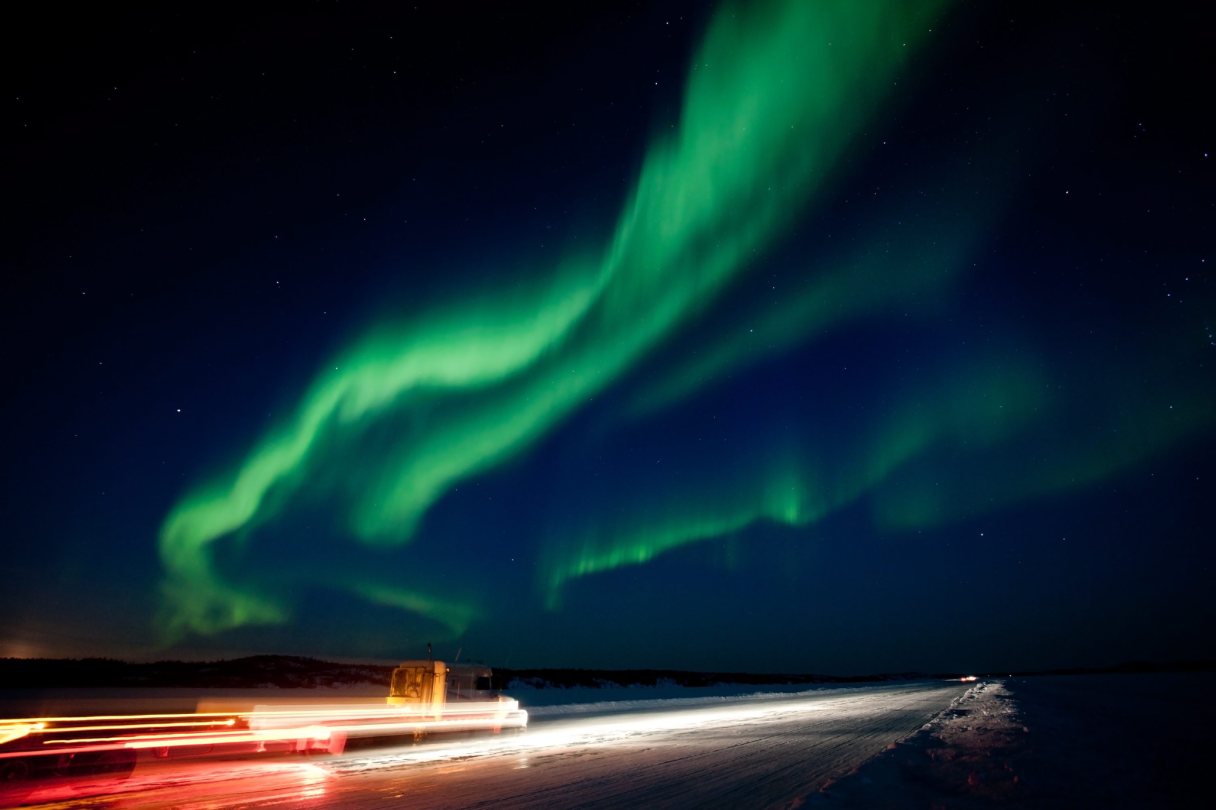
 The largest solar storm in five years sent a huge wave of radiation into earth’s atmosphere creating a brilliant show of the aurora borealis near Yellowknife, North West Territories on Thursday March 8, 2012. Yellowknife, which is situated directly under the auroral “oval”, has some of the best northern lights viewing in the world. Truckers returning from the diamond mines 330 kilometers northeast enjoy the nighttime spectacle as they cruised down the ice road on Prosperous Lake. (AP Photo/The Canadian Press, Bill Braden)
SETH BORENSTEIN, AP Science Writer
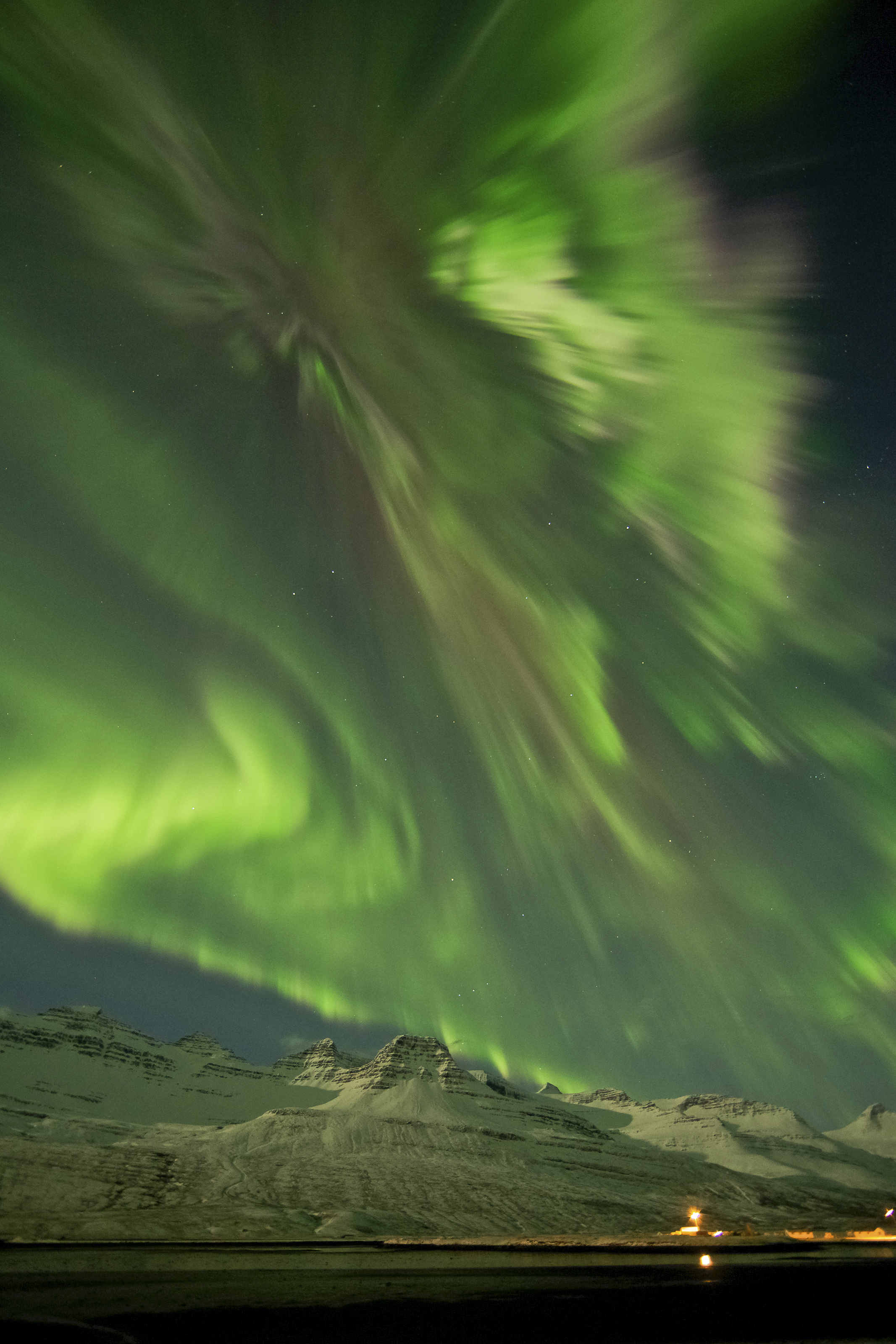 The Northern Lights are seen in the skies near Faskusfjordur on the east coast of Iceland Thursday March 8, 2012. A solar storm shook the Earth’s magnetic field early today, but scientists said they had no reports of any problems with electrical systems. After reports Thursday of the storm fizzling out, a surge of activity prompted space weather forecasters to issue alerts about changes in the magnetic field. (AP Photo/Jonina Oskardottir)
WASHINGTON (AP) – The solar storm that seemed to be more fizzle than fury got much stronger early Friday before fading again.
At its peak, it was the most potent solar storm since 2004, space weather forecasters said.
No power outages or other technological disturbances were reported from the solar storm that started to peter out late Friday morning.
Solar storms, which can’t hurt people, can disturb electric grids, GPS systems, and satellites. They can also spread colorful Northern Lights further south than usual, as the latest storm did early Friday.