
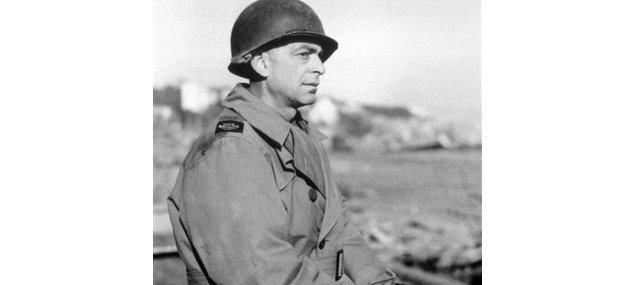
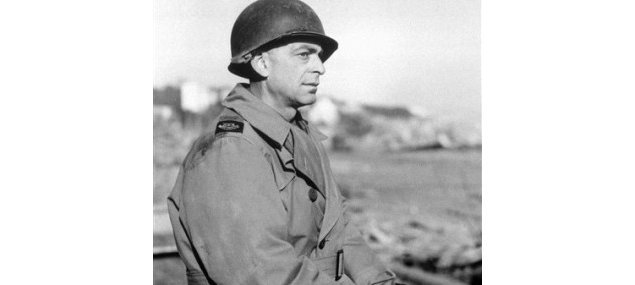
 In this March 1, 1944 file photo, Ed Kennedy, Chief of the Associated Press staff in North Africa, wears a metal helmet at the Anzio beachhead in Italy. Kennedy was dismissed by The AP after he became the first journalist to file a firsthand account of German officials surrendering unconditionally to Allied commanders at a former schoolhouse in Reims, France. Sixty-seven years later, AP President and Chief Executive Officer Tom Curley said that Kennedy was right to stand up to the censors, and should have been commended, not fired. (AP Photo, Pool)
DAVID B. CARUSO
NEW YORK (AP) – In World War II’s final moments in Europe, Associated Press correspondent Edward Kennedy gave his news agency perhaps the biggest scoop in its history. He reported, a full day ahead of the competition, that the Germans had surrendered unconditionally at a former schoolhouse in Reims, France.
For this, he was publicly rebuked by the AP, and then quietly fired.
The problem: Kennedy had defied military censors to get the story out. British Prime Minister Winston Churchill and President Harry Truman had agreed to suppress news of the capitulation for a day, in order to allow Stalin to stage a second surrender ceremony in Berlin. Kennedy was also accused of breaking a pledge that he and 16 other journalists had made to keep the surrender a secret for a time, as a condition of being allowed to witness it firsthand.
Sixty-seven years later, the AP’s top executive is apologizing for the way the company treated Kennedy.