
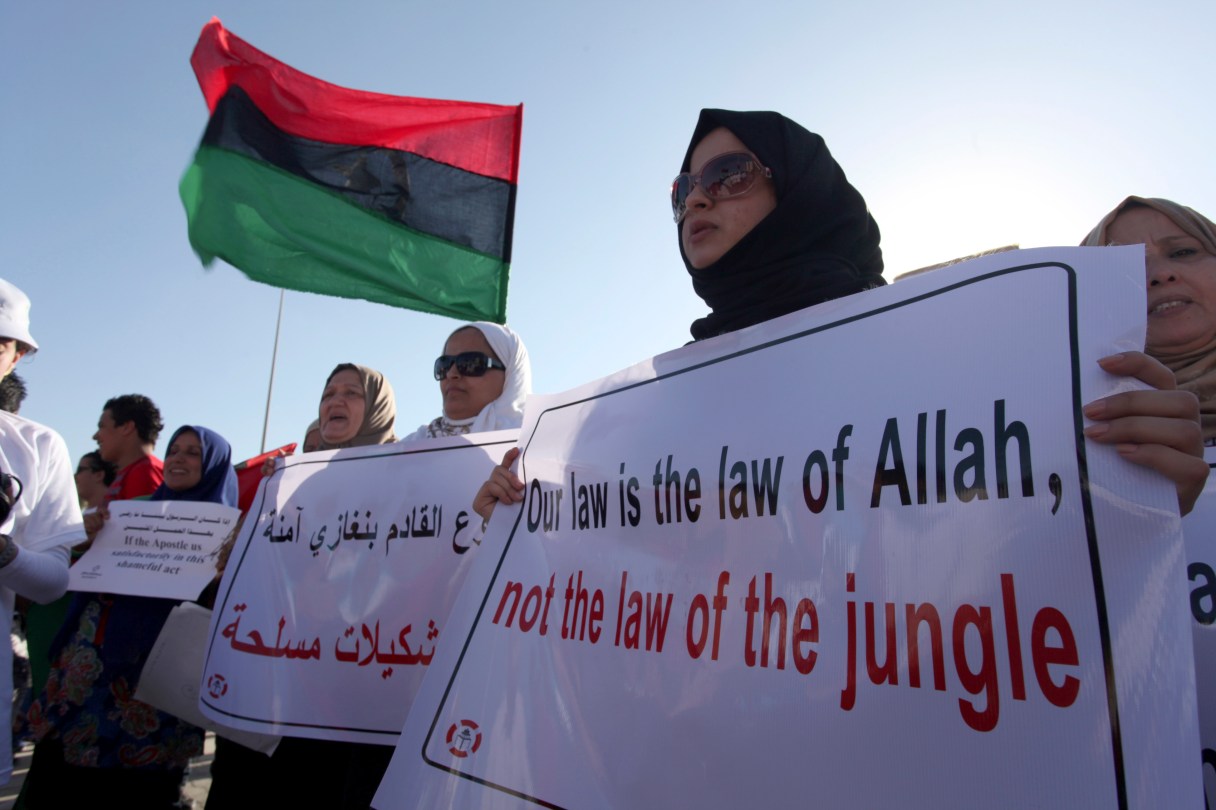
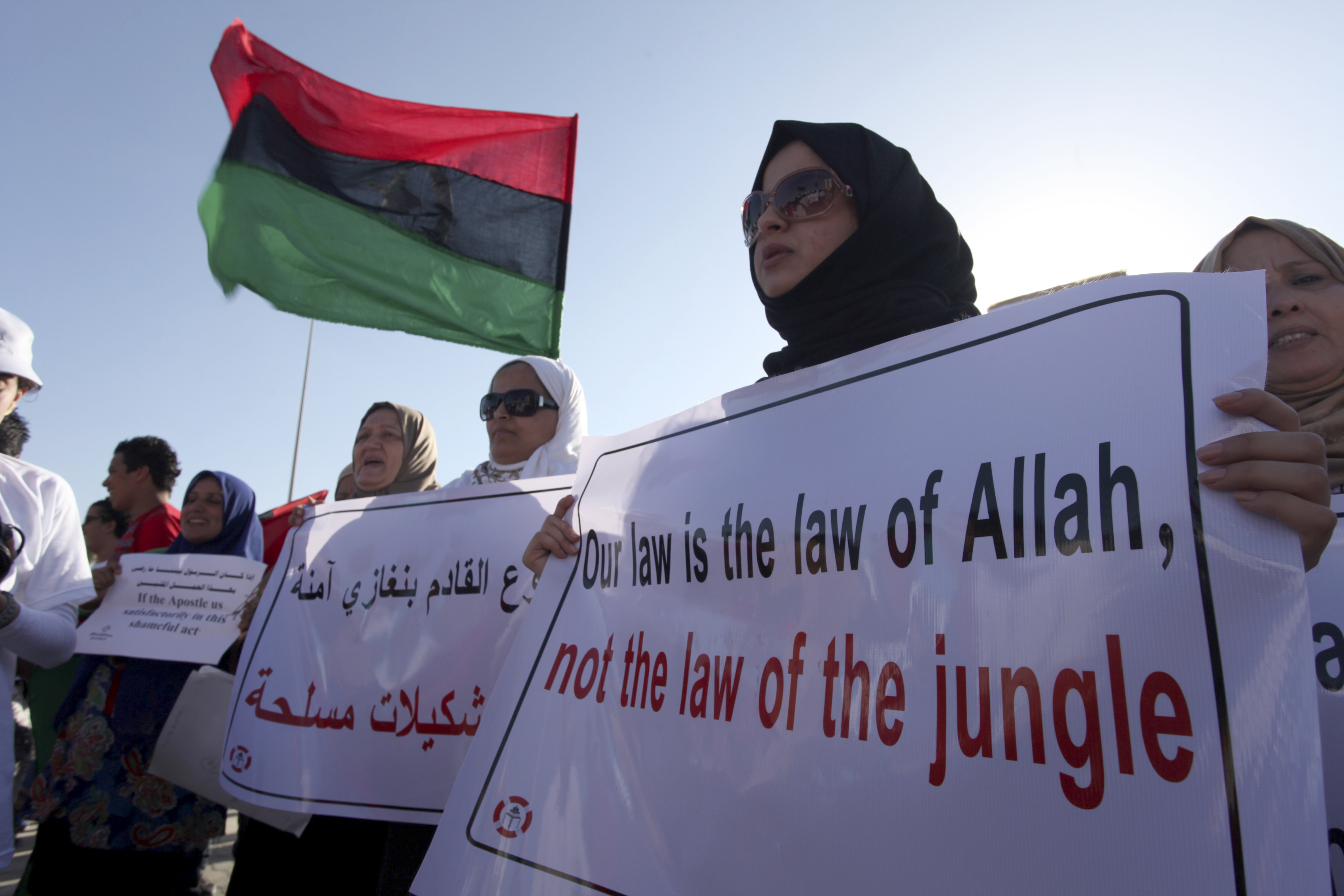
 Libyan women protest against Ansar al-Shariah Brigades and other Islamic militias in front of the Tebesty Hotel, in Benghazi, Libya, Friday, Sept. 21, 2012. The attack that killed the U.S. ambassador and three other Americans has sparked a backlash among frustrated Libyans against the heavily armed gunmen, including Islamic extremists, who run rampant in their cities. More than 10,000 people poured into a main boulevard of Benghazi, demanding that militias disband as the public tries to do what Libya’s weak central government has been unable to.
BENGHAZI, Libya – Tens of thousands of Libyans marched to the gates of one of the country’s strongest armed Islamic extremist groups Friday, demanding it disband, as the attack that killed the U.S. ambassador and four other Americans sparked a public backlash against militias that run rampant in the country and defy the country’s new, post-Moammar Gadhafi leadership.
For many Libyans, last week’s attack on the U.S. Consulate in the eastern city of Benghazi was the last straw with one of the biggest problems Libya has faced since Gadhafi’s ouster and death around a year ago – the multiple mini-armies that with their arsenals of machine guns and rocket-propelled grenades are stronger than the regular armed forces and police.
The militias, a legacy of the rag-tag popular forces that fought Gadhafi’s regime, tout themselves as protectors of Libya’s revolution, providing security where police cannot. But many say they act like gangs, detaining and intimidating rivals and carrying out killings. Militias made up of Islamic radicals are notorious for attacks on Muslims who don’t abide by their hardline ideology. Officials and witnesses say fighters from one Islamic militia, Ansar al-Shariah, led the Sept. 11 attack on the Benghazi consulate.
Some 30,000 people filled a broad boulevard as they marched along a lake in central Benghazi on Friday to the gates of the headquarters of Ansar al-Shariah.
“No, no, to militias,” the crowd chanted, filling a broad boulevard. They carried banners and signs demanding that militias disband and that the government build up police to take their place in keeping security. “Benghazi is in a trap,” signs read. “Where is the army, where is the police?”