
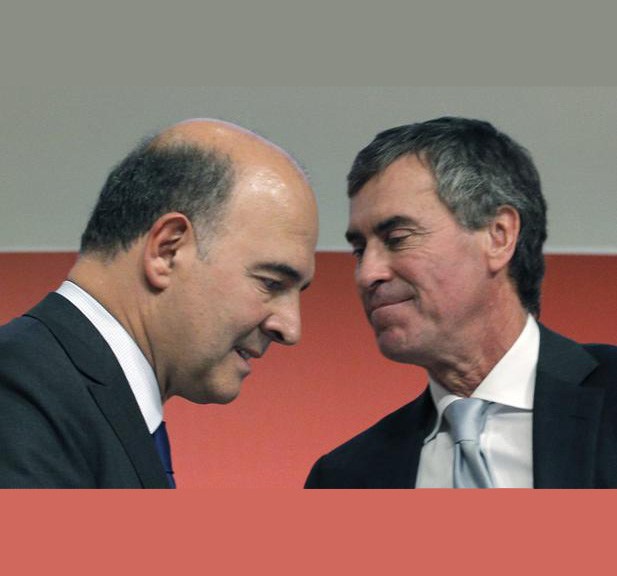
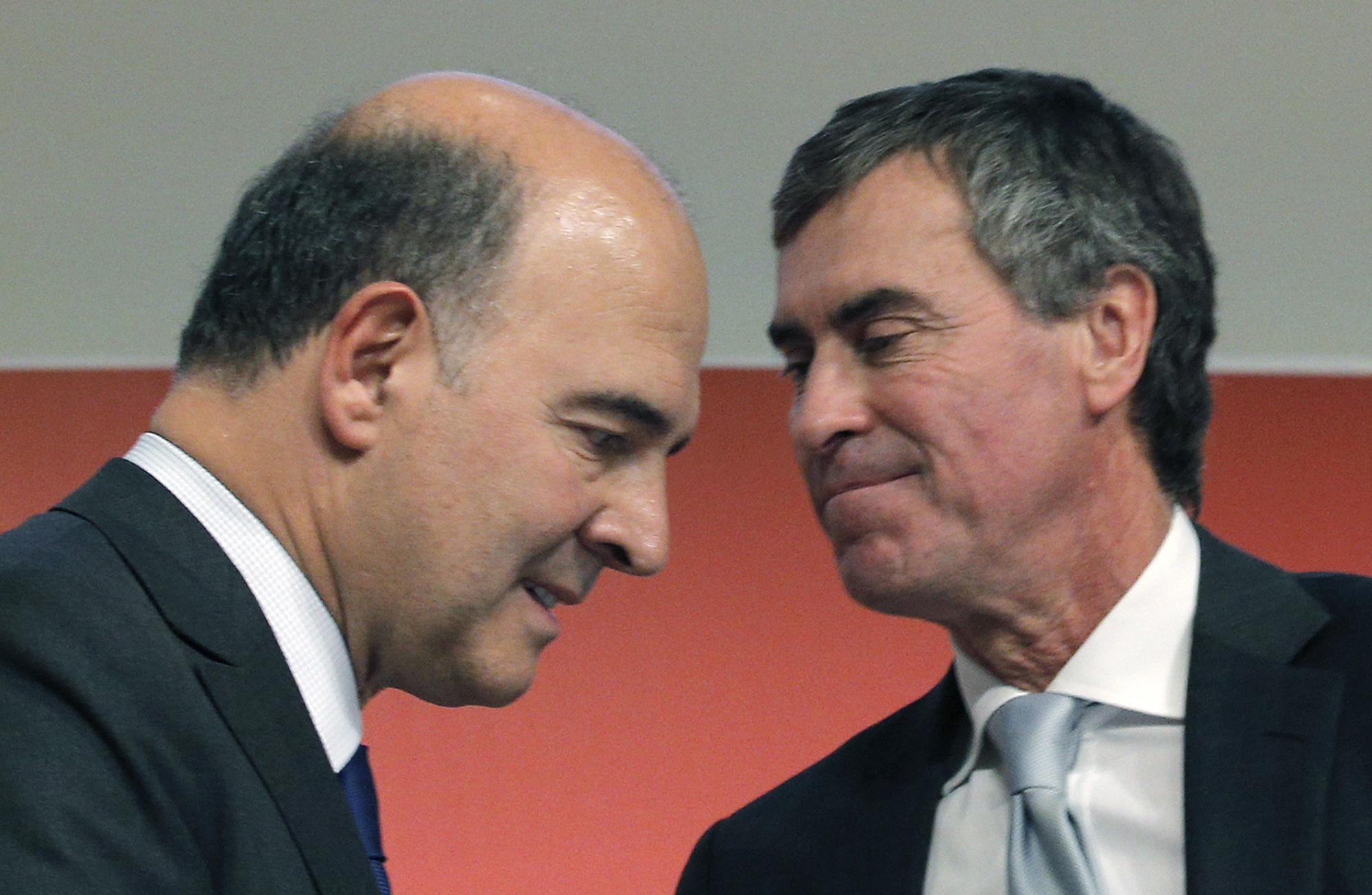
 France’s Finance Minister Pierre Moscovici, left, and then Budget Minister Jerome Cahuzac attend a news conference in Paris. Francois Hollande is a president on the ropes, reeling from a potentially knockout blow delivered by his ex-budget minister, a man who admitted this week that he had hidden hundreds of thousands of euros from the taxman for decades and lied about it. Those lies from Jerome Cahuzac came both in front of the National Assembly and to Hollande’s own face.
PARIS – It’s a data leak involving tens of thousands of offshore bank accounts, naming dozens of prominent figures around the world. And new details are being released by the day – raising the prospect that accounts based on promises of secrecy and tax shelter could someday offer neither.
Among those named include a top campaign official in France, the ex-wife of pardoned oil trader Marc Rich, Azerbaijan’s ruling family, the daughter of Imelda Marcos and the late Baron Elie de Rothschild. The widespread use of offshore accounts among the wealthy is widely known – even Mitt Romney acknowledged stashing some of his millions in investments in the Cayman Islands.
But this week’s leak, orchestrated by a Washington-based group called the International Consortium of Investigative Journalists, appeared to be the broadest in what has been a steady stream of information emerging about hidden money in recent years amid a wave of anger targeting the super-rich in an age of austerity.
The leak allegedly involved records from 10 tax havens, where the world’s wealthy have long stashed funds. It uncovered a shadow network of empty holding companies and names essentially rented out to fill out boards of non-existent corporations, including a British couple listed as active in more than 2,000 entities, according to The Guardian newspaper, which participated in the global undertaking.
The project started with the receipt of a hard drive by an Australian journalist, Gerard Ryle, who took the data with him when he joined the consortium, according to the project’s website. The group, a project of the Washington-based Center for Public Integrity, has said the hard drive arrived in the mail.