
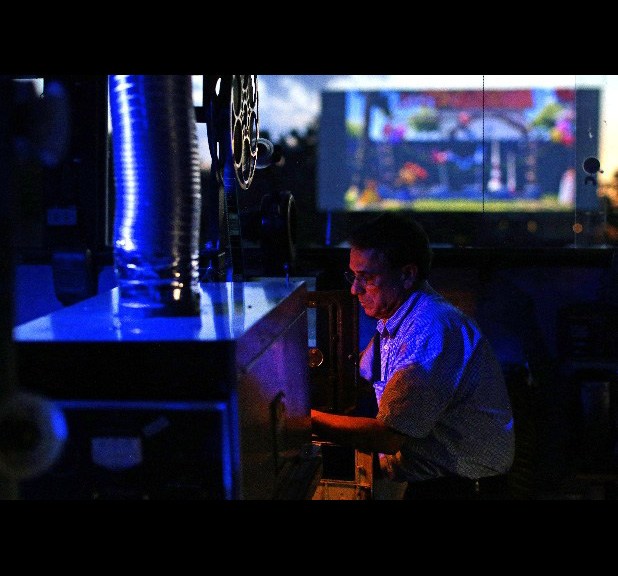
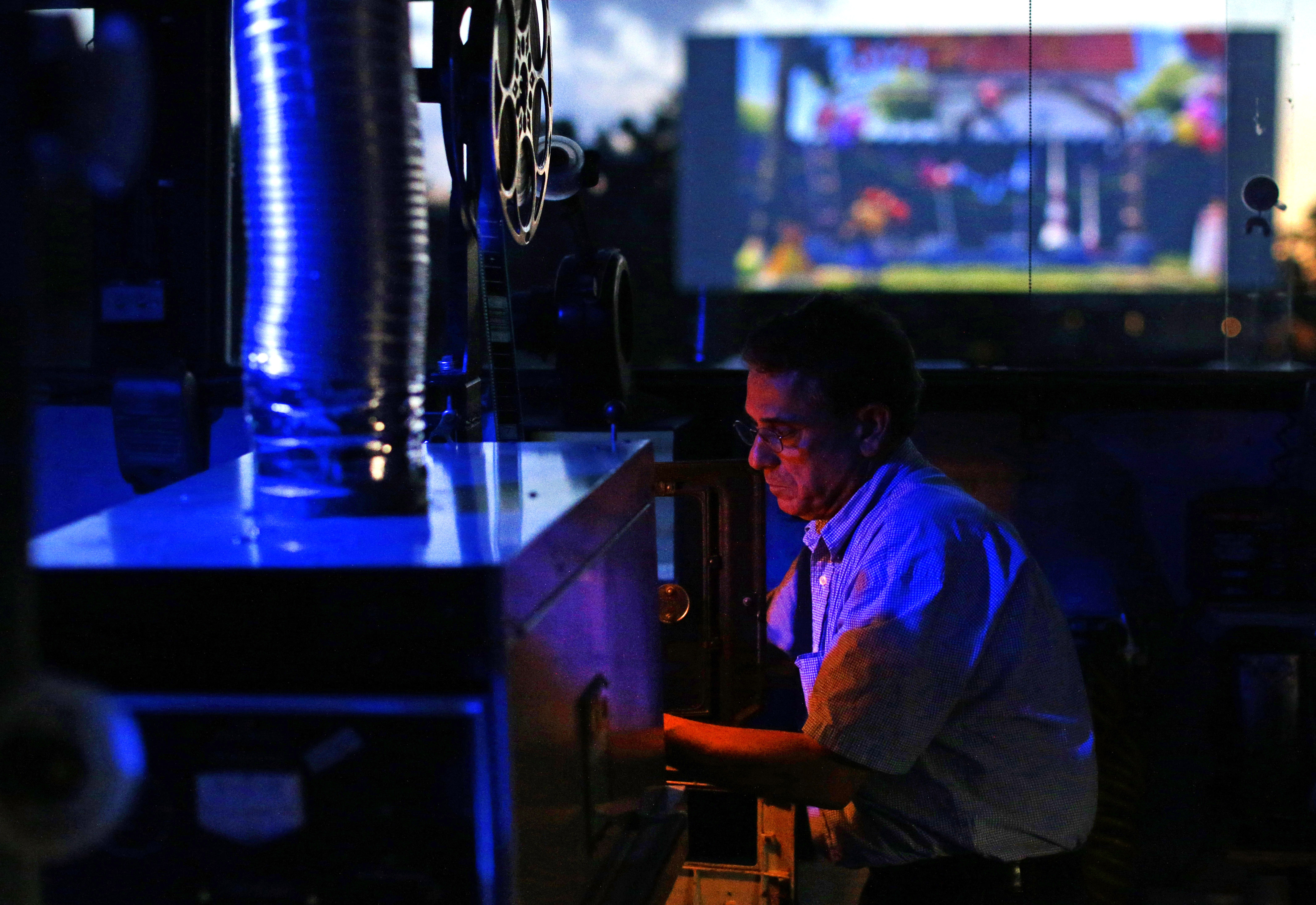
 D. Edward Vogel, owner of Bengies Drive-In Theatre in Middle River, Md, prepares a film on his 35mm film projector as a movie plays on a large screen, top right, from his nearby digital projector. The latest threat to the existence of drive-in theaters is the film industry’s conversion from 35 mm film to digital prints, and the expense involved in converting projectors to the digital age.
LANCASTER, Ohio – Through 80 summers, drive-in theaters have managed to remain a part of the American fabric, surviving technological advances and changing tastes that put thousands out of business. Now the industry says a good chunk of the 350 or so left could be forced to turn out the lights because they can’t afford to adapt to the digital age.
Movie studios are phasing out 35 mm film prints, and the switch to an eventually all-digital distribution system is pushing the outdoor theaters to make the expensive change to digital projectors.
The $70,000-plus investment required per screen is significant, especially for what is in most places a summertime business kept alive by mom-and-pop operators. Paying for the switch would suck up most owners’ profits for years to come.
The United Drive-In Theatre Owners Association figures 50 to 60 theaters have already converted. At least one operator decided to close instead of switch, but it’s not clear how many more might bite the dust.
“Everyone knows eventually that you’ll be digital or you’ll close your doors,” says Walt Effinger, whose Skyvue Drive-In in the central Ohio town of Lancaster has been showing movies on an 80-foot screen since 1948. “Some will. If you’re not doing enough business to justify the expense, you’re just going to have to close up.”