
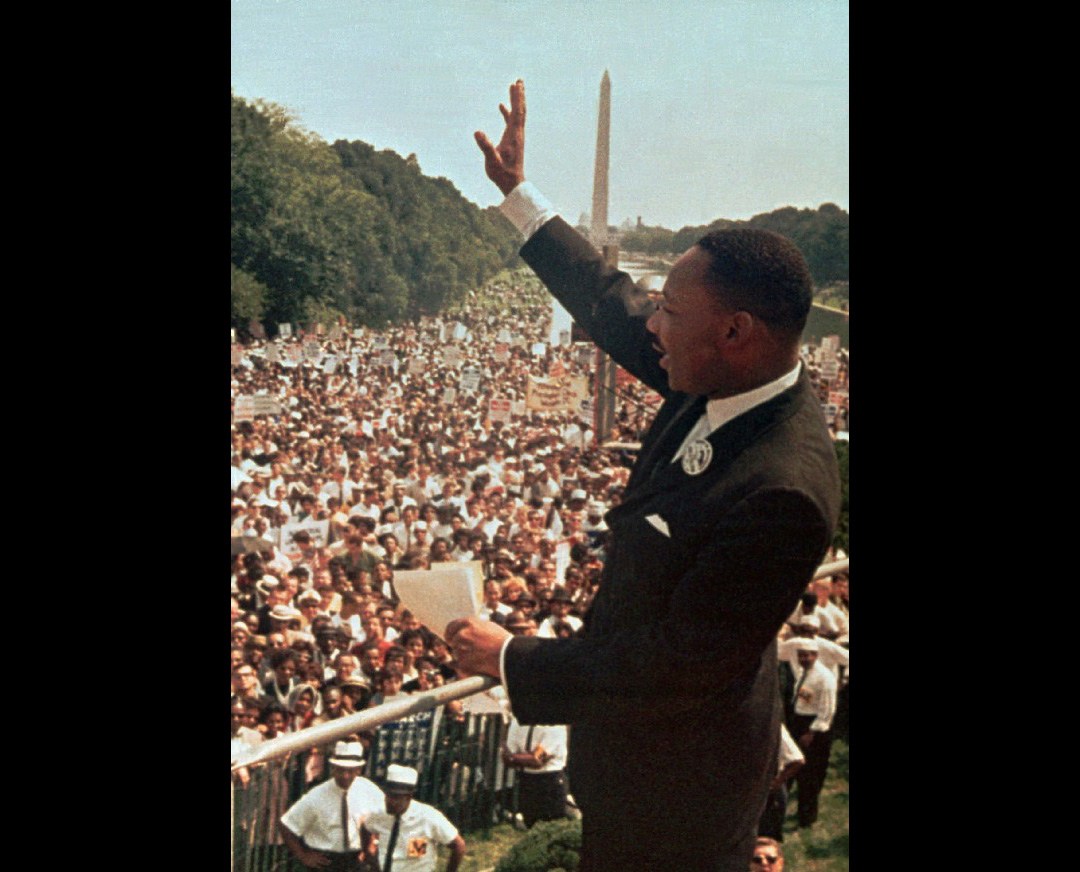
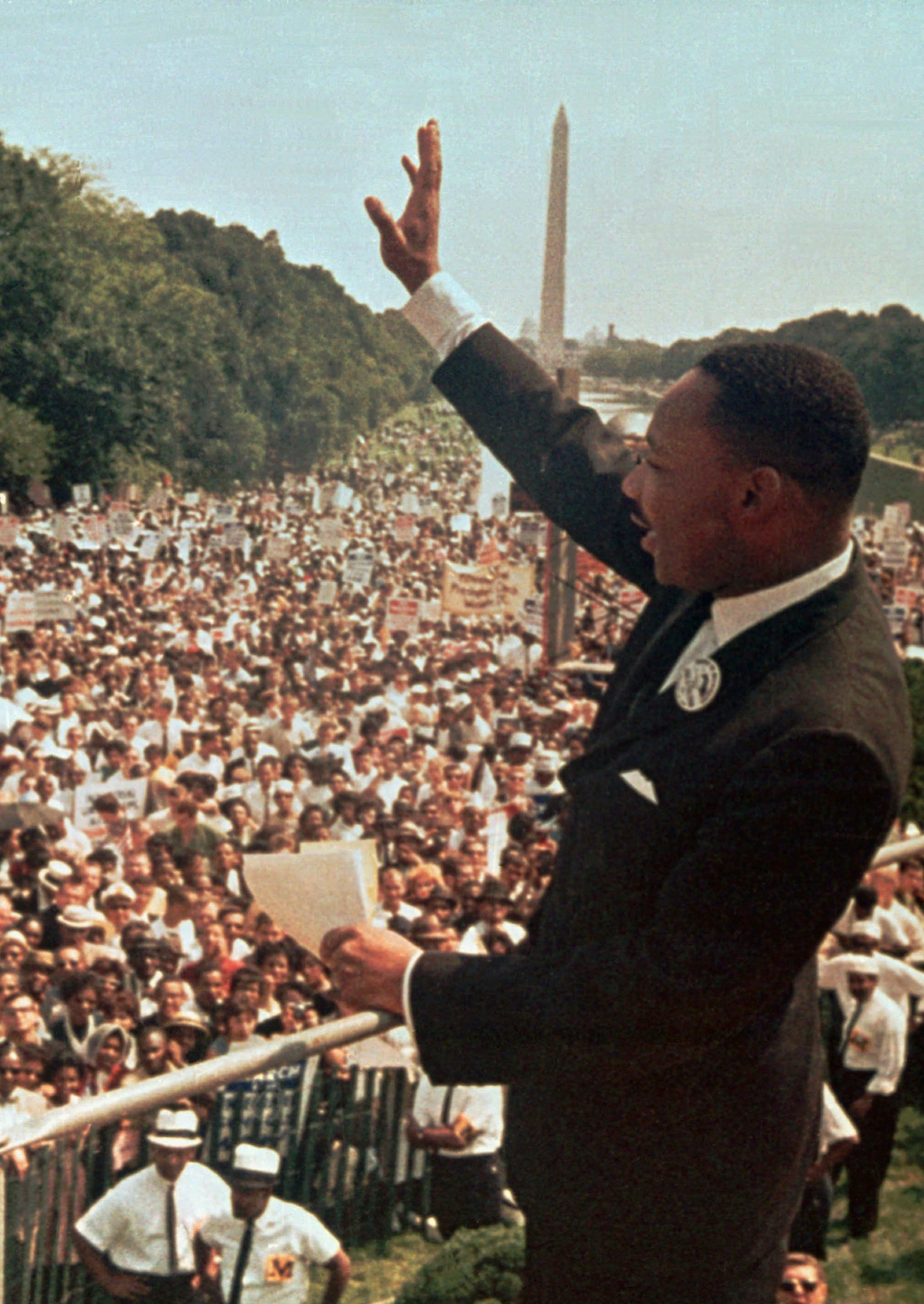
 Dr. Martin Luther King Jr. acknowledges the crowd at the Lincoln Memorial for his “I Have a Dream” speech during the March on Washington, D.C. in this Aug. 28, 1963 file photo.
WASHINGTON – Next week, the nation’s first black president, a living symbol of the racial progress Martin Luther King Jr. dreamed about, will stand near the spot where King stood 50 years ago and say where he believes this nation should be headed.
Then, like King, President Barack Obama will step away from the hulking Lincoln Memorial, and return to where this nation is now.
As civil rights activists pause to consider the great strides toward equality that the 1963 March on Washington helped to spur, they also look at the current political and racial landscape, and wonder: How much of that progress is now being undone?
This march anniversary comes just two months after the Supreme Court effectively erased a key anti-discrimination provision of the Voting Rights Act, unleashing a string of restrictive voting laws and rules in several states. The court also raised the bar for consideration of race in university admissions, and made it more difficult to bring employment discrimination lawsuits.
There are other new issues, such as demands for a federal civil rights prosecution of George Zimmerman for fatally shooting unarmed black teen Trayvon Martin, and abiding ones, such as persistent unemployment among black Americans that runs at a significantly higher rate than that for whites.