
 Staff File Photo by Patrick Smith
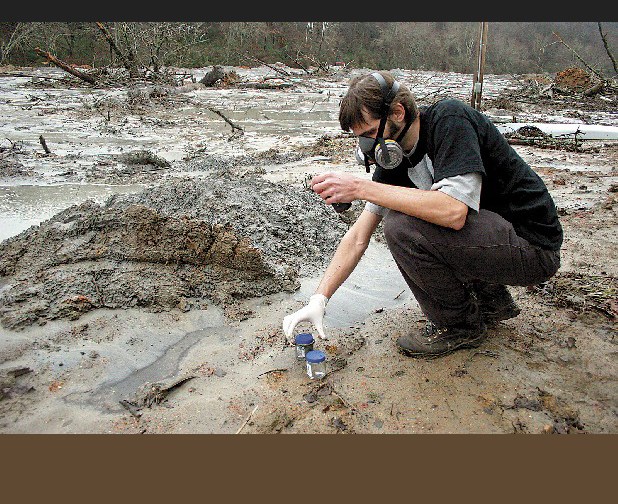
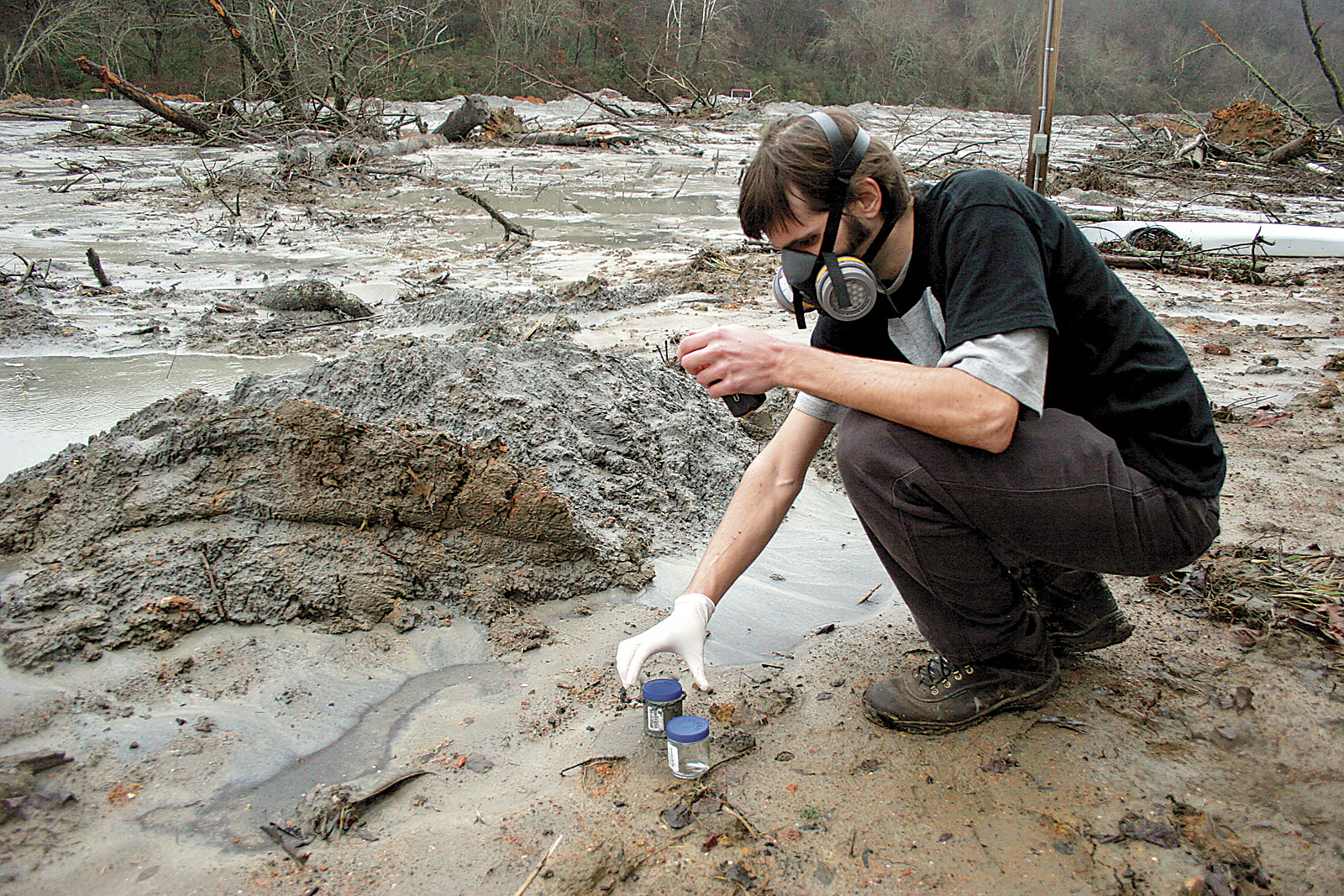
United Mountain Defense volunteer Matt Landon prepares to fill another jar with sediment to be tested from the sludge left in the Swan Pond Lake Road community after the TVA coal ash spill on Dec. 22, 2008. The United Mountain Defense organization is providing its own testing records to help concerned citizens weary of TVA’s information.
In four short months it will have been five years since the Kingston Ash Spill became a household phrase in the Southeast after an earthen dike broke and unleashed 50 years of wet coal ash slime on a sleepy community along the Emory River in Harriman, Tenn.
When we say 50 years of coal ash slime, we mean the toxic remains of waste from burning coal to make electricity. Even before the Clean Air Act of 1970 was passed, scientists knew the dangers of breathing air polluted with coal-fired smoke and ash particles. The wet treatment of coal waste — scrubbed from the burners, moistened and tossed into a pit-turned-60-foot-landfill — was a stopgap way to keep more silica, mercury, selenium, arsenic and other dangerous pollutants out the air and water.
But then the unthinkable happened. A poorly maintained, ever-growing, 50-year-old landfill wall ruptured, and most of toxic stew inside spilled over 300 acres of neighborhood yards and fields and into the Emory River. In all, some 5.4 million cubic yards of muck — more than a billion gallons — suddenly was exposed to sun, rain, air and wind.
Eventually, the wetness that theoretically had kept the ash dangers at acceptable levels dried up. As earth movers labored over the massive site to scoop up coal ash and prepare it to be re-interred, the electric power making company that owns Kingston Fossil Plant, Tennessee Valley Authority, brought in contractors to clean up the mess, including workers to keep the site — as best as possible — watered down and seeded with a crusty grass-growing mix intended to keep the dust down.
That alone, should have been a give-away that the ash was not safe, although TVA maintained that there was no danger to human health there.