
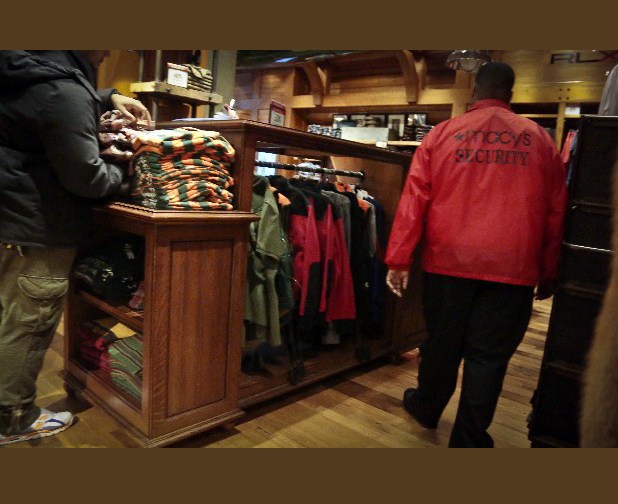
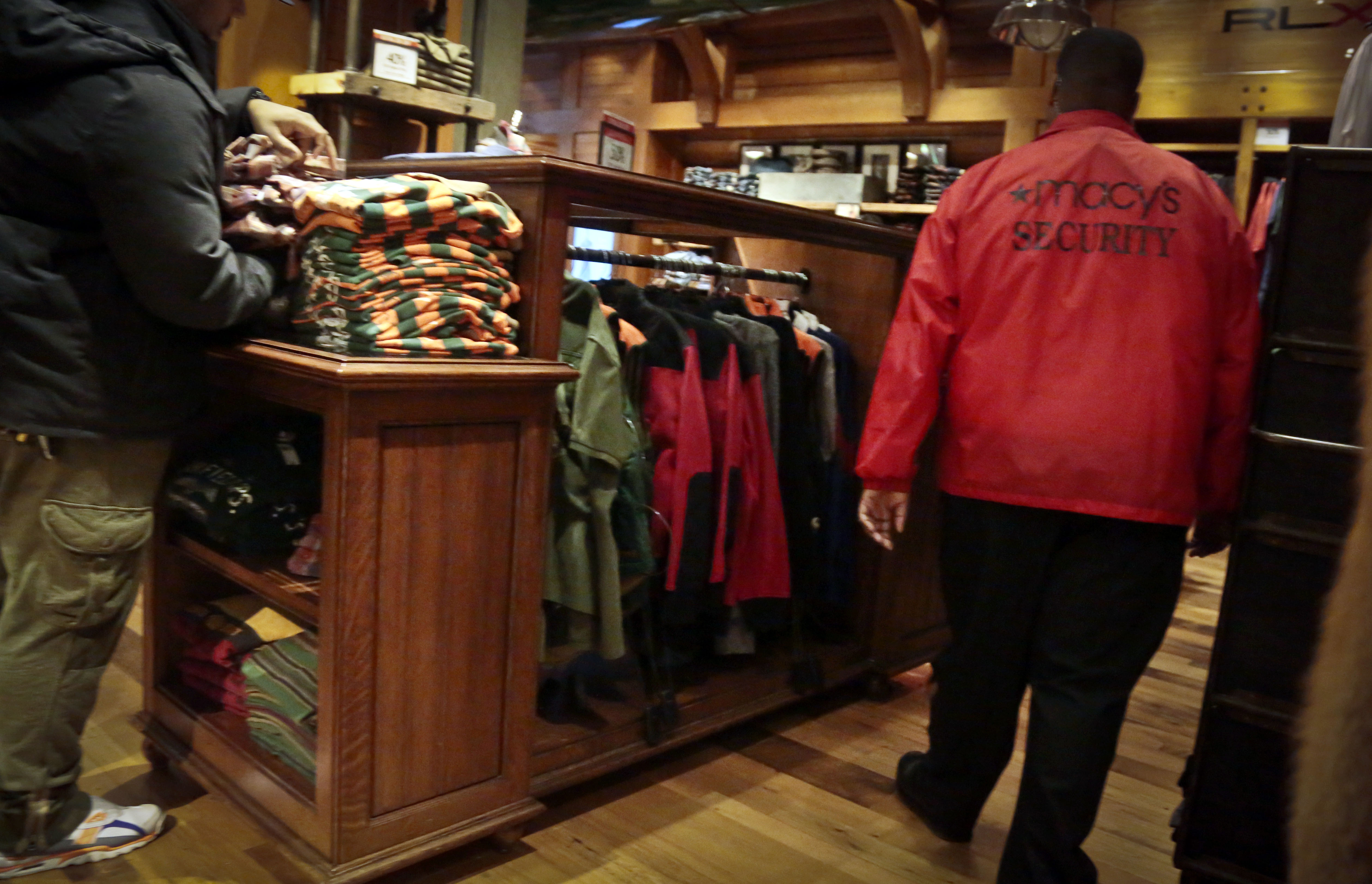
 A security agent walks the floors at Macy’s in New York. Claims over racial profiling at department stores in New York have helped expose the practice in more than 40 states of retailers holding shoplifting suspects and assessing fines, even if a person hasn’t yet technically stolen anything. At Macy’s flagship store, suspects are held in cells, asked to sign an admission of guilt and pay hundreds in fines.
NEW YORK – Outside the view of paying customers, people accused of shoplifting at Macy’s huge flagship store are escorted by security guards to cells in “Room 140,” where they can be held for hours, asked to sign an admission of guilt and pay hundreds in fines, sometimes without any conclusive proof they stole anything.
As shoppers jam stores ahead of the December holidays, claims of racial profiling at department stores in New York have helped expose the wide latitude that laws in at least 27 states give retailers to hold and fine shoplifting suspects, even if a person hasn’t yet technically stolen anything, is wrongly accused or criminal charges are dropped.
“You must remember, these people are not police officers; they are store employees,” said Faruk Usar, the attorney for a 62-year-old Turkish woman who sued Macy’s, which some customers say bullied them into paying fines on the spot or harassed them with letters demanding payment. “When they are detained, they are not yet even in a real jail.”
Industrywide, more than $12 billion is lost to shoplifting each year. The laws, which vary on strictness and fine amounts, allow stores to try to recoup some losses. Under New York’s longstanding law, retailers may collect a penalty of five times the cost of the stolen merchandise, up to $500 per item, plus as much as $1,500 if the merchandise isn’t in a condition to be sold. A conviction is not necessary to bring a civil claim.
Some customers say stores have harassed them into signing admissions of guilt in order to turn a profit — not just recoup a loss.