
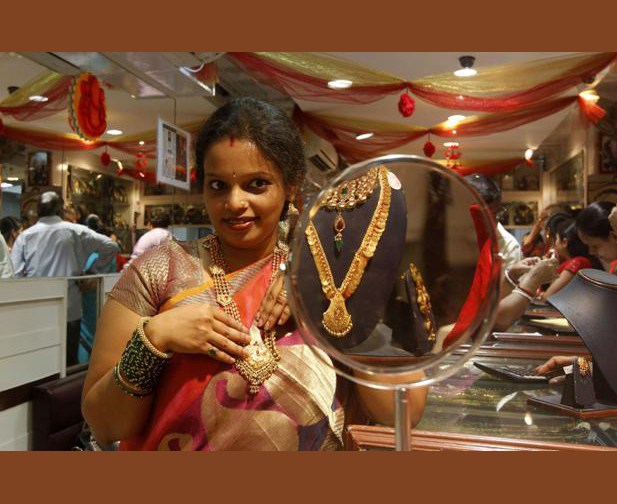
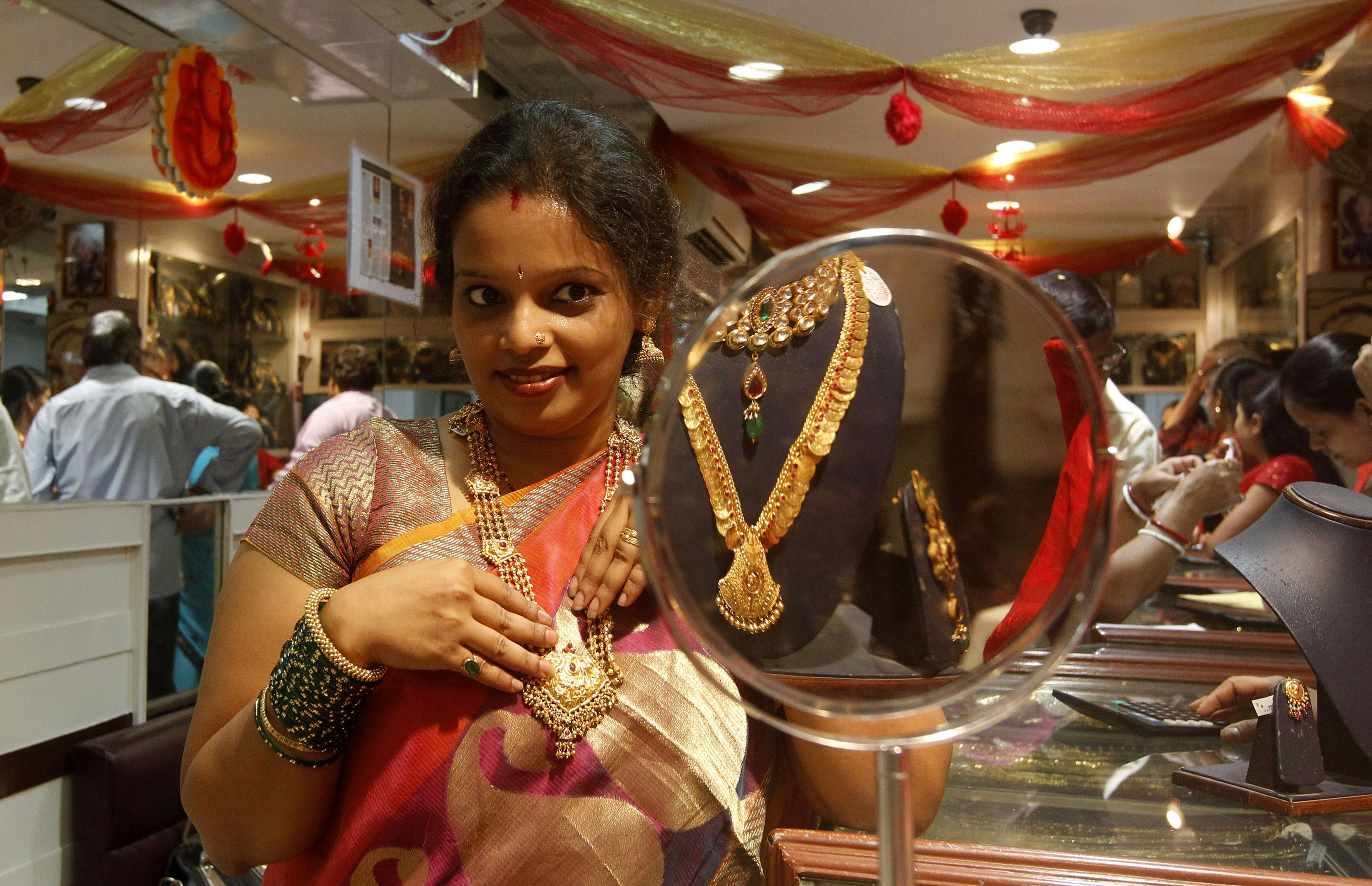
 An Indian woman looks into a mirror as she tries out gold jewelry at a shop in Mumbai, India. Nowadays, India is by far the world’s biggest buyer of gold, which despite its rising value is an increasing drain on an economy that is growing too slowly to reduce widespread poverty. Last year Indians imported 864 tons of gold, about one fifth of world sales. The cost of $45 billion was second only to India’s bill for oil imports. The unquenchable appetite for gold coins, bars and jewelry has swelled India’s trade deficit and weakened its currency, making crucial imports such as fuel more expensive.
MUMBAI, India – India’s steep new tax on gold imports doesn’t deter Mousumi Rao as she holds up a glittering $5,000 filigree necklace that could adorn her daughter on her wedding day. Rao’s daughter isn’t getting married next month or even next year. The 12-year-old is at least several years away from her wedding.
Since tradition demands a bride practically drip with gold jewelry, it’s never too early for an Indian family to start preparing, particularly with the high cost of gold these days.
“I’m collecting things for her now so when she grows older and marries, I should have enough gold for her,” said Rao. “It is very auspicious for us, one of the most auspicious things, to give gold to your daughter.”
Gold has been deeply entwined in Indian culture for thousands of years. Nowadays, India is by far the world’s biggest buyer of gold and those imports are an increasing drain on an economy that is growing too slowly to reduce widespread poverty. Last year Indians imported 864 tons of gold, about one fifth of world sales. The cost of 2.5 trillion rupees ($45 billion) was second only to India’s bill for imported oil. The unquenchable appetite for gold coins, bars and jewelry has swelled India’s trade deficit and weakened its currency, making crucial imports such as fuel more expensive.
The government can’t do much about oil imports – without fuel, the economy would grind to a halt – so in the past year it has tried to rein in gold demand, raising the import duty three times in a year to its current level of 6 percent. The higher tariff is proving little match for age-old tradition.