
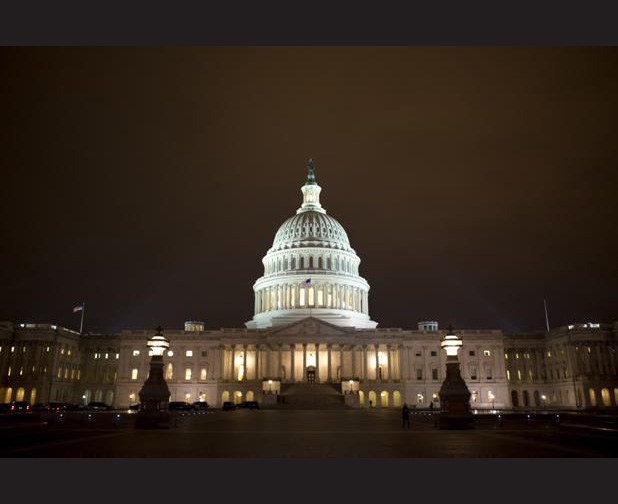
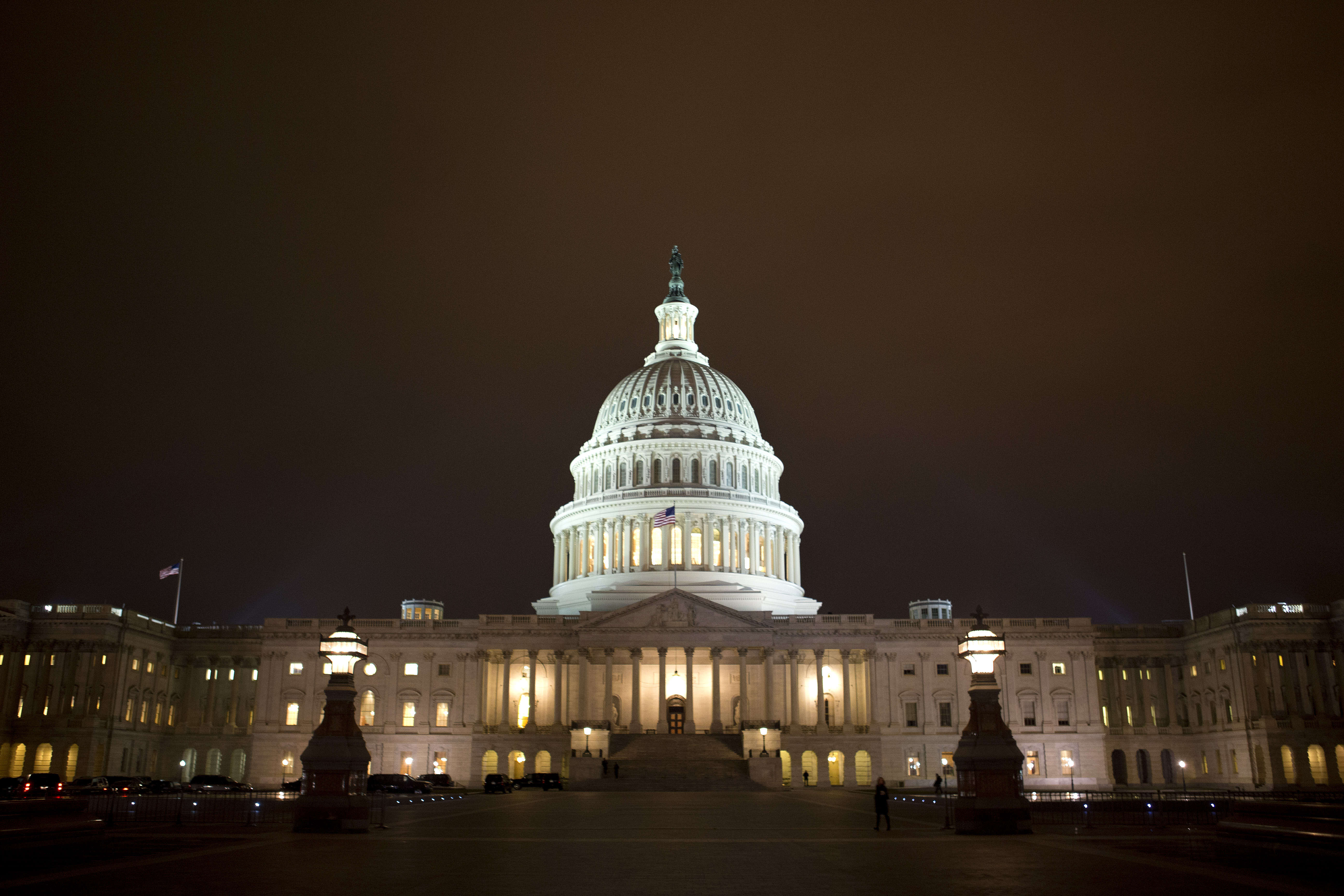
 The lights of the U.S. Capitol remain lit into the night.
How they votedThe House and Senate this week passed legislation to avert the “fiscal cliff.” Among other things, the legislation freezes Bush-era tax rates on everyone except individuals earning more than $400,000 per year and households making $450,000 per year.A “yes” vote indicates support for the final deal.GeorgiaU.S. Sen. Saxby Chambliss (R) — YesU.S. Sen. Johnny Isakson (R) — YesU.S. Rep. Tom Graves (R) — NoTennesseeU.S. Sen. Lamar Alexander (R) — YesU.S. Sen. Bob Corker (R) — YesU.S. Rep. Steve Cohen (D) — YesU.S. Rep. Jim Cooper (D) — NoU.S. Rep. Scott DesJarlais (R) — NoU.S. Rep. Chuck Fleischmann (R) — No
It’s been said that U.S. Rep. Chuck Fleischmann owes everything to House Speaker John Boehner. That he doesn’t think for himself. That he belongs to Grover Norquist and his pledge.
But the Ooltewah Republican’s vote Tuesday night against the “fiscal cliff” deal that froze popular tax rates for most Americans bucked all the assumptions: Boehner personally supported the deal; Norquist, the conservative lobbyist, said “aye” votes honored his pledge to keep taxes low; and a sizable bloc of House Republicans — 85 in all — joined Democrats in passing an 11th-hour measure that had Americans white-knuckling their pocketbooks and economists predicting another recession.
Boehner helped raise $200,000 at a Chattanooga fundraiser for Fleischmann’s re-election campaign, and the speaker recently appointed the freshman lawmaker to the influential House Committee on Appropriations. Meanwhile, Norquist’s Taxpayer Protection Pledge once provided political cover when Fleischmann needed it — as a little-known candidate up against a dozen hopefuls to replace longtime 3rd District Rep. Zach Wamp in 2010.
But Fleischmann said he disregarded the favors and opposed the final deal because it delayed automatic spending cuts and, in a replay of prior fiscal showdowns, postponed another try at deficit reduction for two months.