
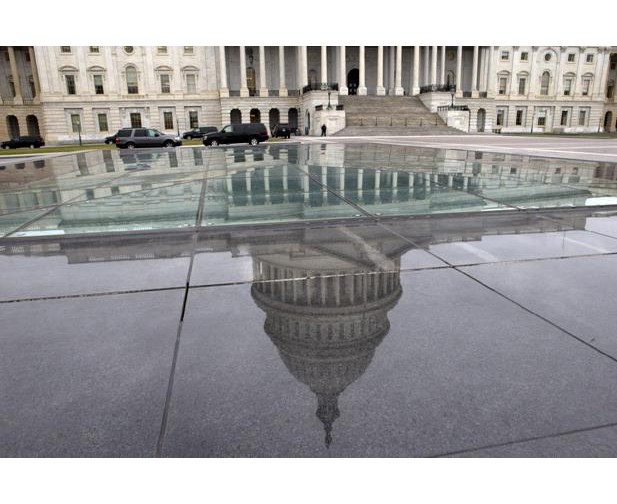
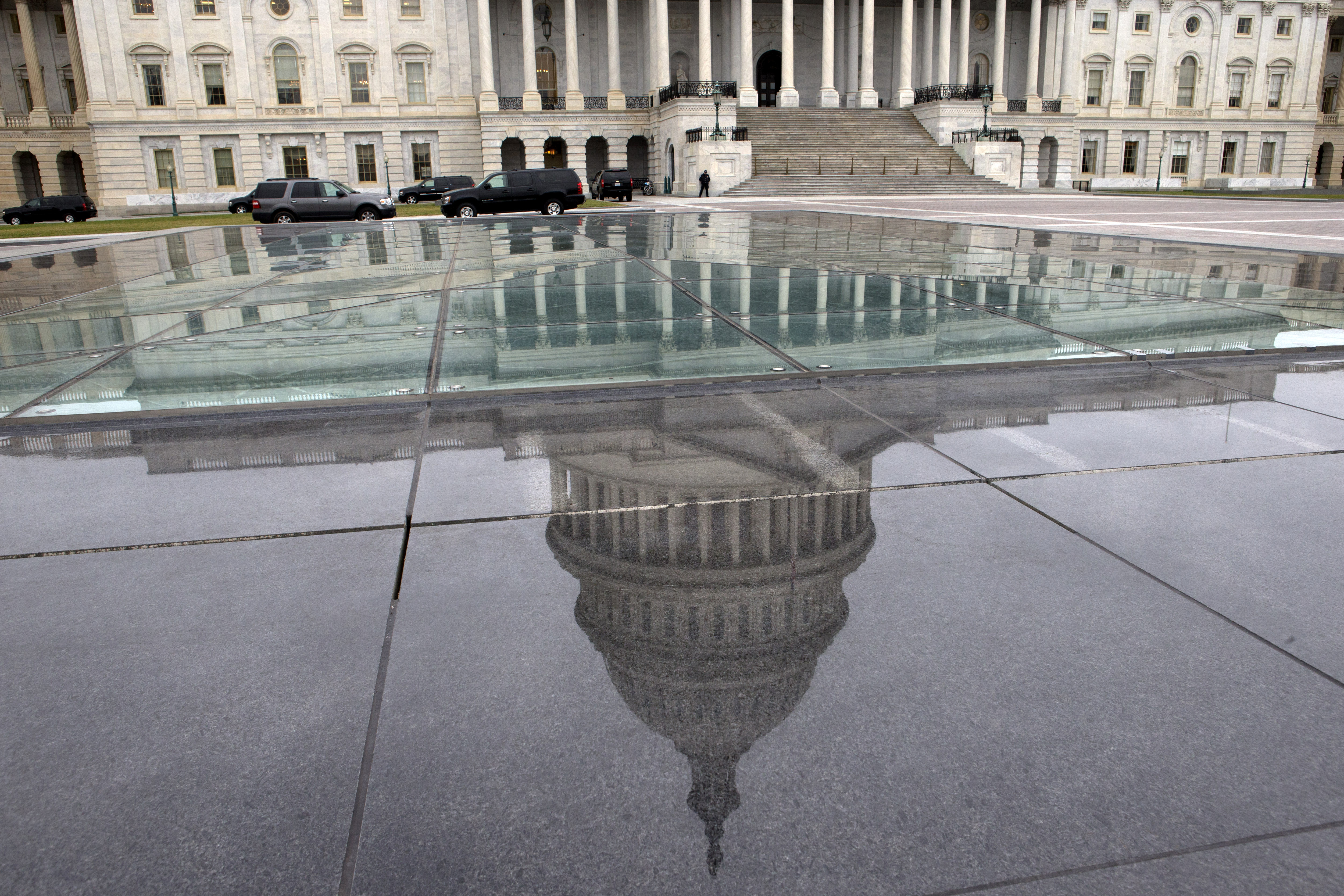
 FILE – In this Tuesday, Jan. 1, 2013, file photo, the dome of the Capitol is reflected in a skylight of the Capitol Visitor’s Center in Washington. By delaying hard choices on spending, the fiscal cliff deal guaranteed more confrontation and uncertainty this year, especially when Congress must vote later this winter to raise the governmentís borrowing limit. Thatís likely to keep businesses cautious about hiring and investing.
WASHINGTON – Housing is rebounding. Families are shrinking debts. Europe has avoided a financial crackup. And the fiscal cliff deal has removed the most urgent threat to the U.S. economy.
So why don’t economists foresee stronger growth and hiring in 2013?
Part of the answer is what Congress’ agreement did (raise Social Security taxes for most of us). And part is what it didn’t do (prevent the likelihood of more growth-killing political standoffs).
By delaying painful decisions on spending cuts, the deal assures more confrontation and uncertainty, especially because Congress must reach agreement later this winter to raise the government’s debt limit. Many businesses are likely to remain wary of expanding or hiring in the meantime.
One hopeful consensus: If all the budgetary uncertainty can be resolved within the next few months, economists expect growth to pick up in the second half of 2013.