
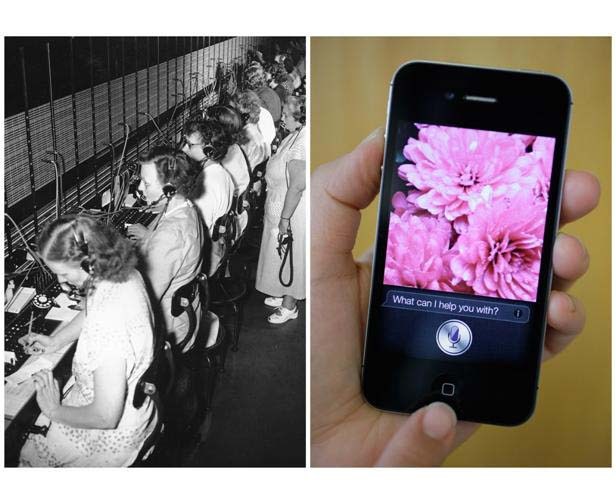
 This combination of Associated Press file photos shows, left, the General Services Administration telephone switchboard and its operators in 1951, and right, Siri, Apple’s virtual assistant on the Apple iPhone 4S. The number of switchboard and telephone operators in the U.S. fell from 182,000 to 73,000 in 10 years through 2010 because of new technology.
WASHINGTON – They seem right out of a Hollywood fantasy, and they are: Cars that drive themselves have appeared in movies like “I, Robot” and the television show “Knight Rider.”
Now, three years after Google invented one, automated cars could be on their way to a freeway near you. In the U.S., California and other states are rewriting the rules of the road to make way for driverless cars. Just one problem: What happens to the millions of people who make a living driving cars and trucks – jobs that always have seemed sheltered from the onslaught of technology?
“All those jobs are going to disappear in the next 25 years,” predicts Moshe Vardi, a computer scientist at Rice University in Houston. “Driving by people will look quaint; it will look like a horse and buggy.”
If automation can unseat bus drivers, urban deliverymen, long-haul truckers, even cabbies, is any job safe?
Vardi poses an equally scary question: “Are we prepared for an economy in which 50 percent of people aren’t working?”