
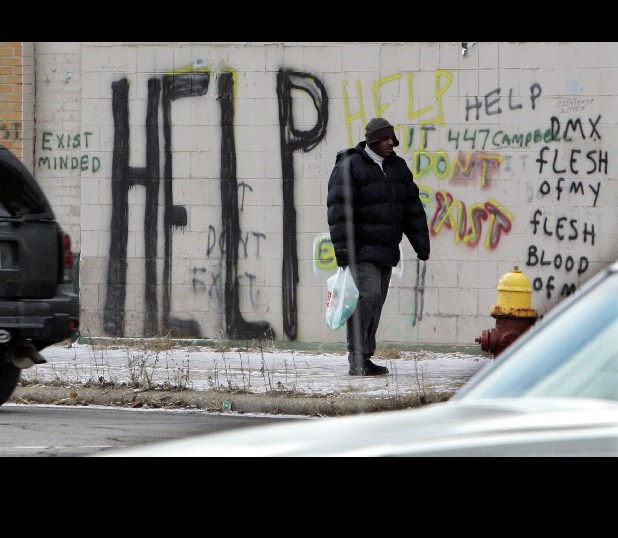
 A pedestrian walks by graffiti in downtown Detroit. Detroit became the largest city in U.S. history to file for bankruptcy on Thursday, July 18, 2013, when state-appointed emergency manager Kevyn Orr asked a federal judge for municipal bankruptcy protection.
DETROIT – Four years ago, America’s Big Three automakers mortgaged all they owned or went into bankruptcy court to keep from going broke.
Since then, General Motors, Chrysler and Ford have all returned to full financial health, unlike Detroit itself, which filed for bankruptcy Thursday after years of painful decline.
So why can’t the Motor City use bankruptcy to transform itself in the same way? Unfortunately for Detroit, it’s not that simple. Automakers were able to shed most of their problems in bankruptcy court and come out leaner and more competitive. The city can get rid of its gargantuan debt, but a bankruptcy judge can’t bring back residents or raise its dwindling revenue.
“In General Motors, at least you could have this dream about there being increased revenues in the future,” said Douglas Baird, a bankruptcy law professor at the University of Chicago. “It’s much harder to do that in the case of a city like Detroit because it doesn’t sell a product.”
Detroit, which filed the largest municipal bankruptcy case in American history, owes as much as $20 billion to banks, bondholders and pension funds. It has revenue of about $1.1 billion per year, a number that drops by about $100 million annually. And it’s burdened with a running deficit of $327 million.