
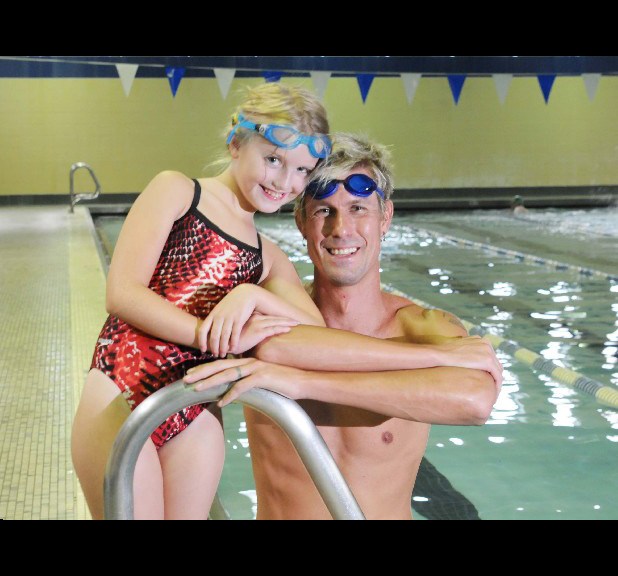
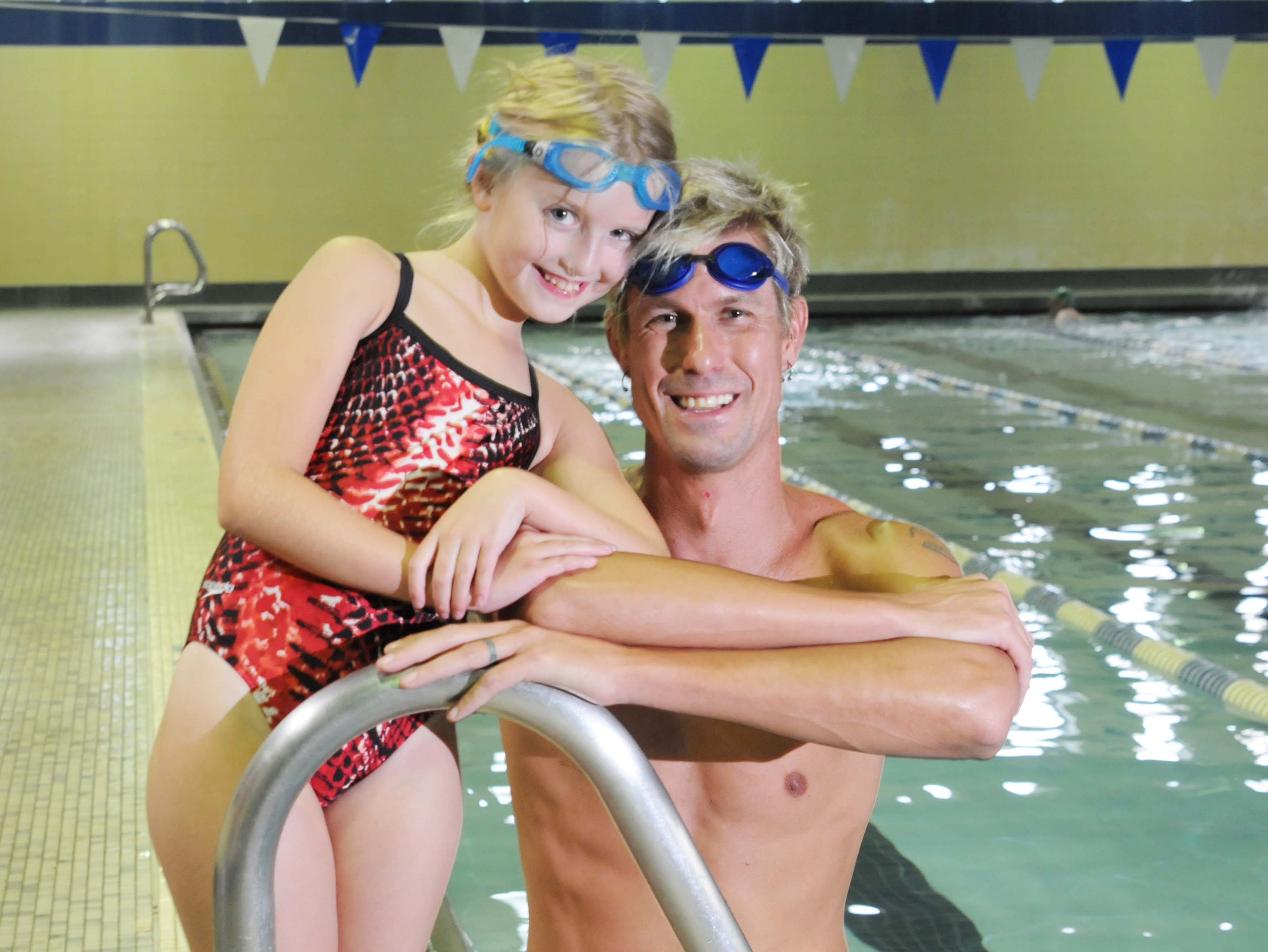
 Jason Howard swims with his daughter, Zoe, 7, at the Downtown YMCA. In addition to swimming several times each week at the YMCA and Sports Barn, Howard also does open-water swims every Wednesday in the Tennessee River.
DROWNINGS BY THE NUMBERS• In nearly 9 out of 10 child-drowning deaths, a parent or caregiver claimed to be watching the child.• An average of 9 people drown every day in the United States.• For each death caused by drowning, there are 1 to 4 non-fatal submersion accidents serious enough for the victim to be hospitalized.• Drowning is the second-leading cause of accidental injury-related death among children ages 1 to 14.• Drowning is the leading cause of accidental injury-related death among children ages 1 to 4.• Among children ages 1 to 4 years, most drownings occur in residential swimming pools. More than half of drownings among infants (under age 1) occur in bathtubs, buckets or toilets.• Portable pools make up 11 percent of all pool drownings for children under age 5.• Non-fatal drownings can result in brain damage that may result in long-term disabilities including memory problems, learning disabilities and permanent loss of basic functioning.• Nineteen percent of child drowning fatalities take place in public pools with certified lifeguards on duty.• Roughly 5,000 children 14 and under go to the hospital because of accidental drowning-related incidents each year; 15 percent (750 children) die and about 20 percent (1,000 children per year) suffer from permanent neurological disability.• Seventy-seven percent of those involved in a home-drowning accident had only been missing for five minutes or less when found in the swimming pool; 70 percent weren’t expected to be in or near the pool at that time.• Participation in formal swimming lessons can reduce the risk of drowning by 88 percent among children ages 1-4.Source: Steve Newman, owner of Choo Choo Diving & Aquatic CenterWant to learn?Area YMCA locations offer adult swim lessons that are open to both members and nonmembers. Visit http://ymcachattanooga.org for locations.
Until Jason Howard was 24 years old, he relied on the simplest stroke to stay afloat when he went swimming — the dog paddle.
Fourteen years later, he’s an aggressive competitive swimmer, winning prestigious open-water races, an endurance sport that takes place in lakes, rivers and oceans.
Howard, also a competitive mountain biker, says his interest in learning proper swimming strokes sparked when he and his wife, Gina Howard, began training for their first triathlon, a competition whose highest levels consist of running a 26-mile marathon, cycling for about 100 miles and swimming for about a mile — one right after the other.
“I would have rather been riding my bike, but I had no idea how many benefits swimming could have for me,” says Howard. “I realized that I could do triathlons and be able to hold my own. I still wasn’t taking swimming real serious at the time, but using it more as cross training for cycling.