
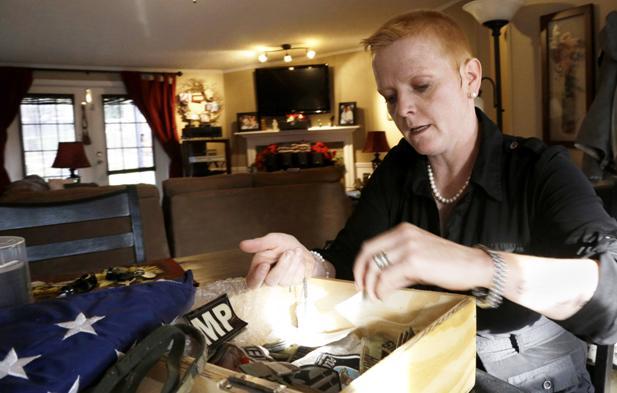
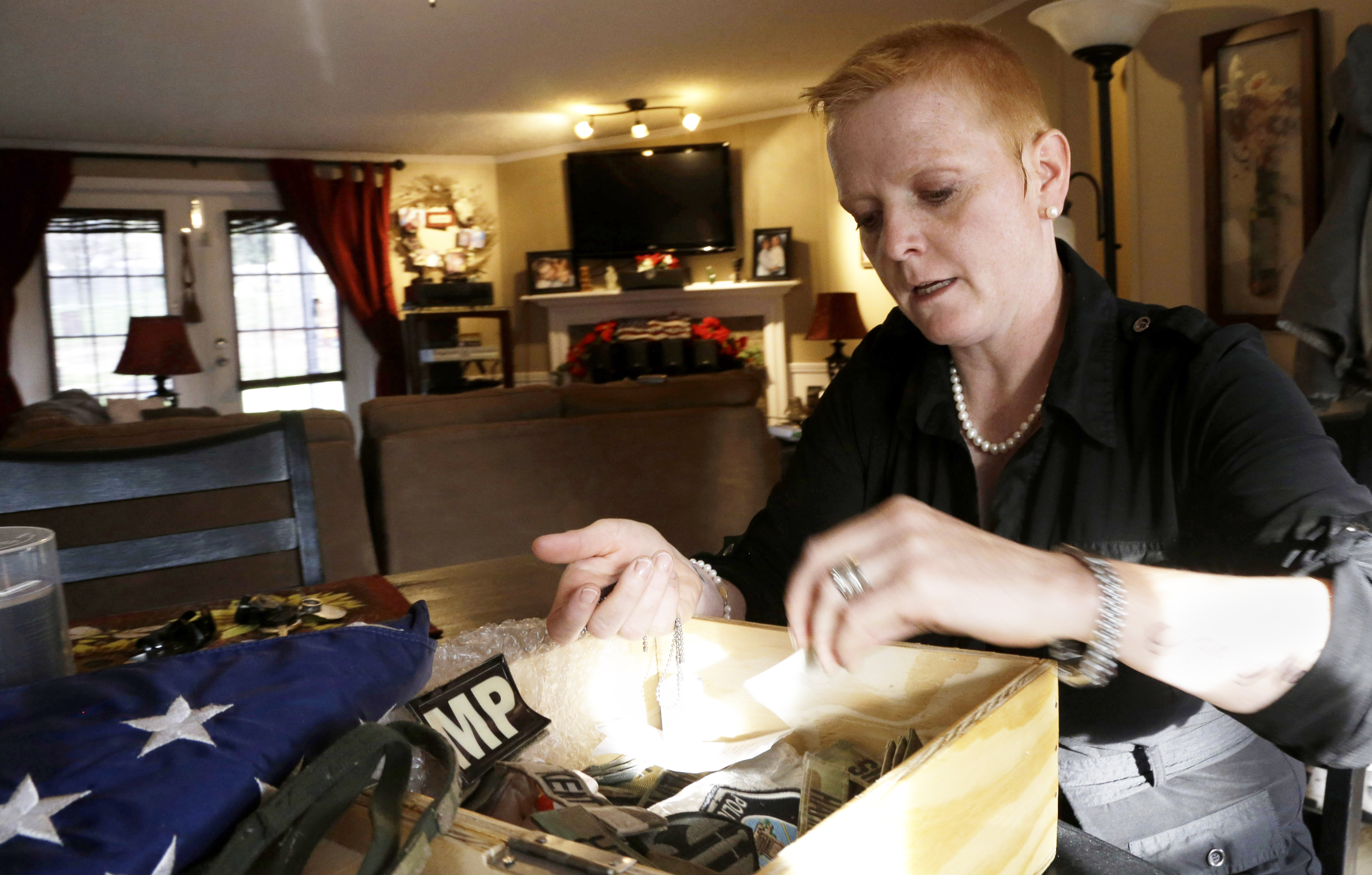
 Tracy Dice Johnson looks through a “widow’s box” that platoon mates of her wife prepared during the service they had for their fallen comrade. When her wife was killed in Afghanistan in 2012, Dice Johnson, a North Carolina National Guardswoman, heard about it from her sister-in-law. Although Donna Johnson had listed Dice as her next-of-kin, Army casualty officers informed Johnson’s mother of her death first because of a federal law that prohibits the U.S. government from recognizing same-sex unions.
The death certificate read “single,” even though the fallen soldier was married.
When it came time to inform the next of kin, casualty officers did not go to the widow’s door in North Carolina, nor did she receive the flag that draped the casket of her beloved, a 29-year-old National Guard member killed by a suicide bomber in Afghanistan.
Because federal law defines marriage as the union of a man and a woman, the military did not recognize the relationship of Army Sgt. Donna R. Johnson and Tracy Dice Johnson at all, rendering Johnson ineligible for the most basic survivor benefits, from return of the wedding ring recovered from the body to a monthly indemnity payment of $1,215.
“You cannot imagine the pain, to actually be shut out,” said Dice Johnson, an Army staff sergeant who survived five bomb explosions during a 15-month tour in Iraq. “Not only is one of their soldiers being disrespected. Two of them are being disrespected.”
As the Supreme Court prepares to consider the constitutionality of the Defense of Marriage Act, gay marriage advocates are focusing attention on the way they say the law dishonors gay service members and their spouses, who are denied survivor payments, plots in veterans’ cemeteries, base housing and a host of other benefits that have been available to opposite-sex military couples for generations.