
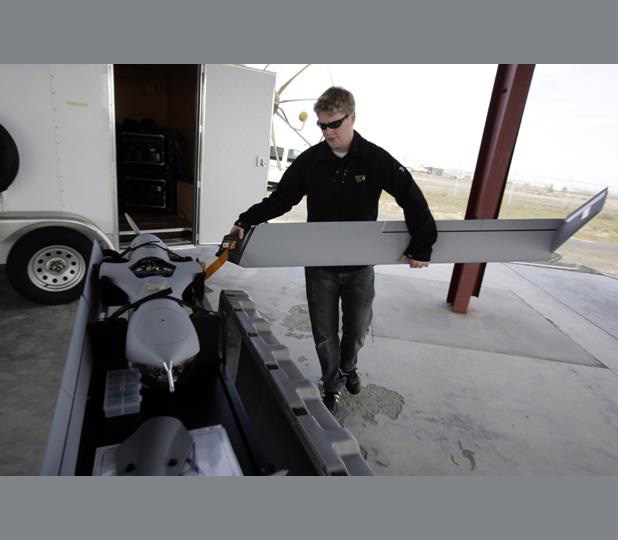
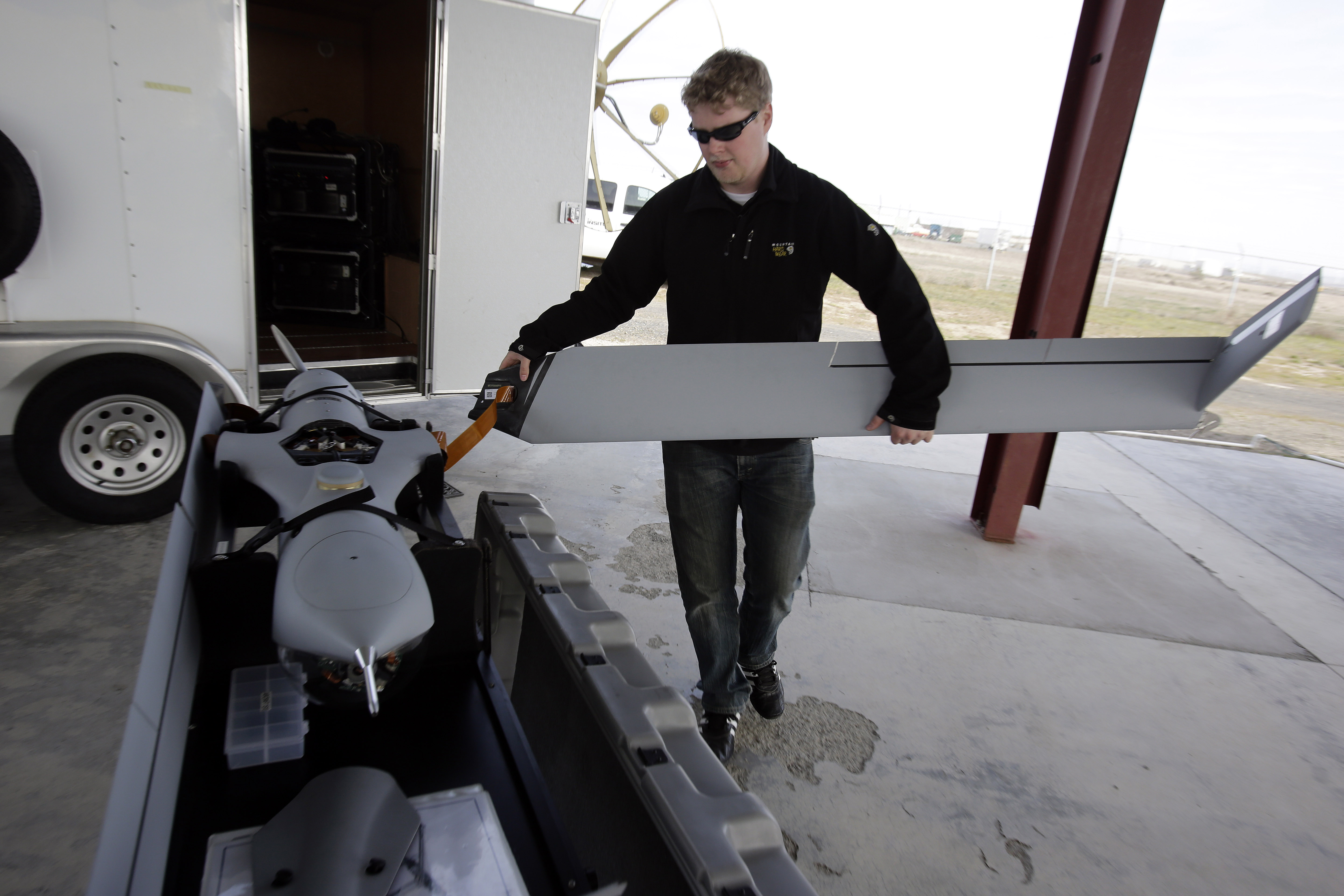
 Flight test pilot Alex Gustafson dismantles an Insitu ScanEagle unmanned aircraft after a flight in Arlington, Ore. It’s a good bet that in the not-so-distant future aerial drones will be part of Americansí everyday lives, performing countless useful functions. A far cry from the killing machines whose missiles incinerate terrorists, these generally small unmanned aircraft will help farmers more precisely apply water and pesticides to crops, saving money and reducing environmental impacts. They’ll help police departments find missing people, reconstruct traffic accidents and act as lookouts for SWAT teams. They’ll alert authorities to people stranded on rooftops by hurricanes, and monitor evacuation flows.
WASHINGTON – The dawn of the age of aerial civilian drones is rich with possibilities for people far from the war zones where they made their devastating mark as a weapon of choice against terrorists.
The unmanned, generally small aircraft can steer water and pesticides to crops with precision, saving farmers money while reducing environmental risk. They can inspect distant bridges, pipelines and power lines, and find hurricane victims stranded on rooftops.
Drones – some as tiny as a hummingbird – promise everyday benefits as broad as the sky is wide. But the drone industry and those eager to tap its potential are running headlong into fears the peeping-eye, go-anywhere technology will be misused.
Since January, drone-related legislation has been introduced in more than 30 states, largely in response to privacy concerns. Many of the bills would prevent police from using drones for broad public surveillance or to watch individuals without sufficient grounds to believe they were involved in crimes.
Stephen Ingley, executive director of the Airborne Law Enforcement Association, says resistance to the technology is frustrating. Drones “clearly have so much potential for saving lives, and it’s a darn shame we’re having to go through this right now,” he said.