
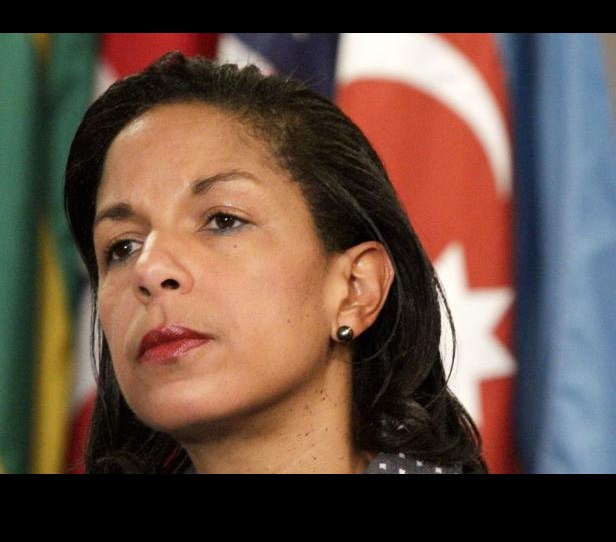
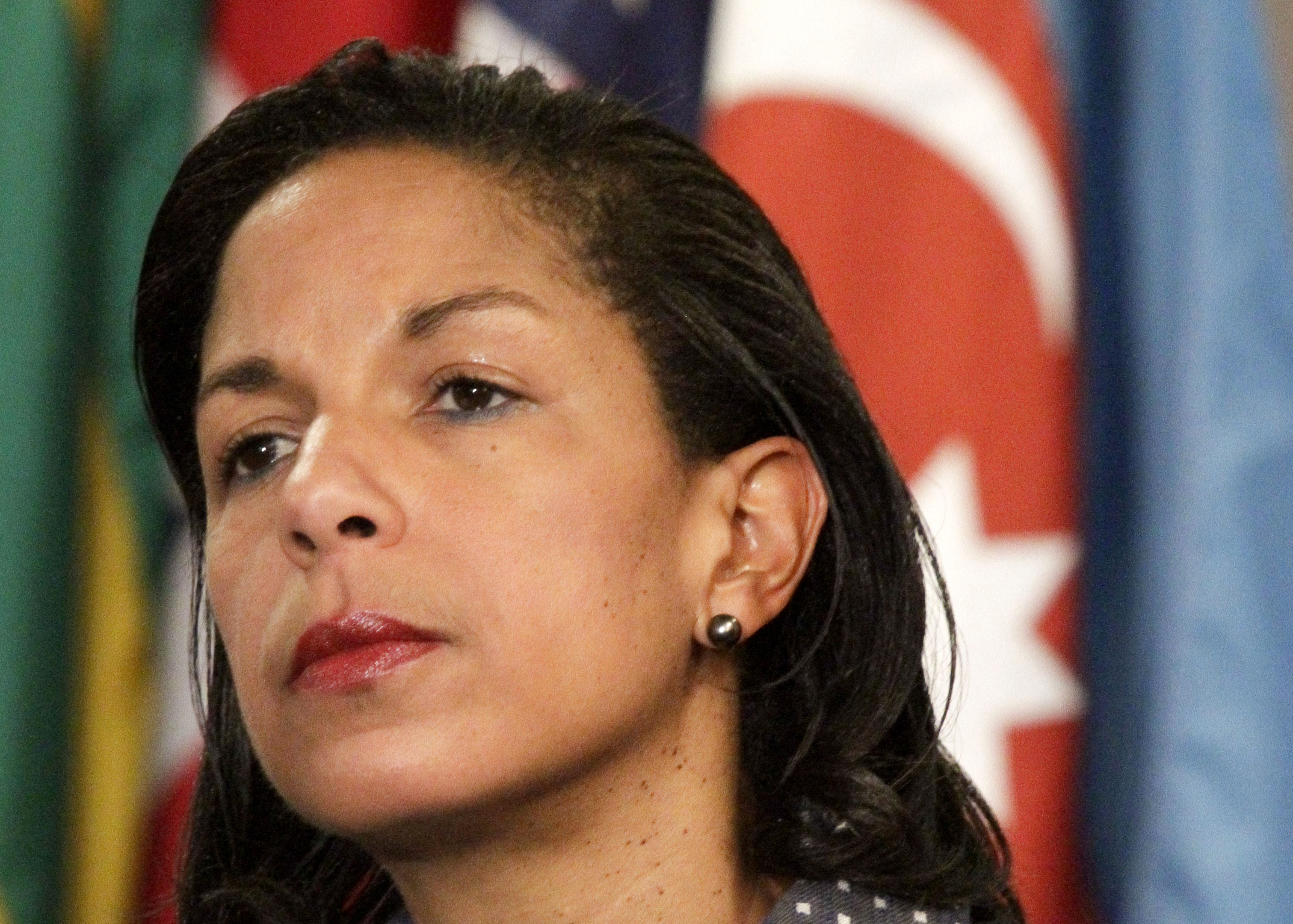
 Ambassador to the U.N. Susan Rice listens during a news conference at the U.N. Senior State Department officials pressed for changes in the talking points that U.N. Ambassador Susan Rice used after the deadly attack on the U.S. diplomatic mission in Libya last September, expressing concerns that Congress might criticize the Obama administration for ignoring warnings of a growing threat in Benghazi.
WASHINGTON – Political considerations influenced the talking points that U.N. Ambassador Susan Rice used five days after the deadly Sept. 11 assault in Benghazi, Libya, with State Department and other senior administration officials asking that references to terror groups and prior warnings be deleted, according to department emails.
The latest disclosures Friday raised new questions about whether the Obama administration tried to play down any terrorist factor in the attack on a diplomatic compound just weeks before the November presidential election. Ambassador Chris Stevens and three other Americans were killed when insurgents struck the U.S. mission in two nighttime attacks.
The White House has insisted that it made only a “stylistic” change to the intelligence agency talking points from which Rice suggested on five Sunday talk shows that demonstrations over an anti-Islamic video devolved into the Benghazi attack.
Numerous agencies had engaged in an email discussion about the talking points that would be provided to members of Congress and to Rice for their public comments. In one email, then-State Department spokeswoman Victoria Nuland worried about the effect of openly discussing earlier warnings about the dangers of Islamic extremists in Benghazi.
Nuland’s email said such revelations “could be abused by members of Congress to beat the State Department for not paying attention to (central intelligence) agency warnings,” according to a congressional official who reviewed the 100 pages of emails.