
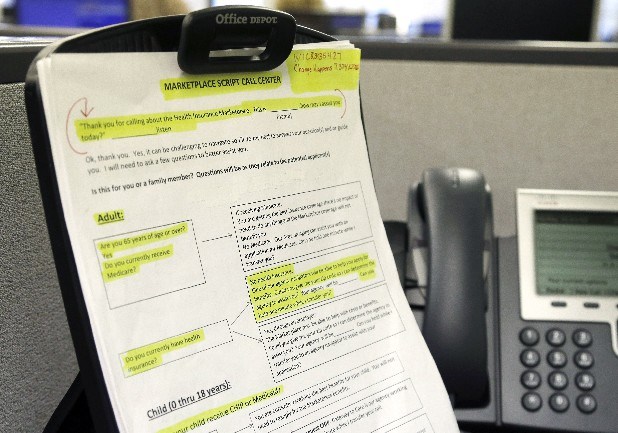
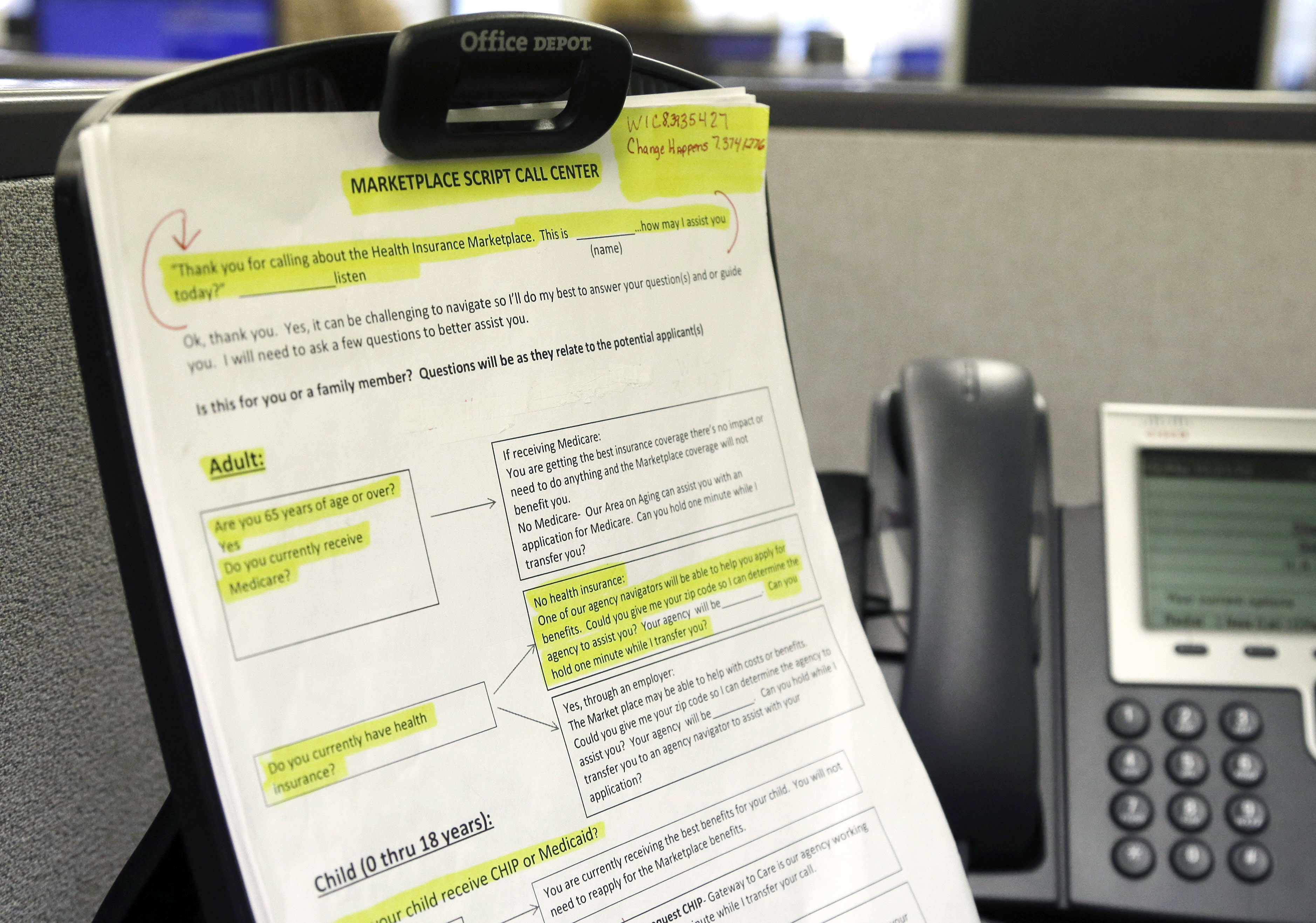
 A script for handling calls about the new health insurance program rests beside a phone at a call center in Houston. The city is providing office space, laptops and cellphones for workers reaching out to the uninsured, and setting up online enrollment in city-owned buildings. The seven-person call center partly funded by the city fields questions about the program, which aims to register recipients by Dec. 15.
HOUSTON – The scene in a city-owned building may look like a hurricane has swept through Houston: Nurses giving vaccine shots, people scurrying around with files and papers and officials leaning over computers helping bleary-eyed parents fill out forms as their children munch on free pretzels.
But this is no hurricane. Instead, it is Houston’s offensive to reach more than 1 million people across 600 square miles who don’t have health insurance and connect them with the new federal health insurance program that began accepting applications this month. The push is happening in one of the nation’s reddest states, an example of the gap between the vitriolic political opposition to President Barack Obama’s signature initiative in some conservative bastions and the actual response to it by local officials.
“This is the same strategy we use to respond to hurricanes and public health disasters,” said Stephen Williams, director of Houston’s Department of Health and Human Services, who has organized an effort to sign up as many uninsured people as possible.
Republican governors and legislatures in about two dozen states are refusing cooperation with the roll-out of the health overhaul, but some local governments are trying to fill the gap, working with nonprofit organizations, hospitals and churches leading the outreach.
After receiving only about $600,000 in federal grant money, Williams put together a 13-county coordinating group with other organizations so they could pool funds, resources and data. He also invested about $600,000 from his own budget.