

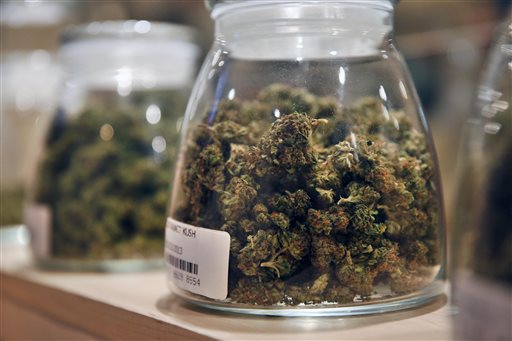
 In this Oct. 23, 2013, photo, marijuana is displayed at the River Rock dispensary in Denver.
DENVER – Colorado’s hearty embrace of a 25 percent marijuana tax this week could prove a turning point for legalization backers. They’ve long argued that weed should come out of the black market and contribute to tax coffers instead of prison populations.
But it’s far too soon to say how much revenue the marijuana taxes in Colorado and Washington will actually produce when retail sales begin next year.
A tax windfall in the two states could win over skeptical states that may be interested in pot legalization but wonder about costs of regulation. On the other hand, if many pot smokers in Colorado and Washington stay in the black market to avoid taxes, supporters could lose a major plank of their longstanding argument that legalization will take money from criminal cartels and benefit government programs.
“It’s a crucial question,” said Sam Kamin, a University of Denver law professor who served on a panel that helped write Colorado’s marijuana regulations. “There’s this premise that marijuana legalization can be a net-net win, spending less money putting people in prison and seeing a tax benefit from the sale of marijuana. Voters are going to expect to see both.”
Colorado’s vote Tuesday showed it wants the benefits, even in a tax-adverse state that typically rejects proposed taxes. The pot tax question – on an excise and special sales tax that could add more than 25 percent to the sales price of weed – passed by nearly 2-to-1.