
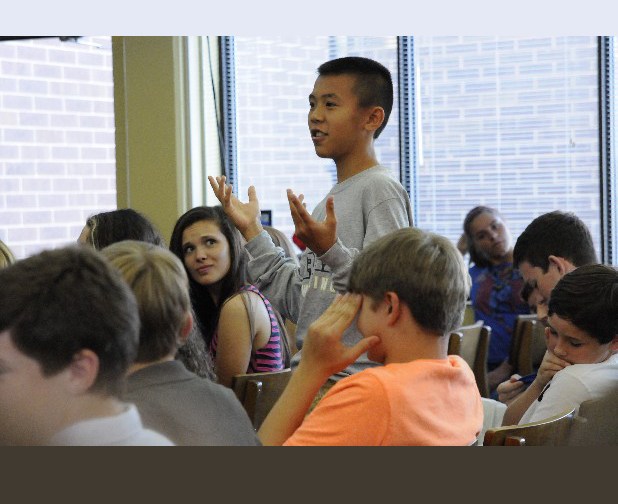
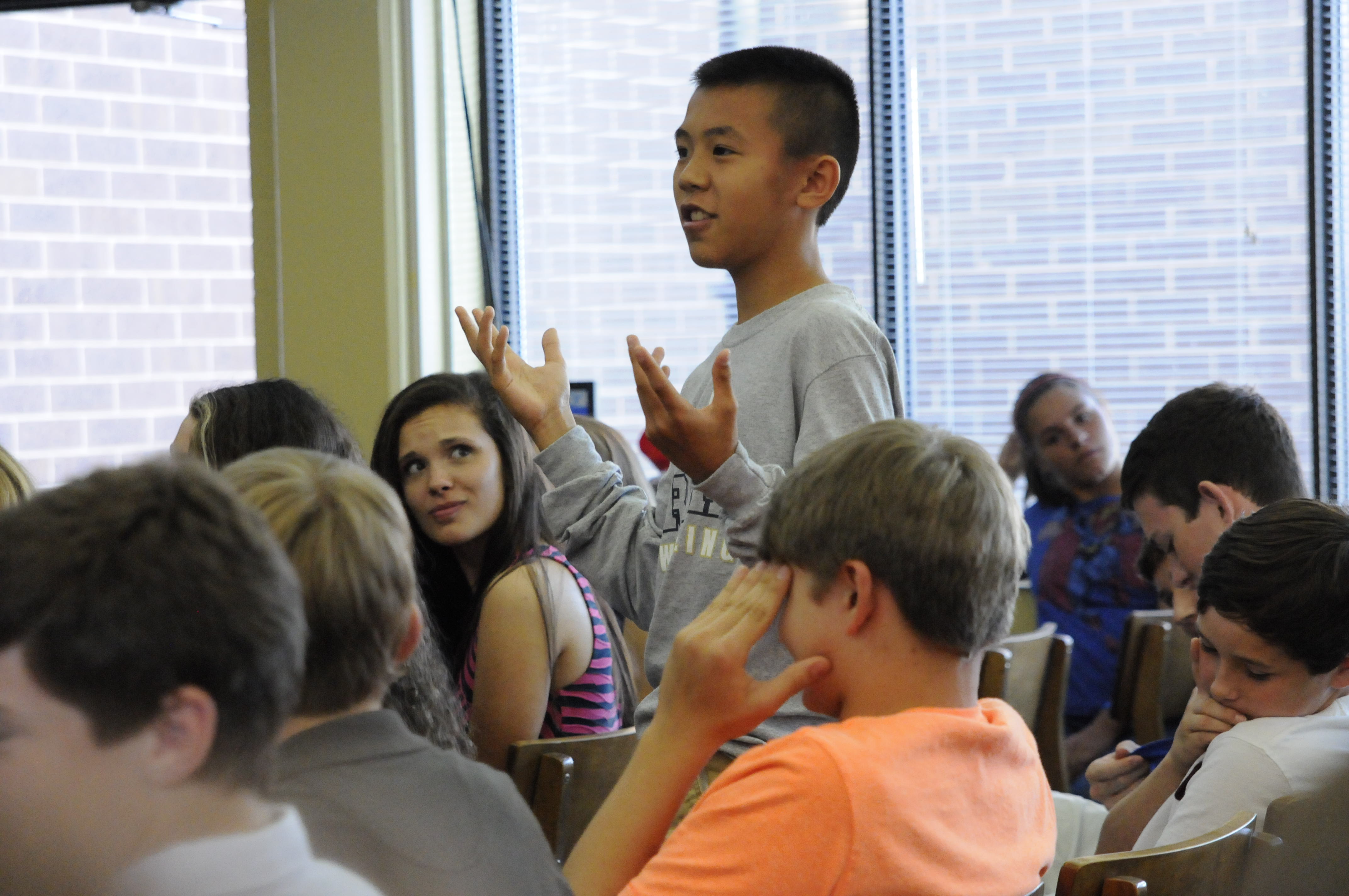
 Soddy-Daisy High School freshman Chris Lee addresses questions from a panel Monday during a discussion about forgiveness of war crimes. The panel and the students recently read The Sunflower, a book in which a dying Nazi soldier asks a concentration camp prisoner for forgiveness.
 Soddy-Daisy High freshman Corey Markus, left, responds to questions about forgiveness at a panel discussion Monday. The panel and the students recently read The Sunflower, a book in which a dying Nazi soldier asks a concentration camp prisoner for forgiveness.
Things got deep during a book discussion in a Monday English class at Soddy-Daisy High School.
The conversation between two classes of ninth-graders and a panel of local leaders went far beyond the plot, theme and narrative arc of Simon Wiesenthal’s “The Sunflower: On the Possibilities and Limits of Forgiveness.” In the book, a dying Nazi solider brings Wiesenthal, a concentration camp prisoner, to his deathbed and asks forgiveness for crimes against the Jews. Wiesenthal says nothing and leaves the soldier’s bedside, but later questions his own response.
Aside from the author’s story, the book contains essays from various religious and social leaders on whether forgiveness should have been granted. And on Monday, students heard differing views from a priest, a news anchor, the Chattanooga mayor, a lawyer and academics. The adults and the students took turns weighing in on the role of human forgiveness. But the conversation eventually touched on everything from mob mentality to religious beliefs to bullying.
“You forgive,” said Monsignor Al Humbrecht, of Soddy-Daisy’s Holy Spirit Catholic Church. “But we have to remember so that we don’t repeat those same mistakes.”
Lauren Ingraham, a professor of English at the University of Tennessee at Chattanooga, told the students that life is really a series of small daily choices. The Nazi in the story took many incremental steps down the wrong path before committing atrocities, she said, and that’s why it’s important to always remain vigilant.