
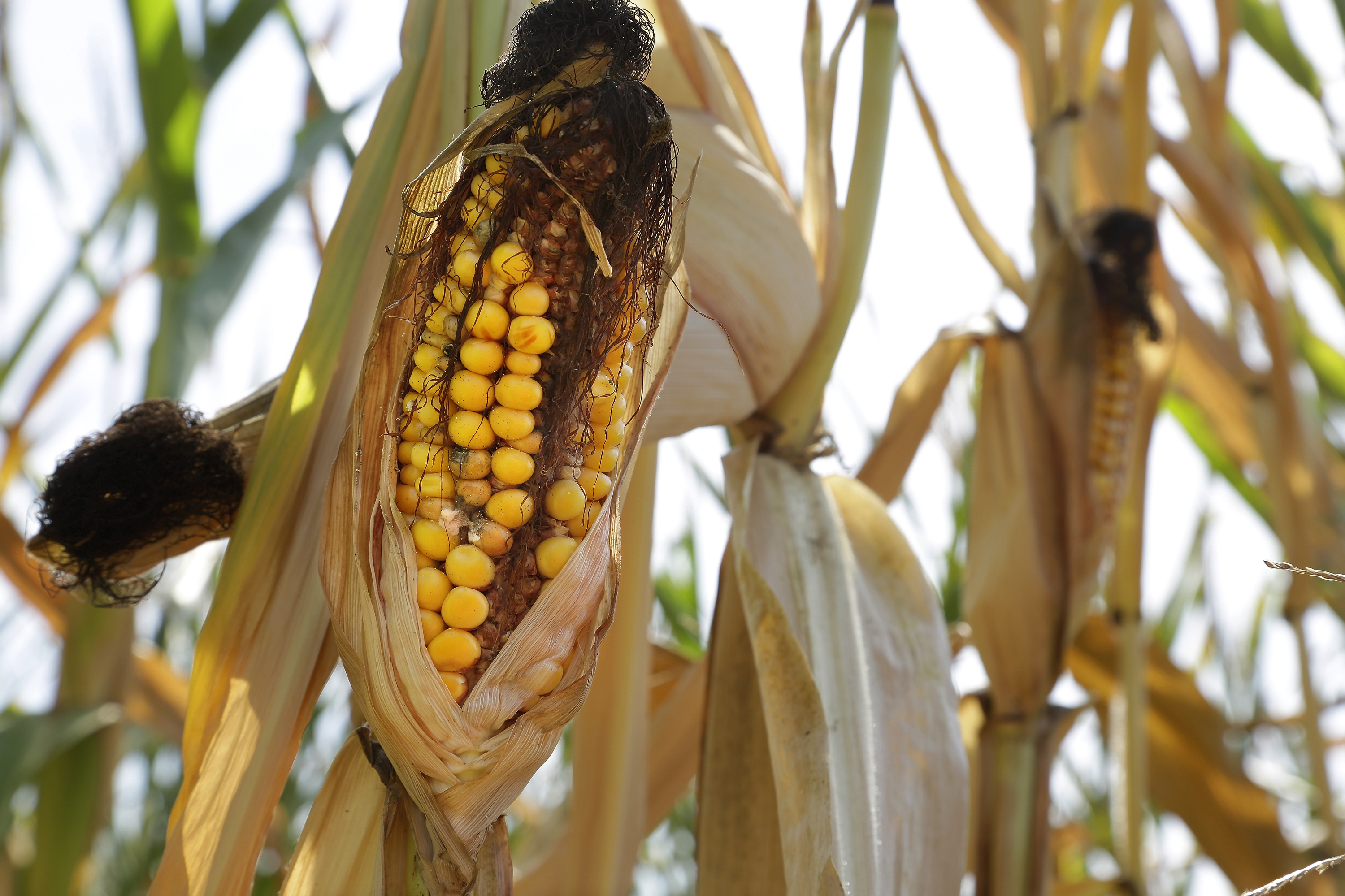
 An ear of corn is blackened in the sun during a heat wave in Farmingdale, Ill. Researchers with the United States and British governments concluded Thursday that climate change had made these events more likely: U.S. heat waves, Superstorm Sandy flooding, shrinking Arctic sea ice, drought in Europe’s Iberian peninsula, and extreme rainfall in Australia and New Zealand.
WASHINGTON – A study of a dozen of 2012’s wildest weather events found that man-made global warming increased the likelihood of about half of them, including Superstorm Sandy’s devastating surge and the blistering U.S. summer heat.
The other half — including a record wet British summer and the U.S. drought last year — simply reflected the random freakiness of weather, researchers with the U.S. National Oceanic and Atmospheric Administration and the British meteorological office concluded in a report issued Thursday.
The scientists conducted thousands of runs of different computer simulations that looked at various factors, such as moisture in the air, atmospheric flow, and sea temperature and level.
The approach represents an evolution in the field. Scientists used to say that individual weather events — a specific hurricane or flood, for example — cannot be attributed to climate change. But recently, researchers have used computer simulations to look at extreme events in a more nuanced way and measure the influence of climate change on their likelihood and magnitude.
This is the second year that NOAA and the British meteorology office have teamed up to look at the greenhouse gas connection to the previous year’s unusual events.