
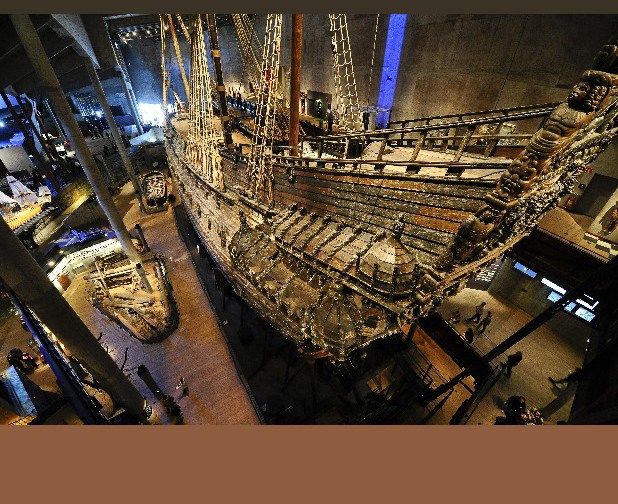
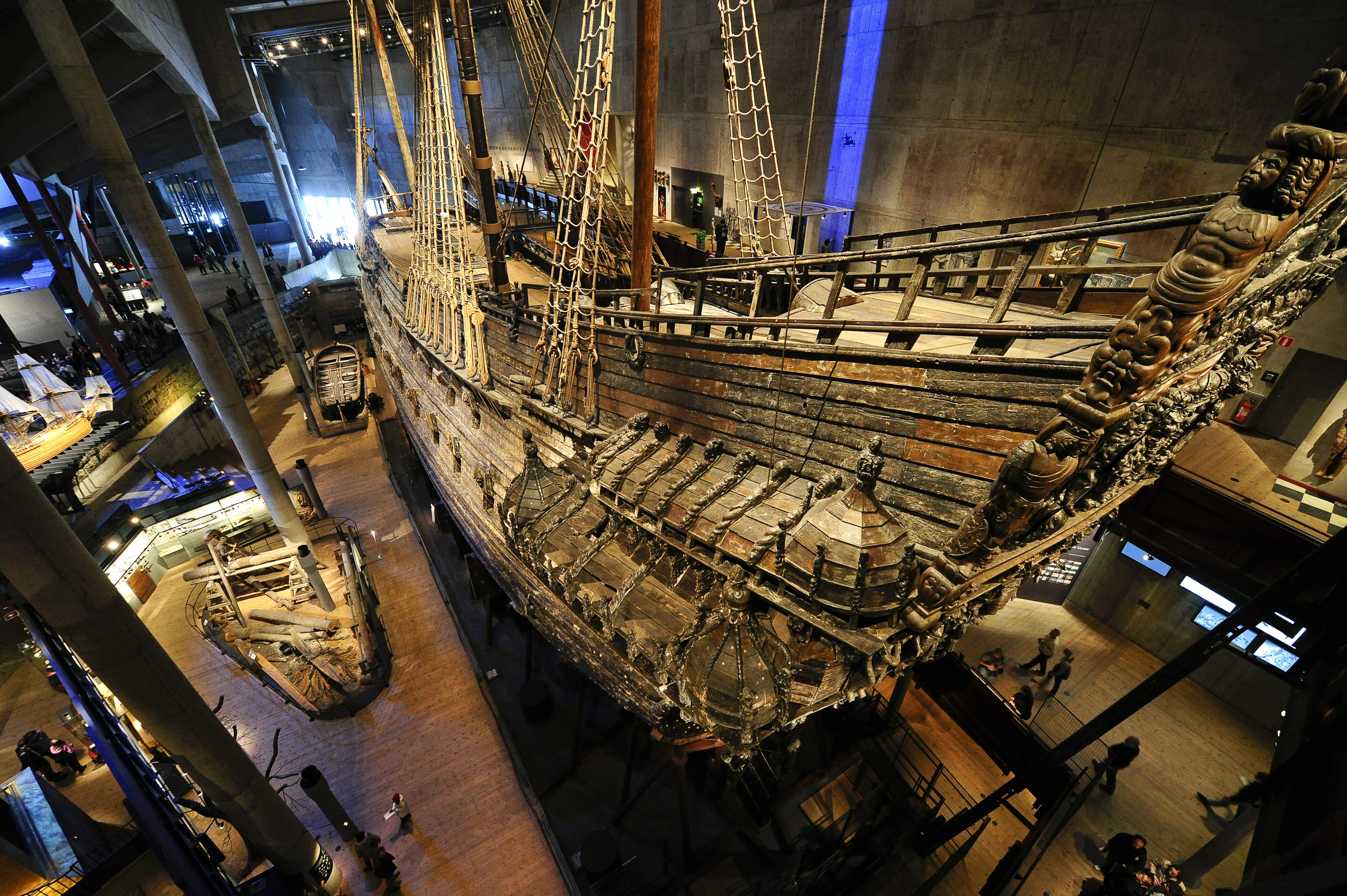
 The royal warship Vasa is seen at the Vasamuseet museum in Stockholm. Long before the Costa Concordia capsized in Italy, salvagers fished out ships from the depths of the ocean with bold and innovative feats of engineering. The Vasa. The top-heavy crown jewel of the Swedish navy sank on its maiden voyage in 1628. More than three centuries later the hull was raised from a depth of 105 feet in the Stockholm harbor, nearly intact. Using steel cables drawn through tunnels in the seafloor, the wreck was pulled to the surface in a series of delicate lifts over two years. The Vasa is now housed in a museum in Stockholm where some 1 million visitors a year admire its intricate wooden sculptures.
STOCKHOLM – Long before the Costa Concordia capsized in Italy, salvagers fished out ships from the depths of the ocean with bold and innovative feats of engineering. Here are some of the most improbable salvage operations in maritime history:
SCAPA FLOW
At the end of World War I, Germany scuttled its High Seas Fleet to prevent it from falling into British hands. Stunned British sailors watched dozens of German warships sink at the Royal Navy’s Scapa Flow base in Orkney, where they had been interned.
The British navy didn’t want to raise them, but a scrap-metal dealer named Ernest Cox set in motion the biggest salvage operation in history. More than 30 ships were raised in the 1920s and ’30s, including the 30,000-ton battle-cruiser Hindenburg. Cox refloated many ships by patching them up to make them air-tight and then pumping air into the wrecks so that they would surface — a method still in use today.
PEARL HARBOR