

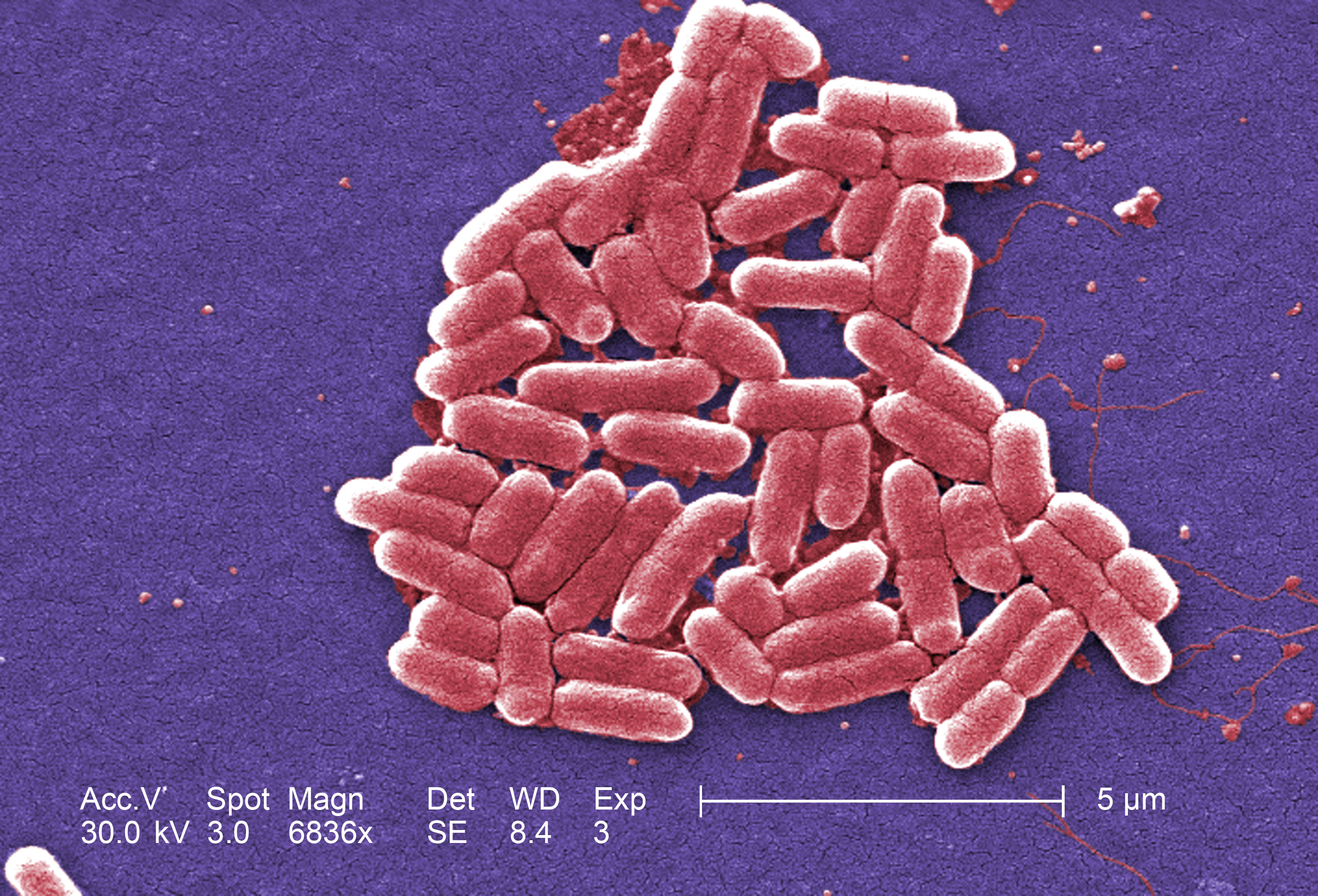
 This is a photo of the bacteria that causes hemolytic uremic syndrome, a rare disease that follows e-coli-related illness and can cause anything from blindness to kidney failure and even death.
Photo from Centers for Disease Control and Prevention
 Amber De Vaux Madaris holds her daughter, Emma Grace Madaris.
SYMPTOMS OF HUSAround 5-10 percent of those who are diagnosed with Shiga toxin-producing E coli infections develop a potentially life-threatening complication known as hemolytic uremic syndrome. Clues that a person is developing HUS include:• Decreased frequency of urination.• Feeling very tired.• Loss of pink color in cheeks and inside the lower eyelids.Persons with HUS should be hospitalized because their kidneys may stop working and they may develop other serious problems. Most persons with HUS recover within a few weeks, but some suffer permanent damage or die.Source: U.S. Centers for Disease Control and PreventionA RUN FOR EMMA GRACEWhat: A one-mile “color run” to raise money for the Madaris family. Participants will wear white clothes and get splattered with corn starch tinted with food coloring as they run by.When: 8 a.m. SaturdayWhere: Saddle Ridge Elementary and Middle School, 9858 North Highway 27, Rock Spring, GA 30739Cost: $10 to run, $12 for T-shirts and $5 for sunglasses. Registration will begin at 7 a.m.
Amber De Vaux Madaris had never heard of hemolytic uremic syndrome, a rare consequence of food poisoning that is the single biggest cause of acute kidney failure in children.
But Madaris knows about it now. She and her husband, Dustin Madaris, have spent almost all of September living at Children’s Hospital at Erlanger to be near their 4-year-old daughter, Emma Grace, who developed the syndrome after an E. coli infection.
“We haven’t left her side,” said Amber Madaris, of Chickamauga, Ga. “It’s been a big nightmare.”
Emma Grace is improving now, but she spent 22 days in intensive care. Both her kidneys shut down, requiring dialysis. She also needed blood transfusions, her mother said, and had a feeding tube inserted into her stomach.