
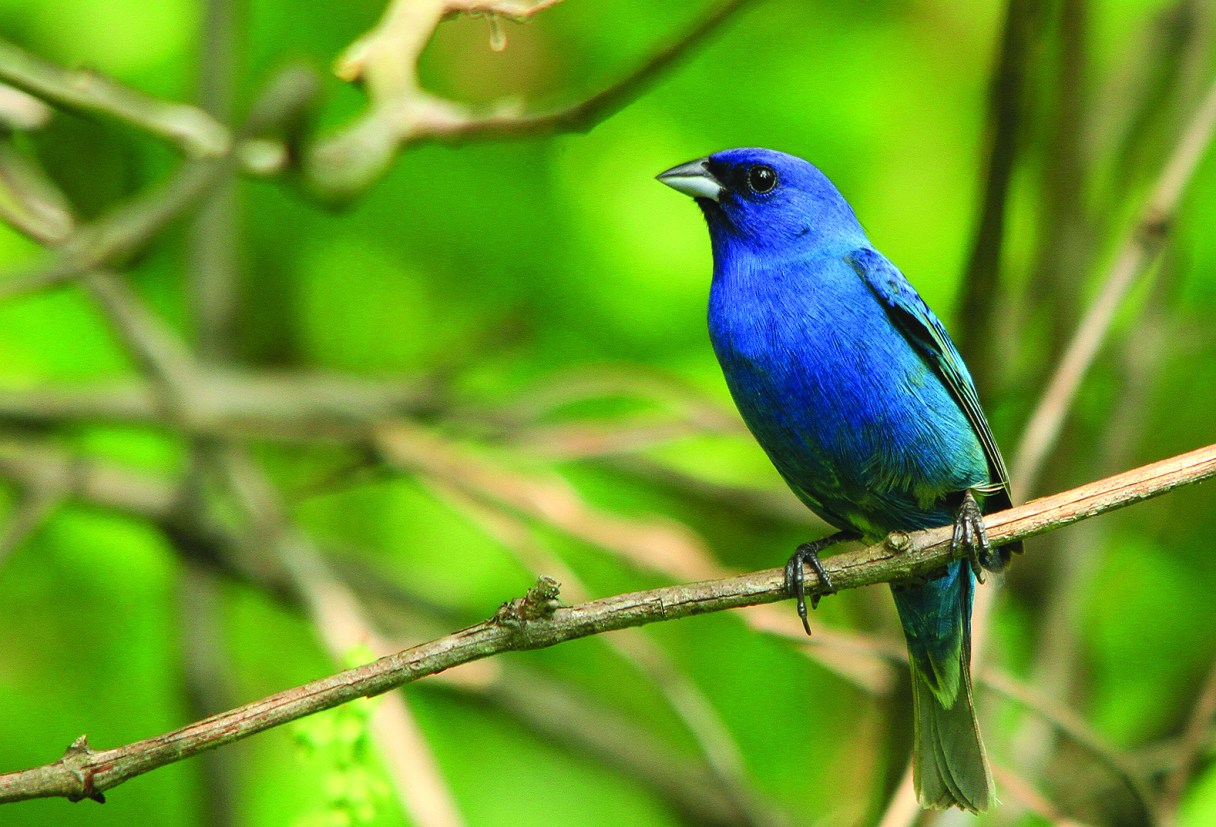
Something like a sapphire flits past your binoculars. You hear the chirp of a canary, or so you think. But this bird is something all its own. It’s an indigo bunting, and it’s singing its way into Tennessee this month for its summer vacation-also known as mating season.
Wild Bird Unlimited’s Mel Vandergriff says you’ll want to keep an eye out for these birds-the male indigo bunting is a treat to see during breeding season because of its jewel-like color. Deep indigo feathers on its head give way to cerulean and black plumage along the body to create a stunning image. And if you’re watching in the month of May, you’re more likely to hear its cheerful songs.
A long-distance migratory bird, the indigo bunting comes our way from southern Florida and northern South America, where it weathers the winter months. The cool part is that this sojourner gets here by following the stars. It is one of many bird species whose internal clock can adjust its angle of orientation to a star, even as the star drifts across the night. It’s like your GPS, but better.
Even though they are night travelers, you can see indigo buntings during the day if you know where to look and how to attract them. If you are venturing outside of your home base to find the indigo bunting, look for it along rural roads. This bird nests in brushy and weedy areas on the edges of woods and fields, and you may see it hanging out on telephone lines nearby such areas.
If you want the bird to come to you, the Cornell Lab of Ornithology suggests placing small seeds like thistle or nyjer in your feeder. Mealworms may attract indigo buntings as well, as their diet during the summer mainly consists of spiders and insects.
However you are able to find it this summer, you will see that the indigo bunting is not your average blue bird.