
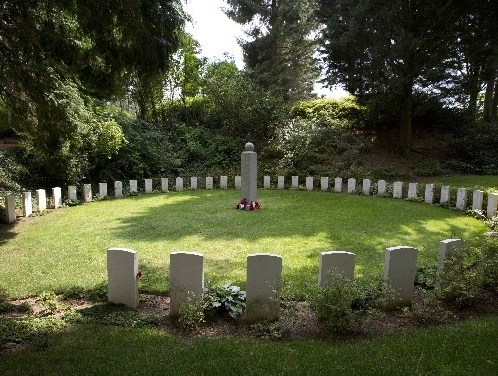
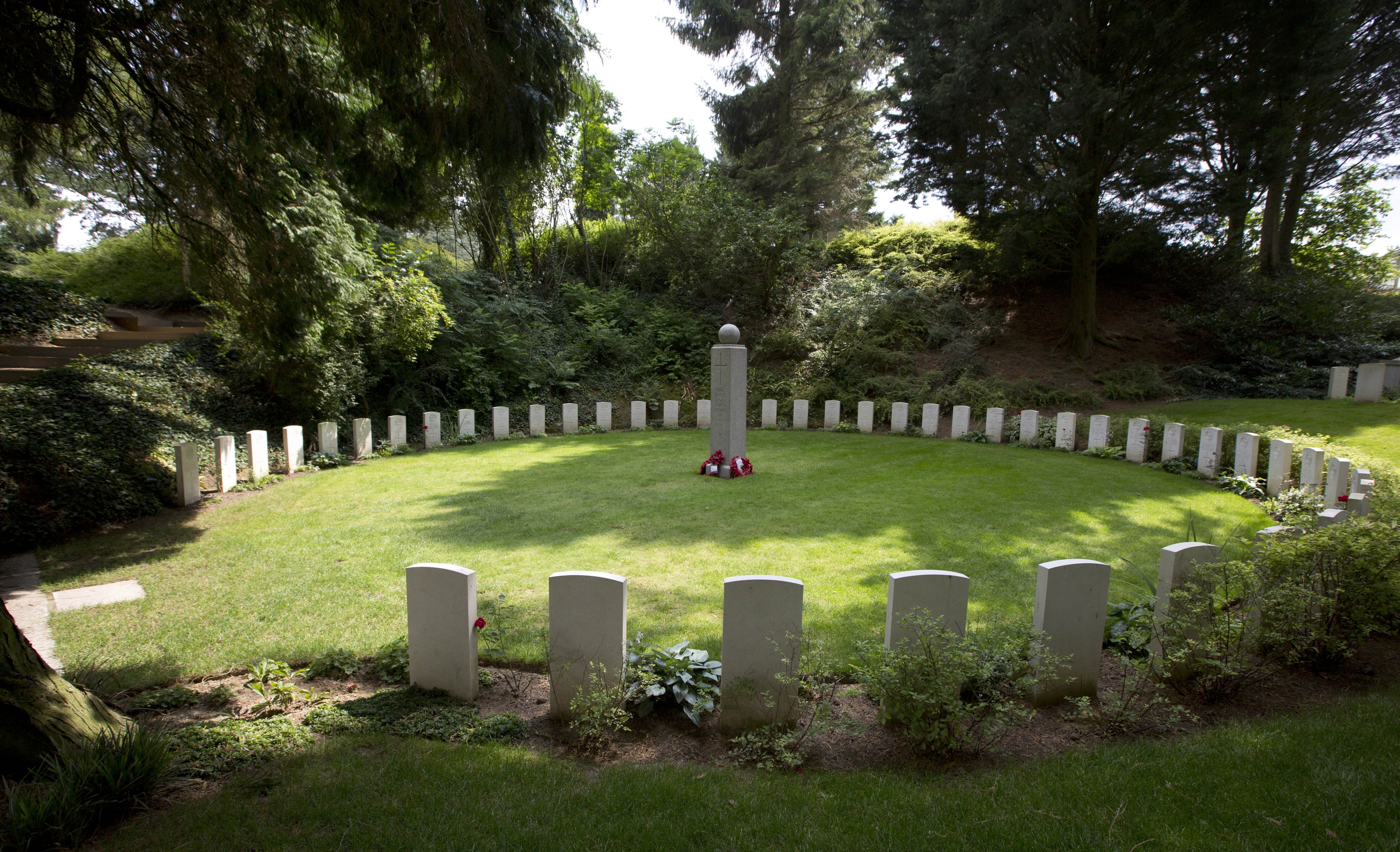
 World War I graves surround an obelisk at the Saint Symphorien Cemetery near Mons, Belgium. The cemetery will be the site of one of the first commemorative events surrounding the 100th Anniversary of the outbreak of World War I.
SAINT-SYMPHORIEN, Belgium – British Pvt. John Parr set off on his reconnaissance bike on the lookout for German troops amid the rolling farmland and woods south of Brussels in August 1914. It was the last anyone saw of ‘Ole Man’ Parr, the ironic nickname he won due to his tender age of 17. He became known as the first Commonwealth soldier to die on the Western Front of World War I, likely killed by German gunfire.
Another British private, George Ellison, was already moving to face the Germans in southern Belgium for the first battle of the two empires. He went on to survive the horrific slaughter of the Somme and Passchendaele and came back to the Belgian pastures, where he was shot and killed on Nov. 11, 1918 — the last day of the war.
Now, Parr and Ellison lie separated by a few footsteps – and 9 million dead soldiers over four years – in the cemetery of Saint Symphorien. The jarring contrast of distance and death count symbolizes that, in the early August days of 1914, few knew what hell the great powers of the age unleashed when they declared war.
“They didn’t, most of them, foresee what the war would turn into,” said Oxford University historian Margaret MacMillan. “And if they had known what the war was going to be, four years of huge slaughter, consumption of resources, destruction in many cases of their own societies, they might have thought differently.”
Nobody foresaw the cataclysm that would befall the world the day of Aug. 4 when the conflict erupted in full force with the German invasion of Belgium and the British declaration of war. Both sides believed the war would be over by Christmas. Instead, a battlefront scar would slowly and agonizingly rip across Europe, ravage whole societies and millions of families. It produced a moral wasteland in Germany that would become fertile ground for the rise of Nazism. Four empires would disappear.