
Saturday, November 14, 2026Nov 14

Replant after wildfire or let nature take over?

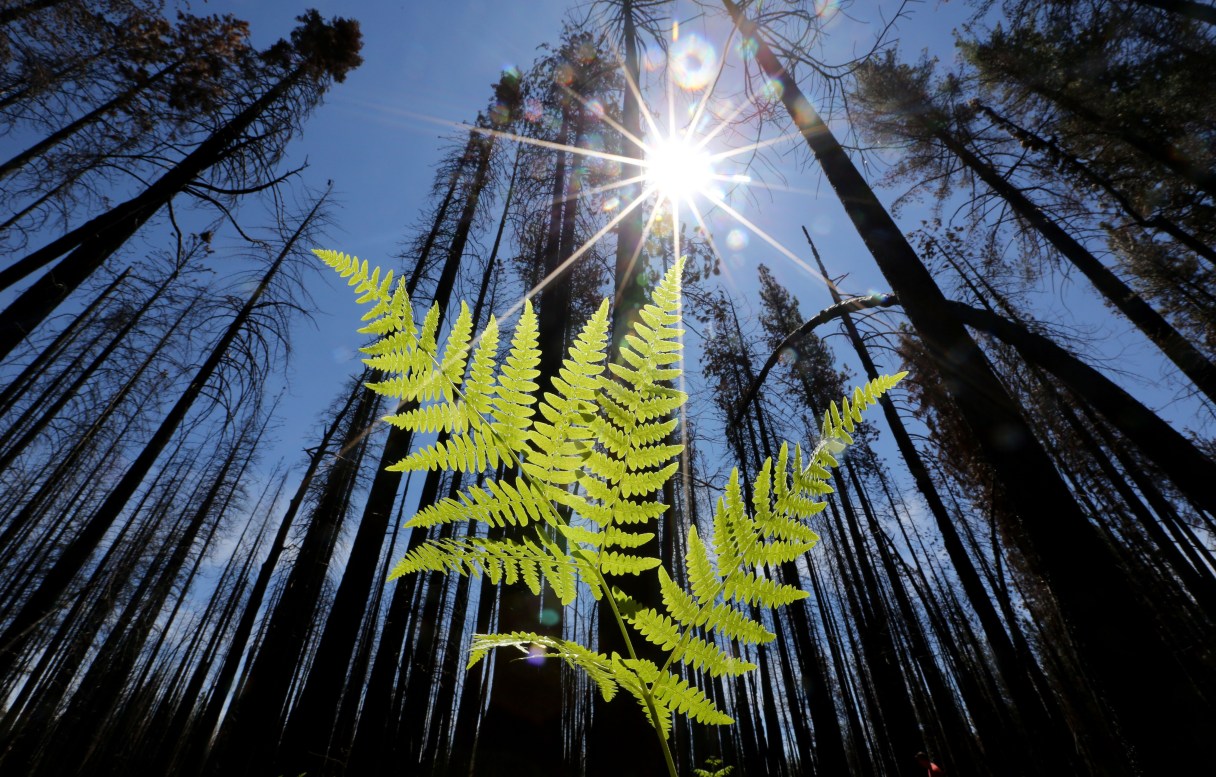
In this Friday, July 25, 2014 photo, vegetation grows among trees burned by the Rim Fire, near Groveland, Calif.  Nearly a year after the Rim Fire charred thousands of acres of forest in California's High Sierra, a debate rages over what to do with the dead trees, salvage the timber to pay for forest replanting and restoration or let nature take its course. Environmentalist say that the burned trees and new growth beneath them create vital habitat for dwindling bird such as spotted owls, and black-backed woodpeckers and other wildlife. (AP Photo/Rich Pedroncelli)
In this Friday, July 25, 2014 photo, vegetation grows among trees burned by the Rim Fire, near Groveland, Calif. Nearly a year after the Rim Fire charred thousands of acres of forest in California's High Sierra, a debate rages over what to do with the dead trees, salvage the timber to pay for forest replanting and restoration or let nature take its course. Environmentalist say that the burned trees and new growth beneath them create vital habitat for dwindling bird such as spotted owls, and black-backed woodpeckers and other wildlife. (AP Photo/Rich Pedroncelli)

GROVELAND, Calif. (AP) – Nearly a year since a historic wildfire charred a huge swath of California’s High Sierra, debate rages over what to do with millions of dead trees left in its wake: truck them to lumber mills or let nature to take its course?

One side argues that the blackened dead trees and new growth beneath them already sprouting to life create vital habitat for dwindling birds such as spotted owls and black-backed woodpeckers. Others say time is running out on a golden opportunity to salvage timber to pay for replanting and restoring the forest.

It’s a classic standoff between environmentalists and supporters of the timber industry, which contends dead trees and brush pose a new fire hazard.

The U.S. Forest Service is expected to unveil its final decision in the coming weeks on how much of the land burned by the wildfire, known as the Rim Fire, can be logged.

“It’s not always possible to please everybody,” said Robert Bonnie, the U.S. Department of Food and Agriculture’s Undersecretary for Natural Resources and Environment. He oversees the Forest Service.