
Monday, November 16, 2026Nov 16

Questions and answers about Lake Erie toxic algae

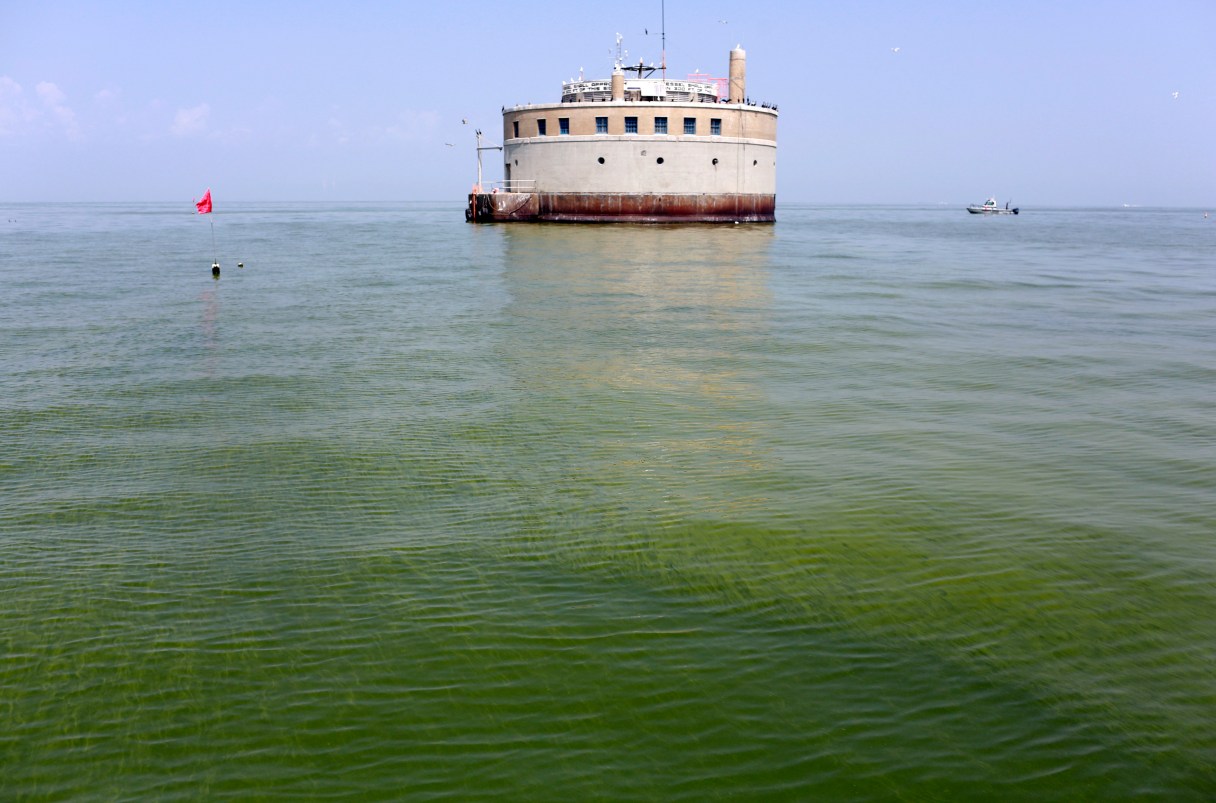
The City of Toledo water intake crib is surrounded by algae, Sunday, Aug. 3, 2014, in Lake Erie, about 2.5 miles off the shore of Curtice, Ohio. More tests are needed to ensure that toxins are out of Toledo's water supply, the mayor said Sunday, instructing the 400,000 people in the region to avoid drinking tap water for a second day. Toledo officials issued the warning early Saturday after tests at one treatment plant showed two sample readings for microcystin above the standard for consumption, possibly because of algae on Lake Erie. (AP Photo/Haraz N. Ghanbari)

Hundreds of thousands of people in Toledo, Ohio, and nearby southeastern Michigan were unable to use tap water from Saturday until Monday morning because of unsafe levels of a contaminant called microcystin in Lake Erie. Here are questions and answers about the situation:

Q. What is microcystin?

A. A toxin produced by microcystis, a type of blue-green algae, or cyanobacteria. Only certain species of blue-green algae form toxins, for reasons that aren’t fully understood.

Q. How dangerous is it?

A. Microcystin can produce hives or blisters from direct contact with the skin. Swallowing it can cause headaches, fever, nausea, vomiting and diarrhea. Large-scale ingestion can damage the liver.