
Thursday, October 29, 2026Oct 29

This story is free to read.

US terrorism database doubles in recent years

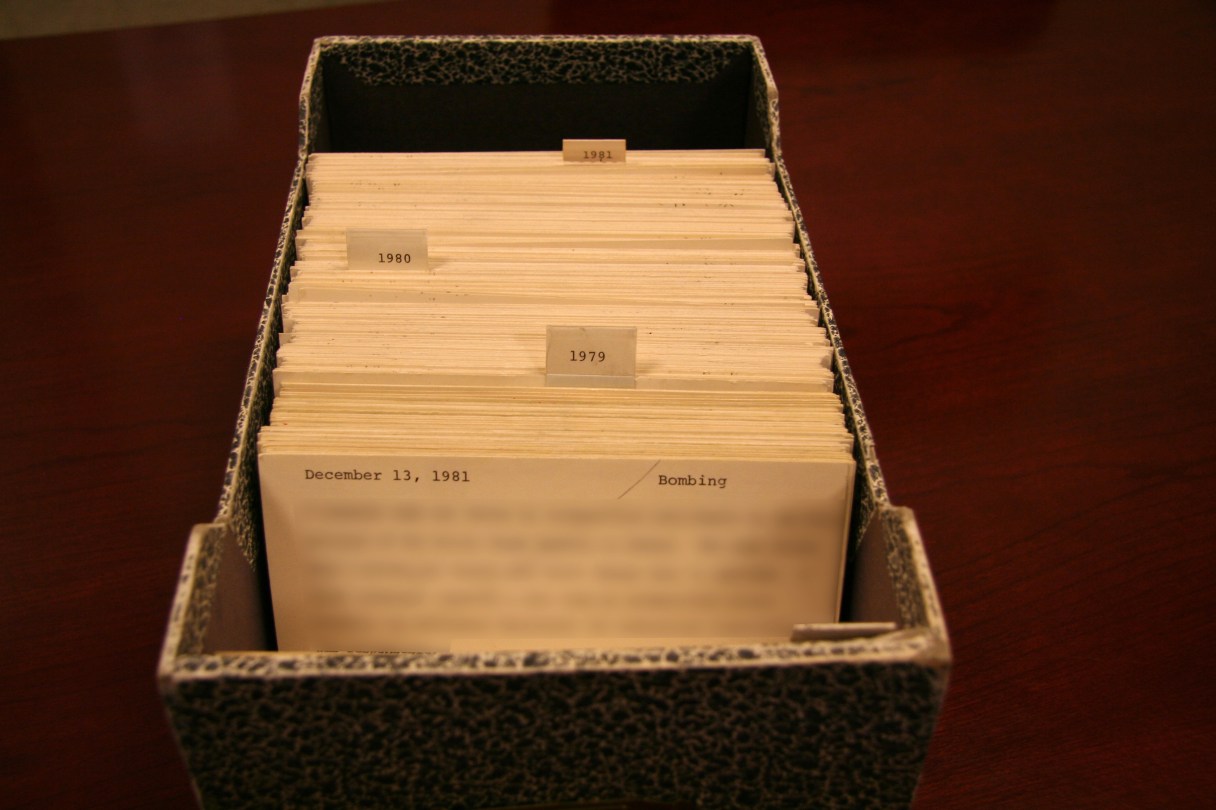
This undated handout photo provided by the National Counterterrorism Center (NCTC) shows the a box a redacted files with names of suspected terrorists. Decades ago, names of suspected terrorists were kept in a rolodex and in notebooks, according to redacted government photographs. The Associated Press has learned that a U.S. government database of known or suspected terrorists doubled in size in recent years. The National Counterterrorism Center says there were 1.1 million people in the database at the end of 2013. Of those, 25,000 are U.S. citizens or legal permanent residents. There were about 550,000 people in the database in March 2010. The Terrorist Identities Datamart Environment, called "TIDE," is a huge, classified database of people who are known to be terrorists, are suspected of having ties to terrorism, or in some cases related to or are associates of known or suspected terrorists. It feeds to smaller lists that restrict peoples' abilities to travel on commercial airlines to or within the U.S. (AP Photo/NCTC)
This undated handout photo provided by the National Counterterrorism Center (NCTC) shows the a box a redacted files with names of suspected terrorists. Decades ago, names of suspected terrorists were kept in a rolodex and in notebooks, according to redacted government photographs. The Associated Press has learned that a U.S. government database of known or suspected terrorists doubled in size in recent years. The National Counterterrorism Center says there were 1.1 million people in the database at the end of 2013. Of those, 25,000 are U.S. citizens or legal permanent residents. There were about 550,000 people in the database in March 2010. The Terrorist Identities Datamart Environment, called "TIDE," is a huge, classified database of people who are known to be terrorists, are suspected of having ties to terrorism, or in some cases related to or are associates of known or suspected terrorists. It feeds to smaller lists that restrict peoples' abilities to travel on commercial airlines to or within the U.S. (AP Photo/NCTC) This undated handout photo provided by the National Counterterrorism Center (NCTC) shows the a box a redacted files with names of suspected terrorists. Decades ago, names of suspected terrorists were kept in a rolodex and in notebooks, according to redacted government photographs. The Associated Press has learned that a U.S. government database of known or suspected terrorists doubled in size in recent years. The National Counterterrorism Center says there were 1.1 million people in the database at the end of 2013. Of those, 25,000 are U.S. citizens or legal permanent residents. There were about 550,000 people in the database in March 2010. The Terrorist Identities Datamart Environment, called "TIDE," is a huge, classified database of people who are known to be terrorists, are suspected of having ties to terrorism, or in some cases related to or are associates of known or suspected terrorists. It feeds to smaller lists that restrict peoples' abilities to travel on commercial airlines to or within the U.S. (AP Photo/NCTC)

WASHINGTON (AP) – A U.S. government database of known or suspected terrorists doubled in size in recent years, according to newly released government figures. The growth is the result of intelligence agencies submitting names more often after a near-miss attack in 2009.

There were 1.1 million people in the database at the end of 2013, according to the National Counterterrorism Center, which maintains the information. About 550,000 people were listed in the database in March 2010.

The Terrorist Identities Datamart Environment, or TIDE, is a huge, classified database of people who are known terrorists, are suspected of having ties to terrorism or in some cases are related to or are associates of known or suspected terrorists. It feeds to smaller lists that restrict people’s abilities to travel on commercial airliners to or within the U.S.

The government does not need evidence linking someone to terrorism in order for the person to be included in the database. This is among the reasons the database and subsequent terror watch lists have been criticized by privacy advocates.

An online publication, The Intercept, on Tuesday reported that 40 percent of people on the terrorism watch list – which is a subset of names in the TIDE database – were not affiliated with any recognized terrorist organization. The publication cited documents from one year ago.