
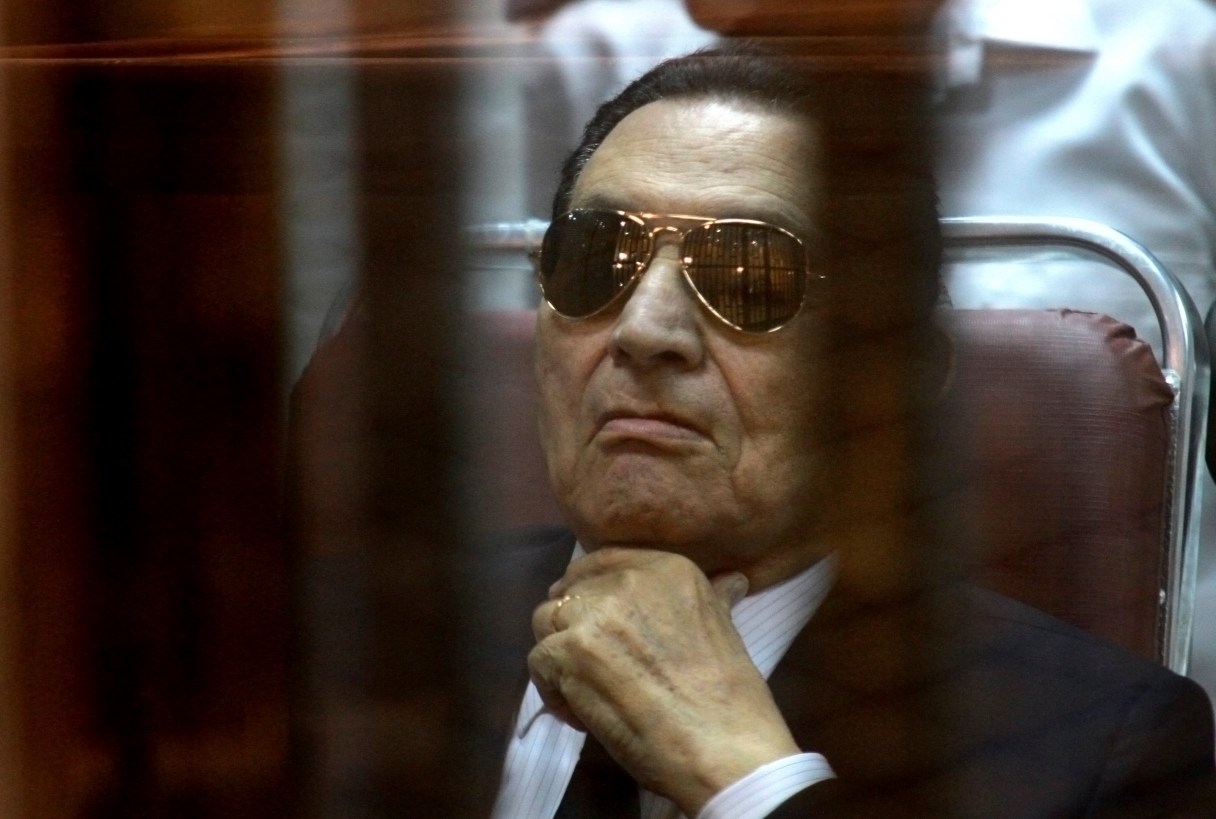
CAIRO (AP) – In his first speech since being put on trial, Egypt’s toppled President Hosni Mubarak denied Wednesday that he ordered the killing of protesters during the 2011 uprising that deposed him. Speaking from a gurney, the 86-year-old former leader sought to mend his image, clearly emboldened by the country’s changed political landscape.
Speaking from inside a cage that holds defendants, Mubarak gave a 23-minute, uninterrupted address aired live on national television. It starkly contrasted the dozens of ongoing trials of ousted President Mohammed Morsi and his supporters, toppled in last year’s military overthrow, who are crammed inside soundproof glass cages for their hearings.
“Hosni Mubarak who appears before you today would never order the killing of protesters or the shedding the blood of Egyptians,” the former autocrat said, speaking in the third person in an impassioned, defiant statement.
Mubarak was found guilty in June 2012 of failing to stop the killing of over 900 protesters during the 18-day uprising in 2011 and was sentenced to life imprisonment. His conviction was overturned in January 2013 and a retrial began in April 2013. He has spent much of his time in a military hospital since.
Relaxed and confident, Mubarak spoke about his years in the military, portraying himself as a patriotic war veteran who successfully fought terrorism. He also cast his 29-year-old rule as one that stabilized the country and achieved unprecedented economic growth.