
Thursday, October 29, 2026Oct 29

This story is free to read.

Another Ebola problem: Finding its natural source

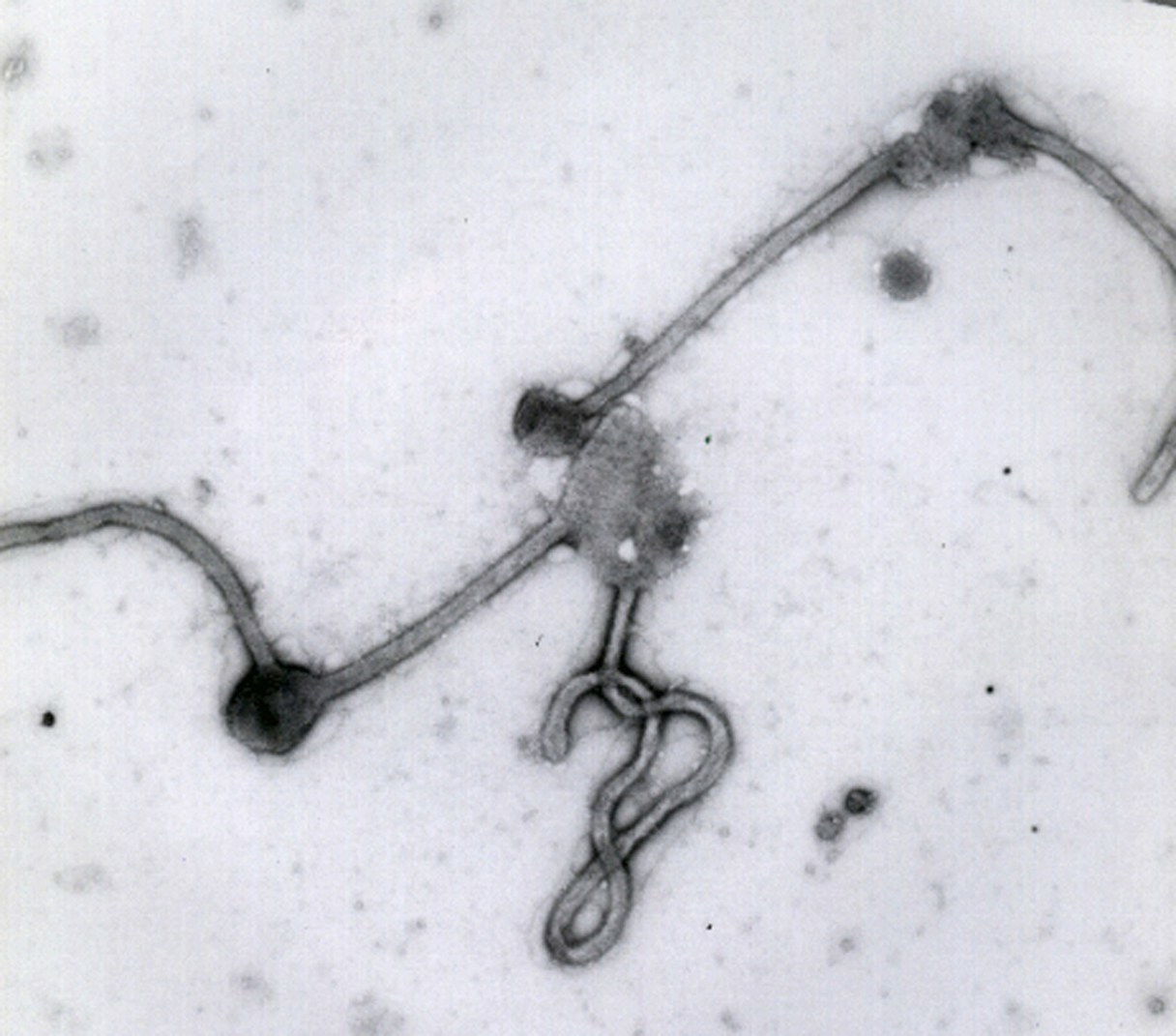
FILE - This undated photo made available by the Antwerp Institute of Tropical Medicine in Antwerp, Belgium, shows the Ebola virus viewed through an electron microscope. As of mid-2014, Ebola has caused two dozen outbreaks in Africa since the virus first emerged in 1976. (AP Photo/Antwerp Institute of Tropical Medicine)
FILE - This undated photo made available by the Antwerp Institute of Tropical Medicine in Antwerp, Belgium, shows the Ebola virus viewed through an electron microscope. As of mid-2014, Ebola has caused two dozen outbreaks in Africa since the virus first emerged in 1976. (AP Photo/Antwerp Institute of Tropical Medicine) FILE - This undated photo made available by the Antwerp Institute of Tropical Medicine in Antwerp, Belgium, shows the Ebola virus viewed through an electron microscope. As of mid-2014, Ebola has caused two dozen outbreaks in Africa since the virus first emerged in 1976. (AP Photo/Antwerp Institute of Tropical Medicine)

A scary problem lurks beyond the frenzied efforts to keep people from spreading Ebola: No one knows exactly where the virus comes from or how to stop it from seeding new outbreaks.

Ebola has caused two dozen outbreaks in Africa since it first emerged in 1976. It is coming from somewhere – probably bats – but experts agree they need to pinpoint its origins in nature.

That has had to wait until they can tame the current outbreak, which has claimed more than 1,100 lives in four countries – the worst toll from Ebola in history.

“First and foremost get the outbreak under control. Once that piece is resolved, then go back and find what the source is,” said Jonathan Towner, a scientist who helped find the bat source of another Ebola-like disease called Marburg. Towner works for the U.S. Centers for Disease Control and Prevention.

Others say finding Ebola’s origins is more than a down-the-road scientific curiosity.