
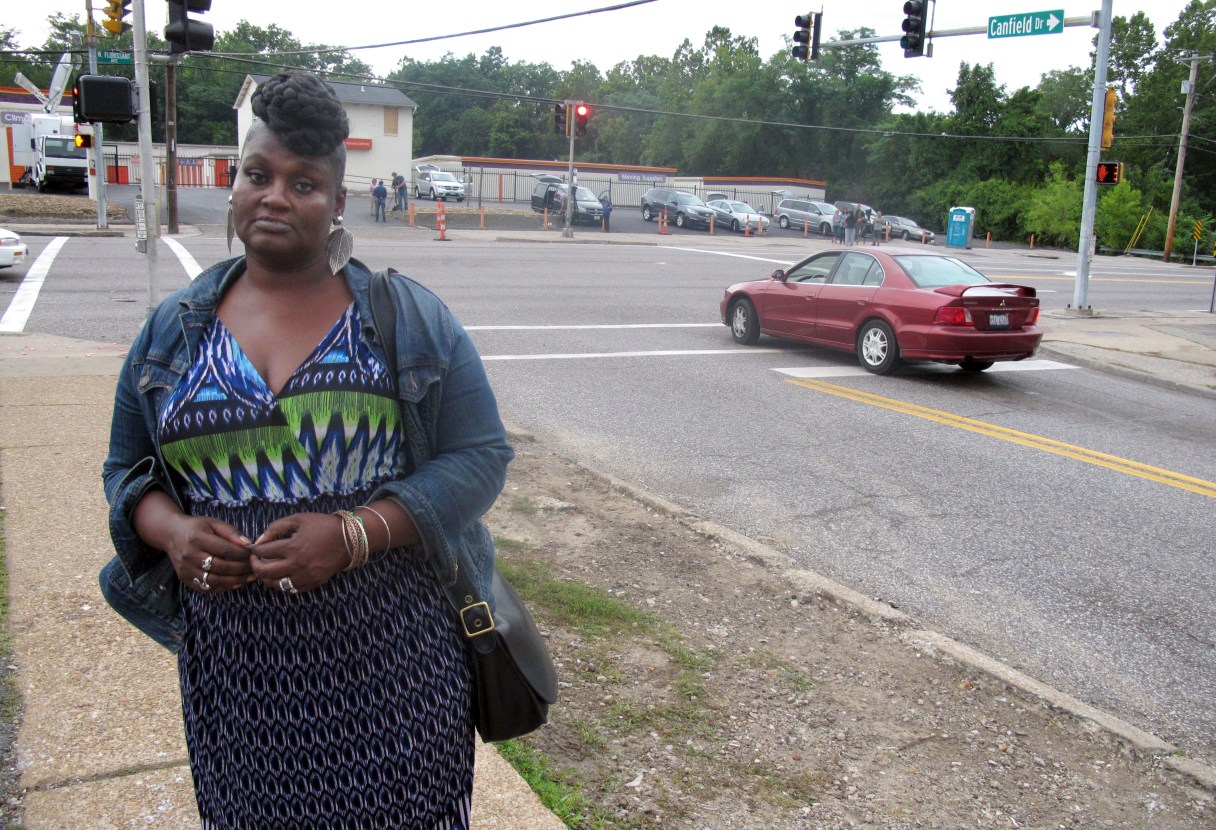
FERGUSON, Mo. (AP) – Life in this working-class St. Louis suburb of modest brick homes and low-rise apartments hasn’t been the same since Angelia Dickens’ son tearfully told her, “The police shot a boy.”
Since that news two weeks ago, she has been afraid to leave her apartment at night as protesters clash with police in sometimes violent confrontations. She’s stopped going to her job at a call center after it took two hours to navigate police barricades and street closings to get home.
Walking down Canfield Drive, Dickens looks right and sees Missouri state troopers assembled outside a boarded-up barbecue joint. She looks left and sees media satellite trucks. Ahead, volunteers pick up trash along the commercial district where throngs gather nightly to protest the shooting of 18-year-old Michael Brown by a white officer.
For the rest of the nation, this is the setting for seeing the angry tensions between young African-Americans and white police officers in predominantly black neighborhoods. Protesters and reporters have flocked here from around the nation.
But for residents, it’s also the place they live. They’re struggling over how to do that, no matter how strongly they feel about the issues being fought over.