
Monday, November 16, 2026Nov 16

Iraq family’s flight reveals depth of Sunni grief

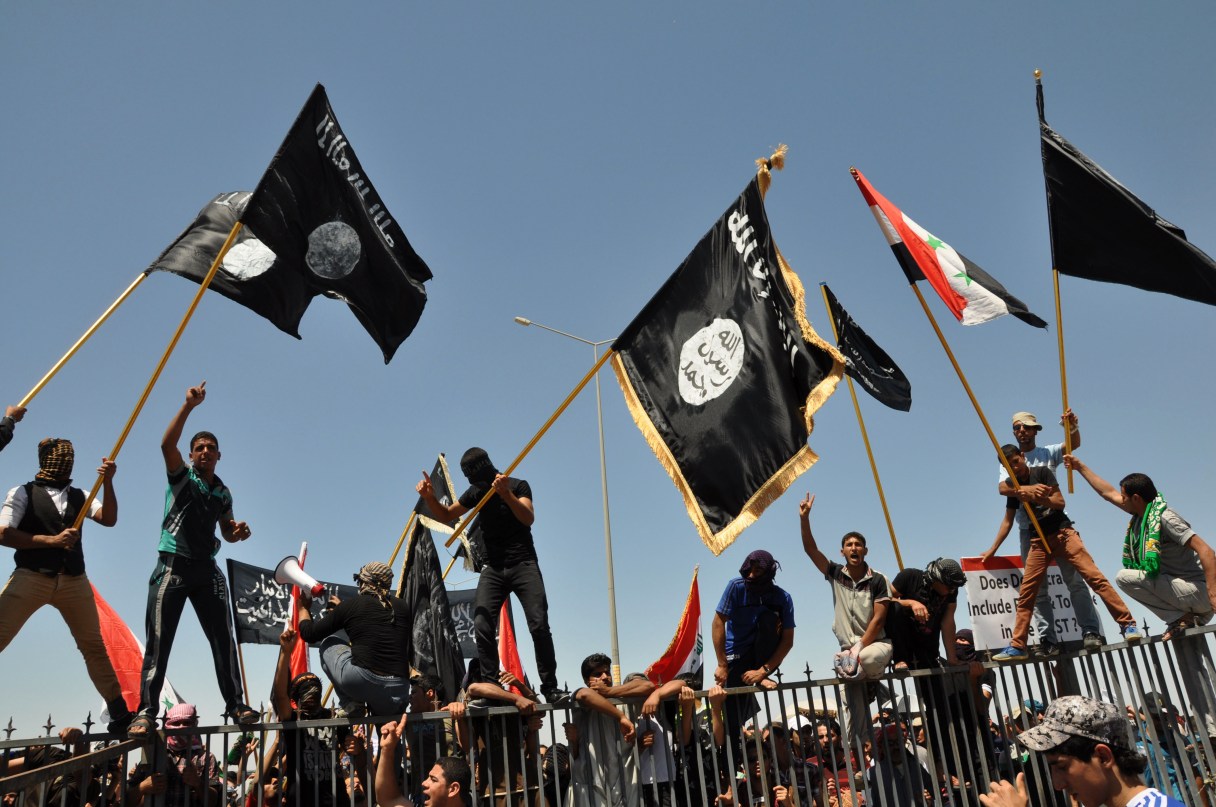
FILE - In this Friday, April 26, 2013 file photo, masked Sunni protesters wave Islamist flags while others chant slogans at an anti-government rally in Fallujah, 40 miles (65 kilometers) west of Baghdad, Iraq. Iraq's Sunni minority have felt maligned by the Shiite-led government in Baghdad, hounded by its security forces and increasingly threatened, once again, by the militias that terrorized them during the darkest days of sectarian bloodletting in 2006 and 2007. The community's anger has fueled the rampage of Islamic extremists across a third of the country, including Fallujah, and Sunnis say their demands must be met by the new Shiite-led government if it hopes to be more inclusive. (AP Photo/Bilal Fawzi, File)

BAGHDAD (AP) – For nearly a decade Abu Omar has been fleeing Iraq’s many conflicts, but they always seem to catch up to him.

In his Sunni family’s ancestral home in Fallujah it was the heavy shelling – first by the Americans in 2004 and then again this past January, when the walls shook and the roof caved in over their heads. In the Baghdad neighborhood where they have twice sought refuge, it is the persistent fear of a late-night knock on the door by shadowy sectarian militias.

Abu Omar’s grim odyssey is shared by countless members of Iraq’s once-dominant Sunni minority, who feel maligned by the Shiite-led government in Baghdad, hounded by its security forces and increasingly threatened, once again, by the militias that terrorized them during the darkest days of sectarian bloodletting in 2006 and 2007.

Their grievances have metastasized since the U.S.-led invasion that toppled Saddam Hussein in 2003 and handed power to the long-oppressed Shiite majority. Their anger fueled the rampage of Sunni militants across northern and western Iraq this summer, and the militant onslaught has aggravated sectarian tensions elsewhere, again driving Iraq to the brink of civil war.

After a humiliating retreat from much of the north in June, the Iraqi military managed to halt the offensive by the Islamic State extremist group on the outskirts of Baghdad. But in the mostly Sunni neighborhood of Azamiyah in the heart of the capital, Abu Omar feels he is under a different kind of siege.