
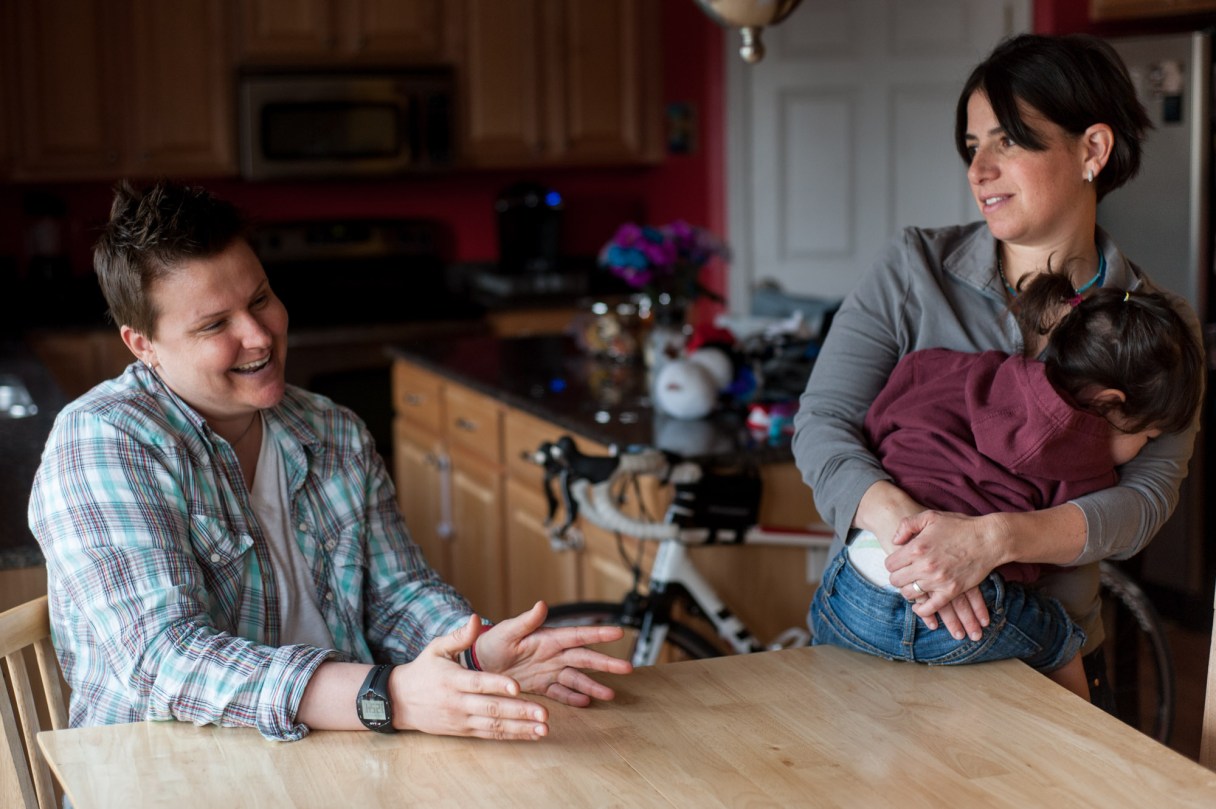
INDIANAPOLIS (AP) – When Niki Quasney felt a piercing pain in her ribcage in March, the oncologist treating her advanced ovarian cancer told her to get to an emergency room immediately.
But instead of making the short drive to a hospital near her home in Munster, Indiana, she drove alone for more than 40 minutes to one in neighboring Illinois. Quasney said she was “terrified” her local hospital might not allow her and her partner of more than 13 years, whom she wed last year in another state, to be together if she suffered a health emergency.
Quasney and her partner, Amy Sandler, are among dozens of couples challenging Indiana’s and Wisconsin’s gay marriage bans in a case being heard Tuesday in the 7th U.S. Circuit Court of Appeals in Chicago. Looming large in the case is the issue of medical emergencies faced by same-sex couples.
The couples are suing for the right to marry or to have their out-of-state marriages recognized in their home states. They argue that powers of attorney and domestic partner registries don’t guarantee they’ll be allowed to make critical end-of-life or life-saving decisions. No legal document, they say, can provide the same protections as a marriage certificate.
Judi Trampf said that became clear when her partner of 25 years, Katy Heyning, suffered a seizure in New Orleans several years ago. The Madison, Wisconsin, couple had health care powers-of-attorney allowing each other to make medical decisions for the other, but that paperwork was at home.