
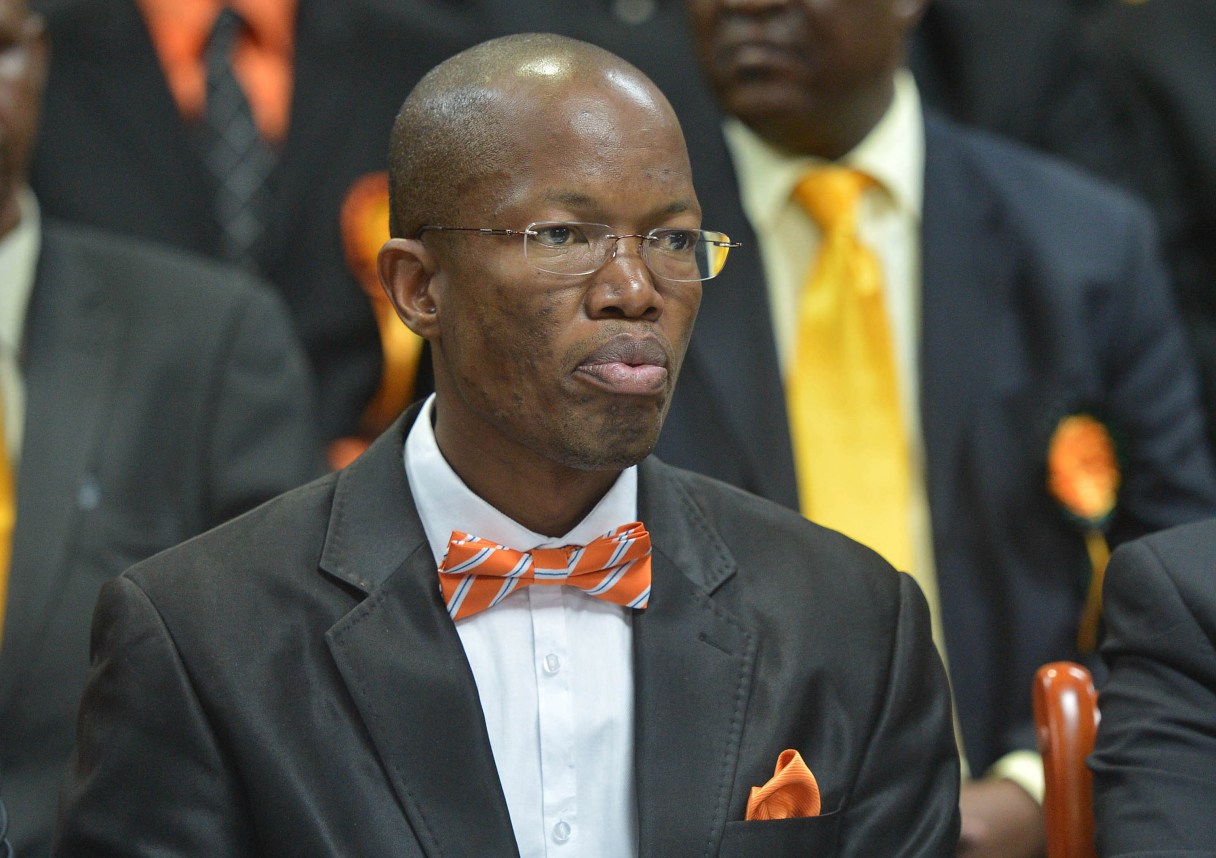
JOHANNESBURG (AP) – He was a former stalwart in Botswana’s ruling party who defected to become a rising star in the political opposition ahead of elections in October. He was also a musical composer who performed with his choir in the 1990s in the United States and other countries. He was, a grief-stricken speaker said at a memorial service in the southern African country, “a mighty good man.”
The July 30 death of 44-year-old Gomolemo Motswaledi in what the police say was a road accident highlighted brewing tension in Botswana, reputed to be one of the most stable and cleanly governed nations on the continent and known to foreign tourists for its well-protected wildlife. The opposition opened a parallel investigation, saying Motswaledi may have been assassinated by pro-government agents, although evidence is lacking.
The conspiracy theories sharpened an election campaign likely to deliver another victory for the ruling Botswana Democratic Party, whose electoral dominance since independence from Britain in 1966 has increasingly frustrated opponents who say the party is shedding old-style consensus politics and tightening its grip on state machinery. Zimbabwe and South Africa, while following different paths after shaking off white rule, are among Botswana’s neighbors in southern Africa where parties with liberation-era credentials have also stayed in power for decades.
Tall and dynamic, Motswaledi was once an ally of President Ian Khama but fell out with him and formed the Botswana Movement for Democracy in 2010 to challenge what he described as a concentration of power among presidential loyalists. In July, he was elected deputy president of the Umbrella for Democratic Change, an opposition coalition gearing up for an Oct. 24 vote expected to be closer than past contests.
In 2009, the ruling party won 45 of 57 directly elected parliamentary seats but won the popular vote by a smaller margin with 53.3 percent, leading fractious opposition groups to complain they were inadequately represented.