
Monday, November 16, 2026Nov 16

Afghanistan’s one-time booming war economy slows

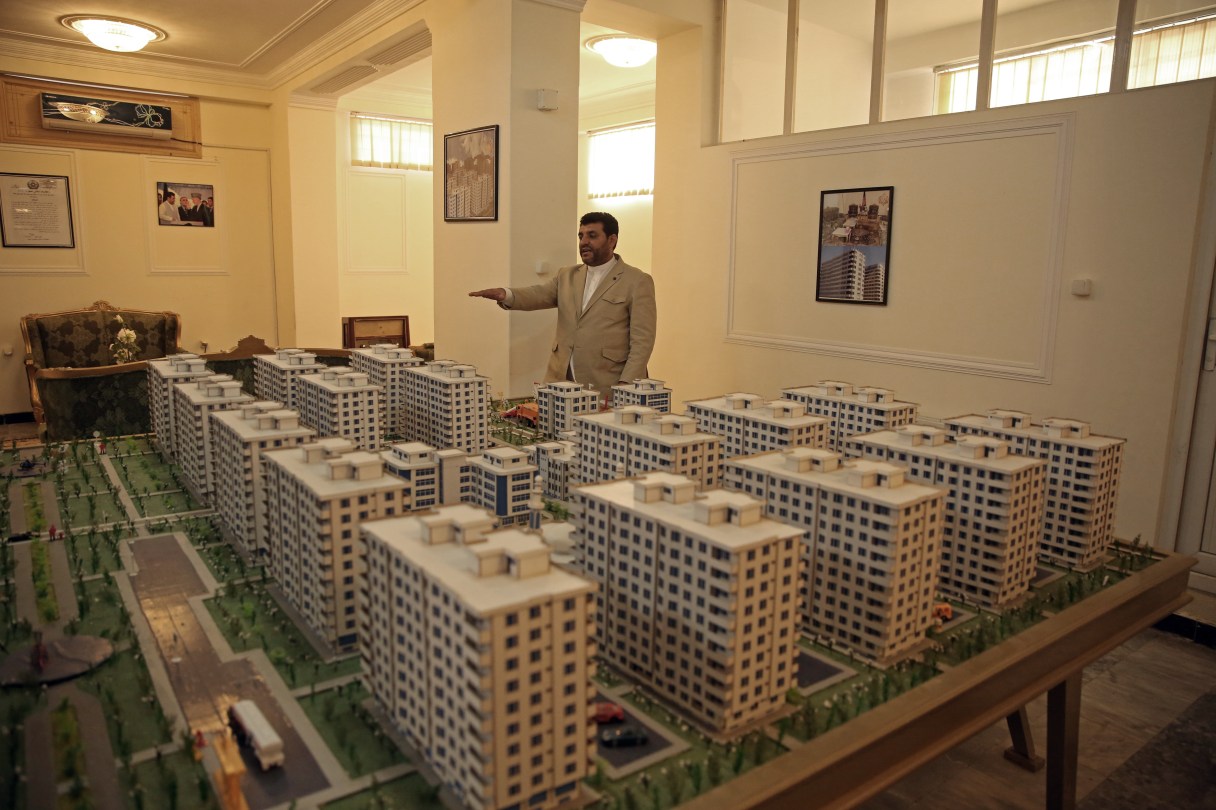
In this Sunday, Aug. 17, 2014 photo, Yunos Mohmand, general director of Shadab Zafar Construction & Housing Co., talks about his planned community during an interview with the Associated Press, on the outskirts of Kabul, Afghanistan.  Afghanistan’s economy, vastly supported by international military spending and aid since the 2001 U.S.-led invasion to topple the Taliban, finds itself struggling on the precipice of what could be an uncertain future. NATO forces plan to pull out of the country at the end of the year, insecurity is rising as international aid falls and its drawn-out election battle threatens to destabilize the country. All those worries have seen the country’s economy retract in recent months and many fear things will only get worse.  (AP Photo/Massoud Hossaini)
In this Sunday, Aug. 17, 2014 photo, Yunos Mohmand, general director of Shadab Zafar Construction & Housing Co., talks about his planned community during an interview with the Associated Press, on the outskirts of Kabul, Afghanistan. Afghanistan’s economy, vastly supported by international military spending and aid since the 2001 U.S.-led invasion to topple the Taliban, finds itself struggling on the precipice of what could be an uncertain future. NATO forces plan to pull out of the country at the end of the year, insecurity is rising as international aid falls and its drawn-out election battle threatens to destabilize the country. All those worries have seen the country’s economy retract in recent months and many fear things will only get worse. (AP Photo/Massoud Hossaini)

KABUL, Afghanistan (AP) – Rows of dusty trucks and used cars sit unsold in Afghanistan’s capital, where real estate agents bemoan a lack of sales and international businessmen no longer frequent top hotels. Even government employees nervously await each payday, worried the next might be delayed.

Afghanistan’s economy, vastly supported by international military spending and aid since the 2001 U.S.-led invasion to topple the Taliban, finds itself struggling on the precipice of what could be an uncertain future. NATO forces plan to pull out at the end of the year, insecurity is rising as international aid falls and a drawn-out election battle threatens to destabilize the country.

All those worries have seen the country’s economy retract in recent months and many fear things will only get worse.

“The people of Afghanistan have experienced civil war, and they worry that a civil war might happen again,” said Ahmad Omed, a car dealer on Kabul’s outskirts who says his sales have slumped as people hoard their money out of fears of having to flee the country.

Since the U.S.-led war began, Afghanistan’s economy has been boosted by foreign spending. The World Bank has said about 97 percent of Afghanistan’s gross domestic product is derived from spending linked to foreign forces and the donor community.