
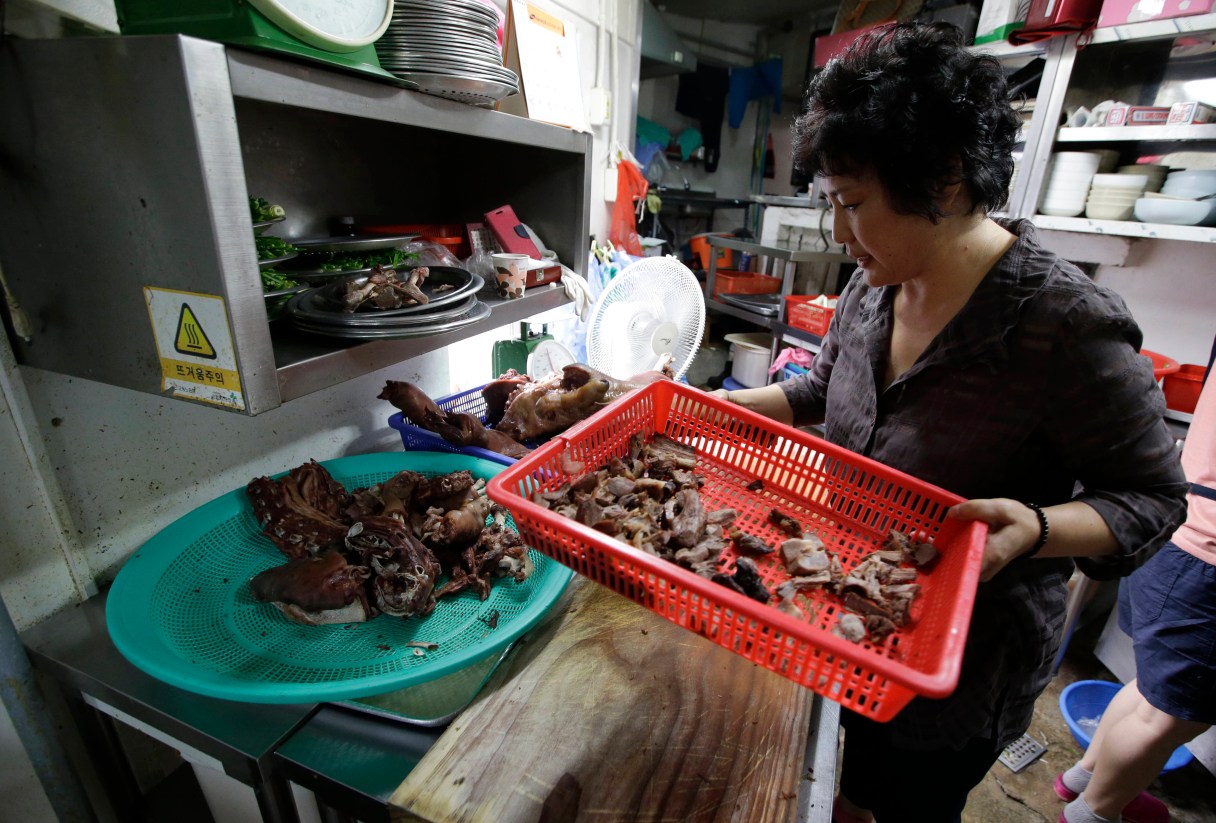
SEOUL, South Korea (AP) – For more than 30 years, chef and restaurant owner Oh Keum-il built her expertise in cooking one traditional South Korean delicacy: dog meat.
In her twenties, Oh traveled around South Korea to learn dog meat recipes from each region. During a period of South Korean reconciliation with North Korea early last decade, she went to Pyongyang as part of a business delegation and tasted a dozen different dog dishes, from dog stew to dog taffy, all served lavishly at the Koryo, one of the North’s best hotels.
She adapted famous dishes to include dog meat, replacing beef with dog in South Korea’s signature meat and rice dish bibimbap. But the 58-year-old’s lifelong experience with a food eaten for centuries in Korea is about to become history.
Daegyo, the famous dog meat restaurant she opened in a Seoul alley in 1981, will serve its last bowl of boshintang, or dog stew, on Friday, a reflection of the challenges facing a trade that is neither legal nor explicitly banned under South Korean laws governing livestock and food processing.
Opposite views on dogs as either for eating or petting have co-existed in the country’s recent history, feeding a controversy that becomes most bitter in the summer. On three “dog days,” which are among the hottest times of the year, many South Koreans queue for the dish of shredded dog meat and vegetables in hot red soup, believing it gives strength to bear the heat.