
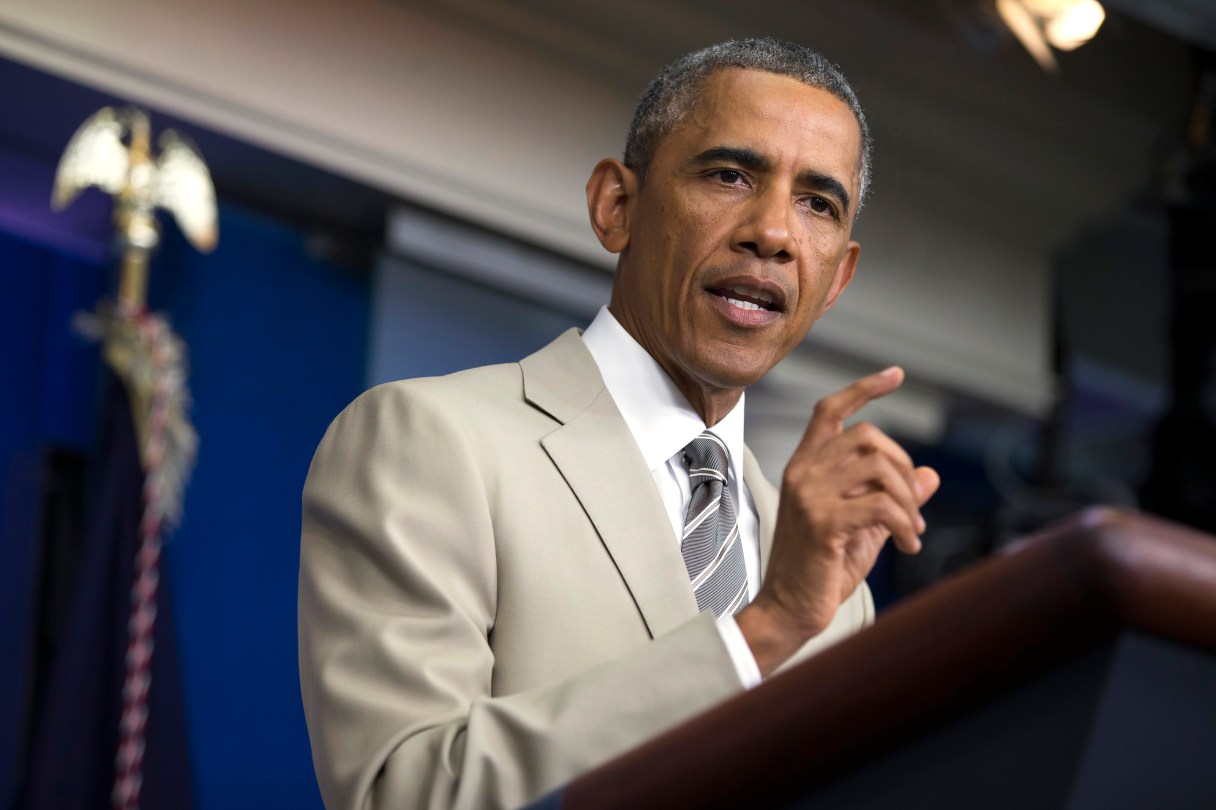
WASHINGTON (AP) – With Russian tanks apparently crossing into southeastern Ukraine, President Barack Obama is suggesting the possibility of more sanctions on Russia.
The sanctions imposed so far have not deterred Russia, but uncertainty over their long-term impact has caused economic growth forecasts to plummet, prompted investors to pull money out of the country at almost twice the pace as last year and forced its central bank to raise rates to defend the Russian currency.
Russian stock markets dived on Thursday as Switzerland joined the European Union in imposing restrictions on Russian state banks and fears grew that the U.S. and EU could impose further sanctions on Russian businesses and individuals.
Obama said that sanctions already announced have had some impact, yet he conceded that they have not forced Russia to resolve the crisis diplomatically. “I think there are ways for us to deepen and expand the scope of some of that work,” he said.
A look at sanctions the U.S. and Europe have imposed on Russia: