
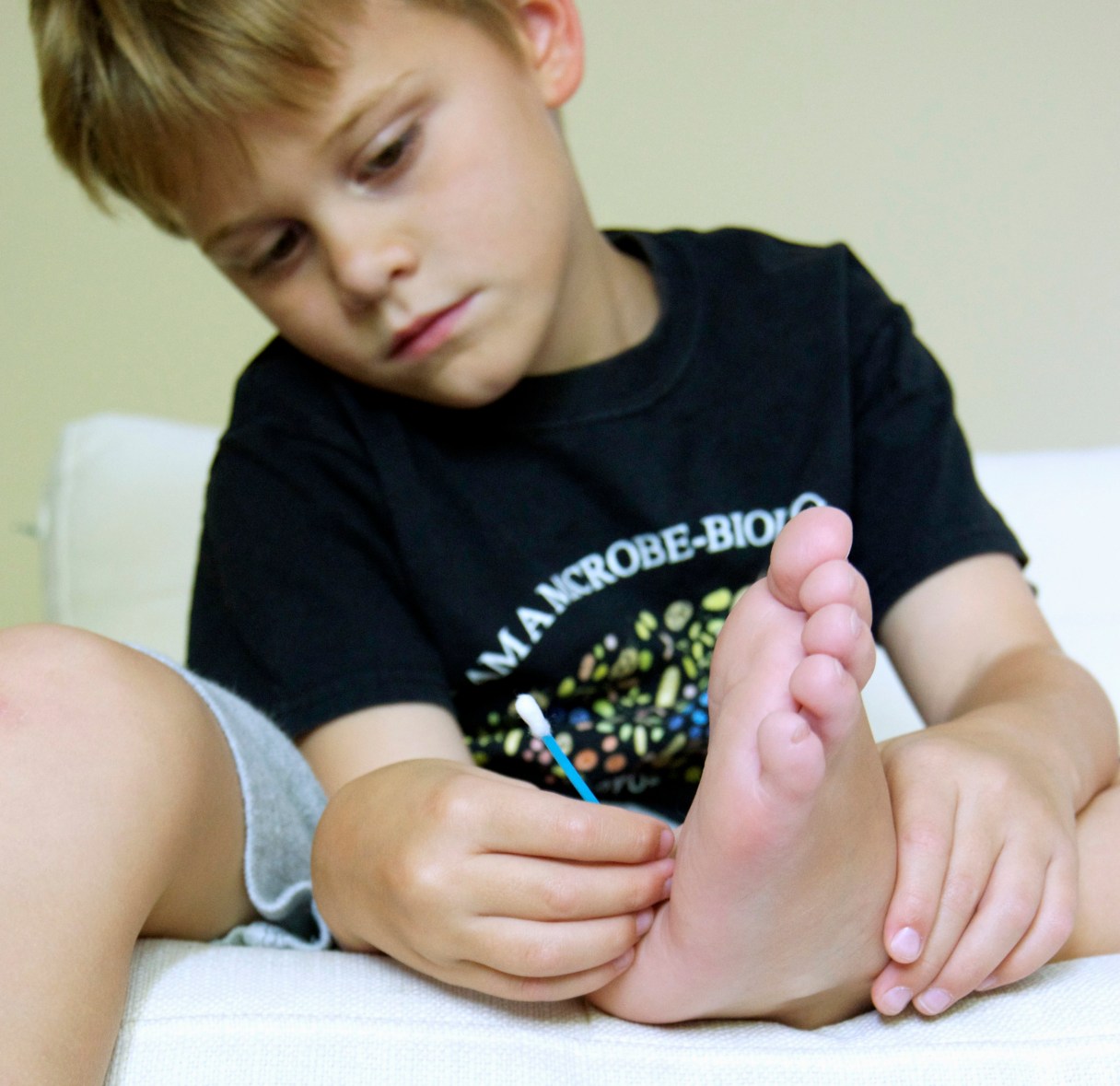
WASHINGTON (AP) – Sorry, clean freaks. No matter how well you scrub your home, it’s covered in bacteria from your own body. And if you pack up and move, new research shows, you’ll rapidly transfer your unique microbial fingerprint to the doorknobs, countertops and floors in your new house, too.
In fact, researchers who studied seven families in Illinois, Washington and California could easily match up who lived where using their microscopic roommates, almost like CSI for germs.
Thursday’s study is part of an effort to understand how the trillions of mostly beneficial bacteria that live in and on our bodies – what’s called the human microbiome – interact with bugs in the environment to affect our health.
“We have so little information about where the microbes come from that shape our microbiome, whether it’s for health or disease,” said microbiologist Jack Gilbert of the Argonne National Laboratory and University of Chicago.
Where do people spend most of their time? “It’s the indoor environment. The best place to look at that was the home,” said Gilbert, who led the Home Microbiome Project and included his own family.