
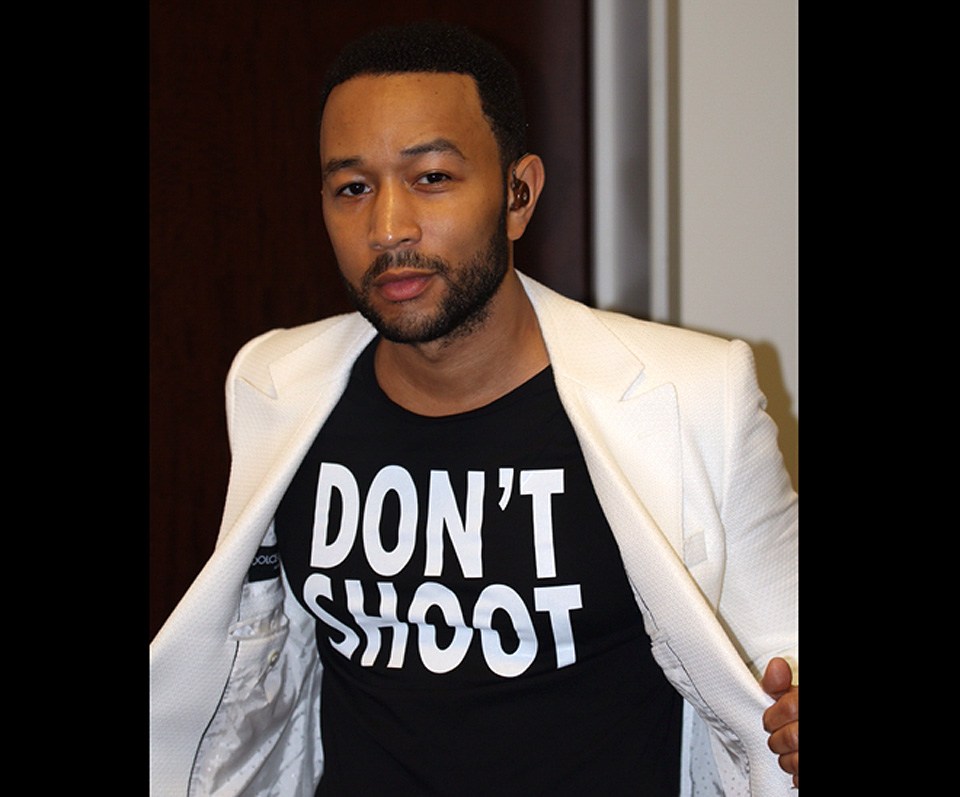
NEW YORK (AP) – Rappers are making their voices heard in song and on the ground in Ferguson, Missouri, in the wake of Michael Brown’s shooting death, channeling hip-hop’s earlier roots when the genre worked as a voice for the oppressed and spoke out against injustice.
“It’s really important to see hip-hop’s role of being some grown-ups and doing some really stand-up, grown-up stuff,” Public Enemy’s Chuck D, one of rap’s most powerful voices, said in a recent interview. “These people have actually stood up … and that has to be saluted.”
The Rock and Roll Hall of Famer said he’s impressed with rappers such as J. Cole, who released a heartaching, tearful song called “Be Free” inspired by Brown, the unarmed 18-year-old who was shot to death by a Ferguson officer on Aug. 9.
Others in rap also have lifted their voices: Talib Kweli, like J. Cole, marched in Ferguson and spoke out about injustice; David Banner appeared on CNN; Nelly started a scholarship for teens in honor of Brown; and Lauryn Hill dedicated her song “Black Rage” – which uses some of Rodgers and Hammerstein’s “My Favorite Things” – to the Ferguson community.
“When the dogs bite, when the beatings, when I’m feeling sad I simply remember all these kinds of things and then I don’t feel so bad,” she sings.