
Monday, November 16, 2026Nov 16

Israeli fire on Gaza town raises war crimes claim

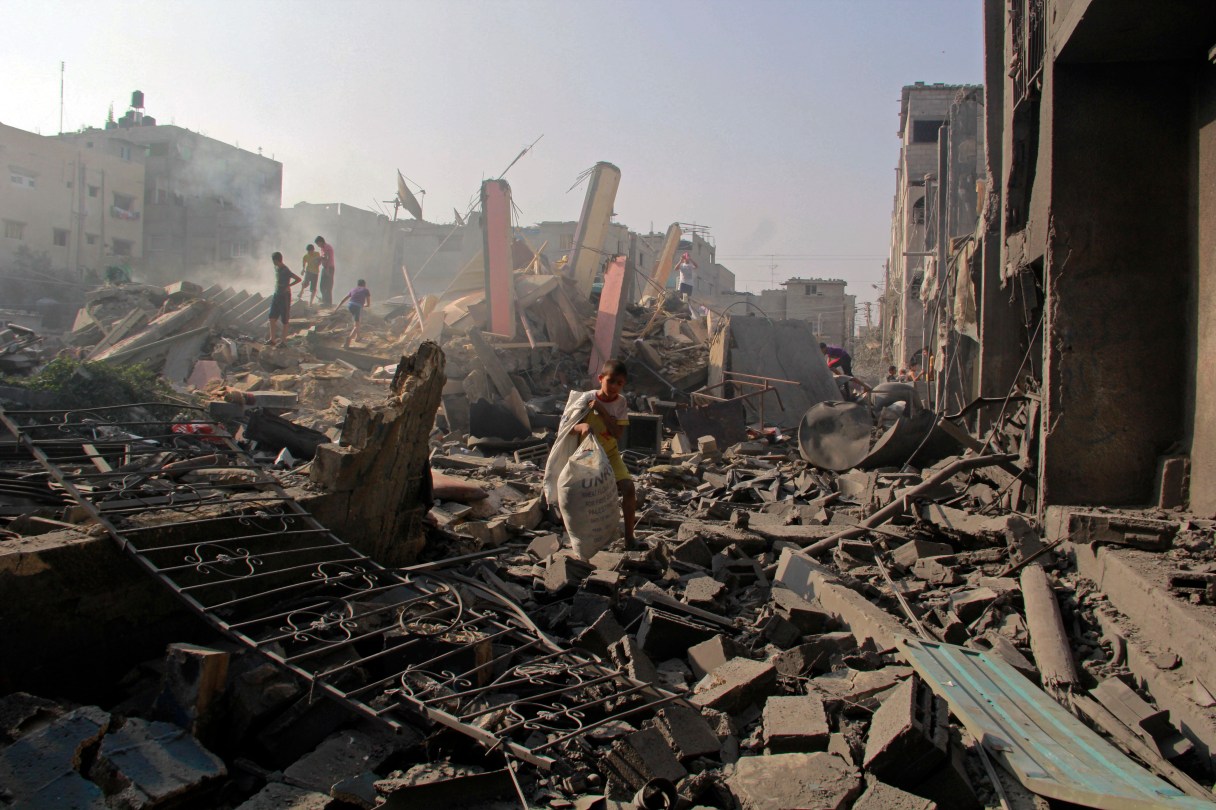
FILE - In this Aug. 2, 2014 file photo, Palestinians look for their belongings after houses were destroyed in Israeli strikes in Rafah, southern Gaza Strip. Amid fear that Hamas had captured an Israeli soldier, the Israeli military sealed off the Rafah area and began shelling on Aug. 1, 2014. By the end of the next day, 190 Palestinians were dead, according to a list of names compiled by two Gaza human rights groups. The suspected capture of the soldier turned out to be a false alarm and the Rafah operation is almost certain to be a focus of U.N. investigators and rights groups looking into possible war crimes because it highlights a key concern: The treatment of civilians. (AP Photo/Hatem Ali, File)

RAFAH, Gaza Strip (AP) – The first of August dawned as a day of promise for the Mahmoum clan and thousands of other Palestinians stuck in United Nations shelters in Rafah – thanks to a temporary cease-fire with Israel they could go home for three days.

But the expected respite quickly turned into one of the deadliest and most controversial episodes in the recent war between Israel and Hamas in the Gaza Strip. After just two hours, amid fear that Hamas had captured an Israeli soldier, the Israeli military sealed off the Rafah area and began shelling. By the end of the next day, 190 Palestinians were dead, according to a list of names compiled by two Gaza human rights groups, including 14 members of the Mahmoum family.

The Rafah operation is almost certain to be a focus of U.N. investigators and rights groups looking into possible war crimes because it highlights a key concern: The treatment of civilians.

A Palestinian rights group argues that the Israeli army violated the rules of war, which include giving adequate warning to civilians, using proportionate force and distinguishing between civilians and combatants. Unlike in many other Gaza battles, civilians were caught by surprise by the sudden fire and sealed exits.

“None of the rules of international humanitarian law was observed,” said Mahmoud Abu Rahma of the Al Mezan rights group.