
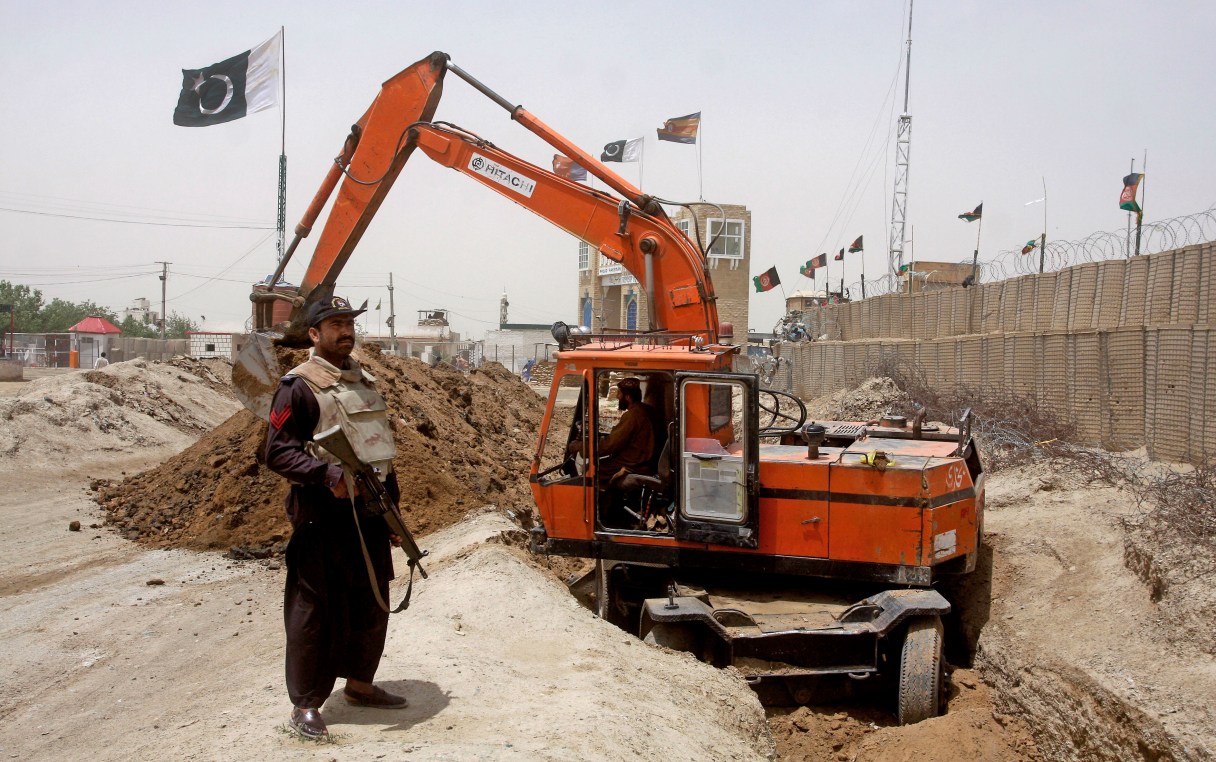
KANDAHAR, Afghanistan (AP) – In the dusty badlands along its disputed border with Afghanistan, Pakistan is carving out a massive trench to keep out separatists, smugglers and militants in an attempt to bring order to a lawless, tribal region.
But like the Berlin Wall or Israel’s West Bank barrier, the planned 485-kilometer (300-mile) trench is giving physical form to a border that locals have long seen as artificial, dividing families and crippling trade. And it is adding to simmering tensions between Afghanistan and Pakistan, U.S. allies which have long accused each other of turning a blind eye to insurgents.
The trench runs along part of the 2,640-kilometer (2,640-mile) Durand Line, named for British diplomat Mortimer Durand, who drew the now internationally recognized border in an agreement with Afghan ruler Abdur Raham Khan in 1893. But the modern Afghan government has never accepted the border, and neither have the mainly tribal communities that straddle it. They are accustomed to moving back and forth freely and in some cases own land on both sides.
The trench is being built in Pakistan’s Baluchistan province, where Baluch rebels have been battling Islamabad for decades, demanding greater autonomy and a larger share of the region’s oil, gas, copper and gold. It’s an eye-sore of construction – a massive furrow 10 feet (three meters) wide and 8 feet (2.4 meters) deep that already snakes 180 kilometers (110 miles) across the desert landscape.
Pakistan’s Frontier Corps said in a recent statement that the trench would “not only help in effectively controlling the movement of drug and arms and ammunition smugglers, but also will help in stopping the intrusion of terrorists and illegal immigrants.” Pakistan fears that arms could make their way to any number of insurgent groups, including the Taliban.