
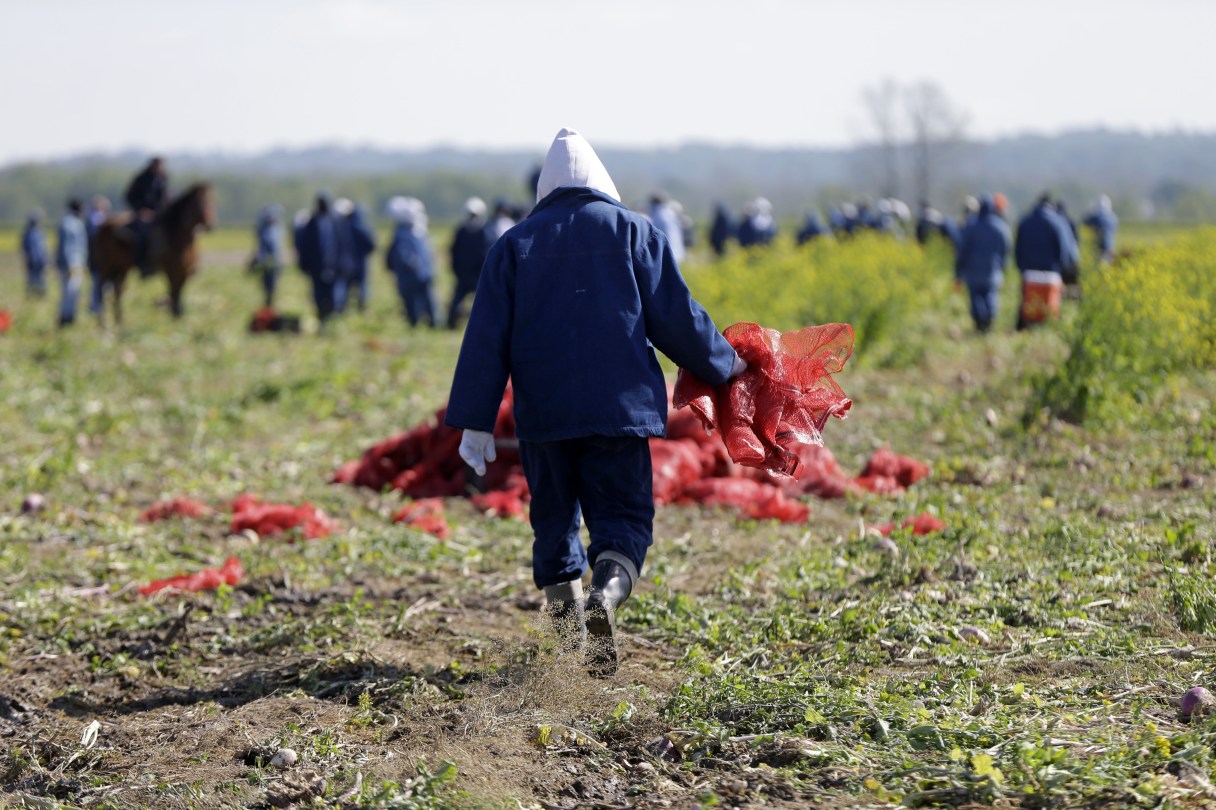
ANGOLA, La. (AP) – Christopher O’Neal has mastered many parts of landscaping and greenhouse work – plant cultivation and pesticide application, among six others – though it’s unlikely he’ll put those skills to use outside the walls of Louisiana’s prison in Angola. So he tends to greenhouse plants that will be sold at the prison’s rodeos and trains short-timers for honest work on the outside.
Of the 30 students and 11 mentors, most are in for life or “tall numbers.” Those who will get out can make a new career or resume an old one with more licenses and updated information; those staying find a positive way to spend their time.
“It has taught me a side of myself I didn’t know I had,” said O’Neal, 40, who was convicted at 17 of killing an 8-year-old boy and at 34 of killing his ex-girlfriend’s husband. He’s been at Angola since 2008 and is getting help with appeals, hoping for a reversal, though the courts so far have not viewed his case favorably.
“Guilty as sin,” Judge Harmon Drew wrote in an April 2009 opinion for the state’s 2nd Circuit Court of Appeal.
Only about a quarter of the inmates getting their certifications are in programs aimed at helping them re-enter society.