
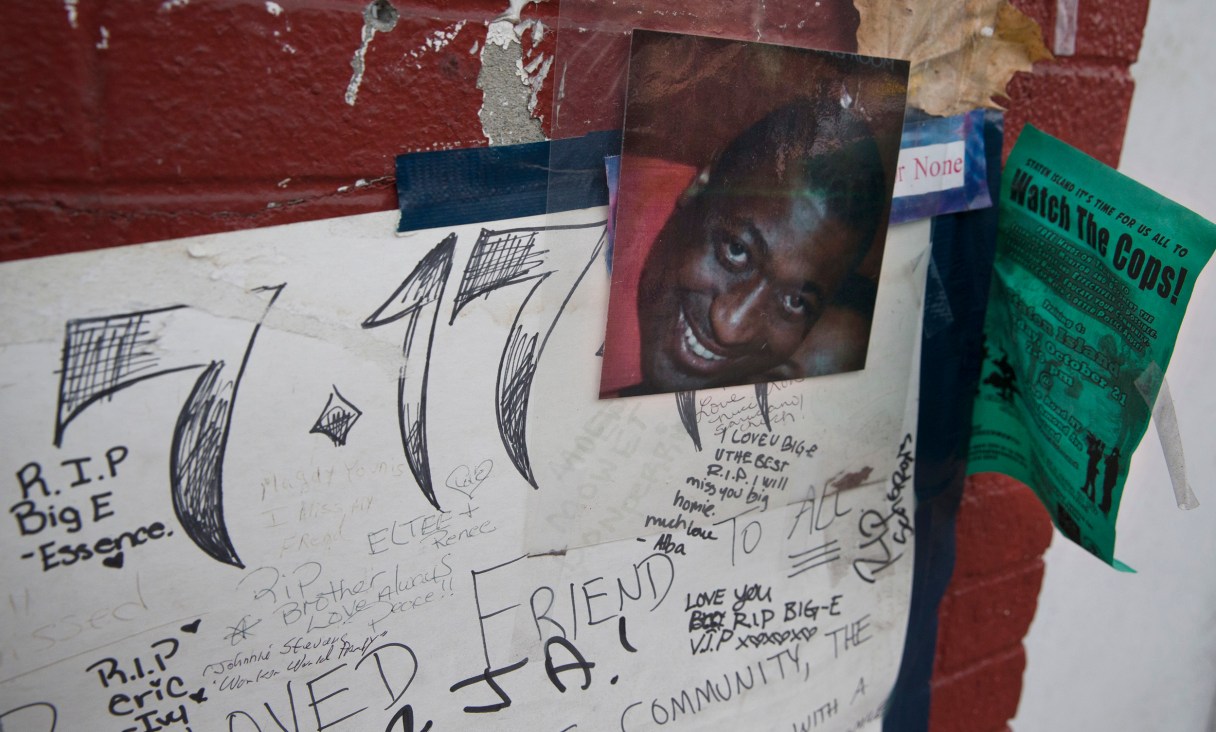
NEW YORK (AP) – In a conference room on Manhattan’s West Side, police investigators and the white officer accused of putting an unarmed black man in a fatal chokehold sat down for the first time to go frame by frame through the amateur video of an arrest gone wrong.
The closed-door viewing this week marked the start of the New York Police Department’s internal affairs probe to determine whether Officer Daniel Pantaleo and at least six other officers will be disciplined for their roles in Eric Garner’s July 17 arrest and death on Staten Island.
The internal inquiry was on hold pending the outcome of a grand jury investigation into whether Pantaleo should face criminal charges. Two days after the grand jury decided not to indict Pantaleo, police investigators started their work. Except for Pantaleo, any officer who testified in the grand jury was given immunity from criminal prosecution.
The police investigation could result in departmental charges such as excessive force or abuse of authority. Such charges could bring public trials, and if the officers are found guilty, they face a range of potential penalties – from reprimands and loss of vacation days to forced retirement or dismissal.
Police Commissioner William Bratton has said the investigation could conclude within a few months – well ahead of any decision by federal prosecutors on whether to bring a civil rights case. And he has made clear he has the last word on any officer discipline.