
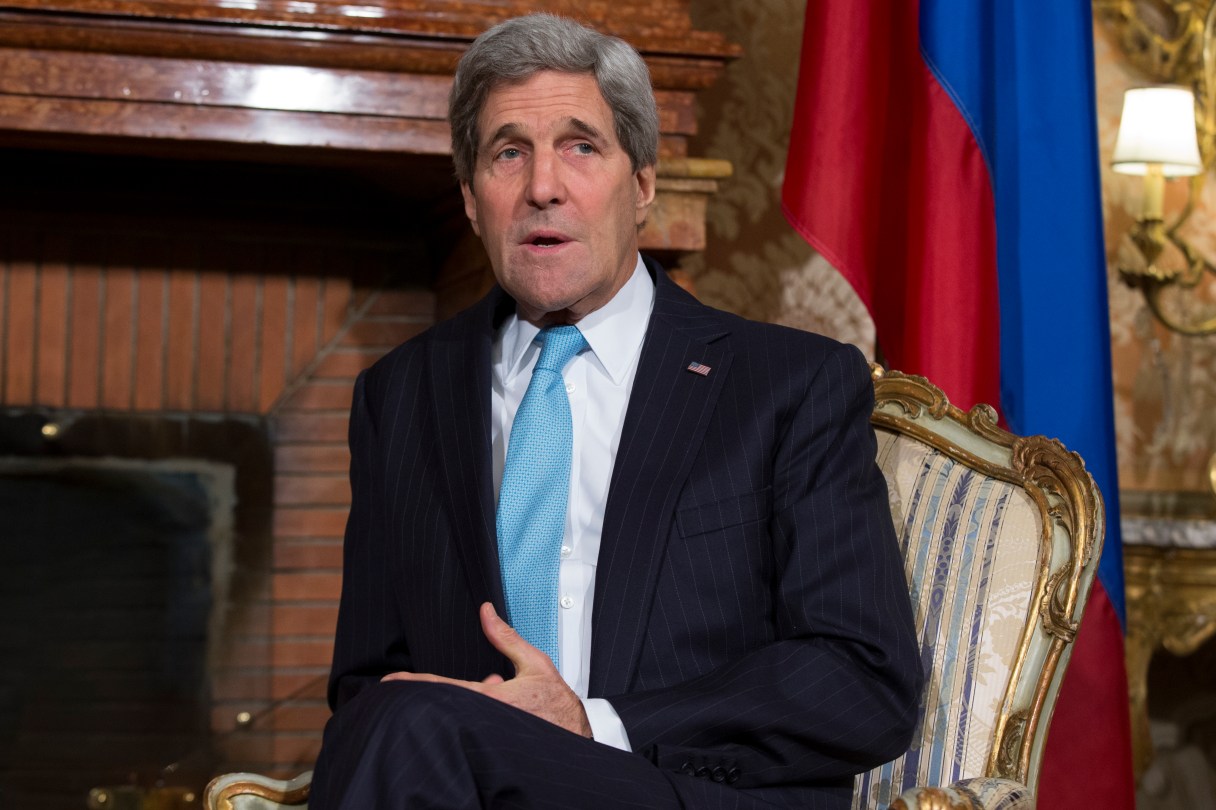
ROME (AP) – The Obama administration is in a diplomatic bind on the Mideast as Secretary of State John Kerry meets with top Israeli and Palestinian officials in Europe this week.
The U.S. is reluctant to do anything right now that can be perceived as interference in Israel’s elections while being pressed by close allies to endorse an Israeli-Palestinian negotiating framework that largely adheres to U.S. policy.
France is drafting a U.N. resolution that proposes a two-year timetable for talks. The draft speaks of the 1967 Mideast borders as the basis for dividing the land, which President Barack Obama has publicly backed, but it doesn’t include key Israeli – and U.S. – conditions such as Palestinian recognition of Israel as a Jewish state.
The United States has long opposed the idea of the Security Council imposing a framework for Israeli-Palestinian negotiations. But for Washington, simply vetoing the plan could have pitfalls.
A veto would upset Palestinians and perhaps some Arab allies frustrated by years of diplomatic gridlock. Several are fighting alongside the U.S. right now against the Islamic State.
And it would risk angering France as well as other European countries that want to broaden peace efforts after countless U.S.-led mediation failures. America’s credibility as a peace broker could be damaged as a result.
At a White House meeting last week, President Barack Obama’s top foreign policy aides were unable to agree on an approach to France’s potential resolution.
Kerry suggested steering away from the effort at a time of increased Mideast violence and with Israeli elections a couple of months away, according to a U.S. official familiar with the discussion.
Susan Rice, Obama’s national security adviser, supported engaging partner countries to see if a compromise is possible, said the official, who wasn’t authorized to speak publicly on the matter.
For now, the administration is trying to get an idea of what key countries are hoping to accomplish or avoid.
Kerry meets Israeli Prime Minister Benjamin Netanyahu in Rome on Monday, followed by the foreign ministers of Britain, France and Germany in Paris. The discussions continue Tuesday in London with top Palestinian negotiator Saeb Erekat and the head of the Arab League.
Kerry discussed the escalating tensions in the Middle East on Sunday with Russian Foreign Minister Sergey Lavrov, who told reporters in Italy’s capital that it was “crucial … we don’t allow the situation to degrade further.”
France’s diplomatic push was prompted by a Jordanian resolution, on behalf of the Palestinians, last month that the U.S. finds much more objectionable.
That proposal demands a full Israeli withdrawal from the West Bank within two years and full recognition of Palestine as a state, with no talk of land swaps between the parties or security measures. The resolution appears to have stalled. If it were to move to a vote, Washington would almost surely exercise its veto.