
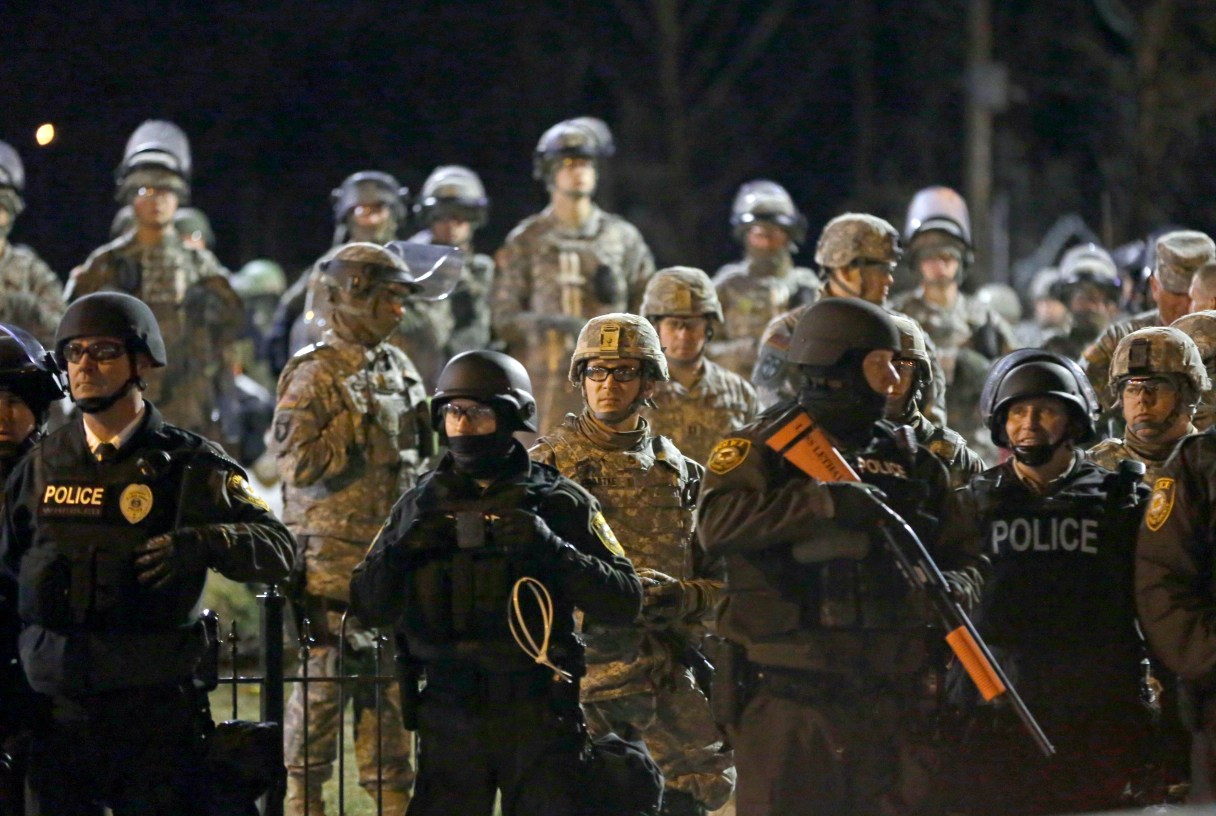
ST. LOUIS (AP) – Missouri Gov. Jay Nixon on Wednesday ended the state of emergency that he declared for the St. Louis area ahead of unrest over the Ferguson grand jury decision, praising the work of police and the National Guard in preventing any protest-related deaths.
He issued his executive order on Nov. 17. Protests, including some that turned violent, broke out on Nov. 24 after St. Louis County prosecutor Bob McCulloch announced that the grand jury wouldn’t indict Ferguson police officer Darren Wilson, who is white, for the Aug. 9 shooting death of Michael Brown, an unarmed, black 18-year-old. Wilson has since resigned from the department in the St. Louis suburb.
“I want to thank state and local law enforcement, the leaders of the unified command, and the members of the Missouri National Guard for working tirelessly to protect the public,” Nixon said in a statement. “As the hard work of healing and rebuilding continues, the fact that not a single life was lost as a result of the unrest is a credit to the hard work and dedication of these brave men and women.”
On the night of the grand jury announcement, 700 members of the Guard were deployed in the St. Louis region. Nixon sent in 1,500 more troops after some of the unrest became violent that first night and led to looting and fires that destroyed 12 Ferguson-area businesses.
After deployment of the additional troops, scattered violence erupted the night of Nov. 25.