
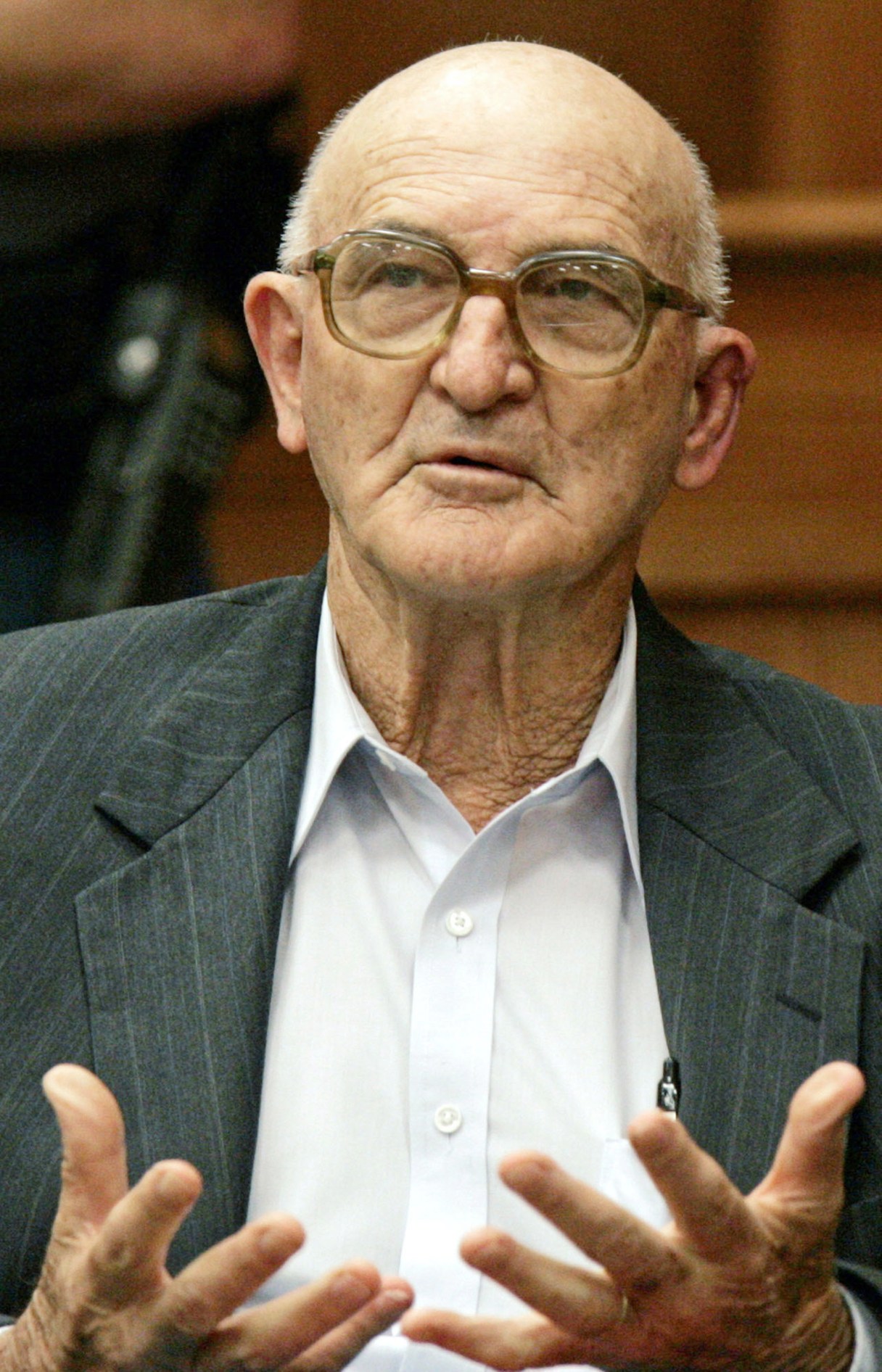
PARCHMAN, Miss. (AP) – Craggy-faced and ornery, Edgar Ray Killen bears the signs of his 89 years. His hands are still scarred and rough from decades in the east Mississippi sawmills. He has a muscular build even as he maneuvers in his wheelchair. Time has not softened his views and he remains an ardent segregationist.
And he steadfastly refuses to discuss the “Freedom Summer” slayings of three civil-rights workers, which sparked national outrage, helped spur passage of the 1964 Civil Rights Act and landed him behind bars.
Killen was interviewed by The Associated Press inside the Mississippi State Penitentiary, where he is serving a 60-year sentence; it was his first interview since his conviction on state charges of manslaughter in 2005, 41 years to the day after James Chaney, Andrew Goodman and Michael Schwerner were killed and buried in a red clay dam. An earlier trial in 1967, on federal charges, resulted in a mistrial.
Killen wouldn’t say much about the 1964 killings. He said he remains a segregationist who does not believe in race equality but contends he bears no ill will toward blacks.
The three civil-rights workers – black Mississippian Chaney and white New Yorkers Schwerner and Goodman – were investigating the burning of a black church outside Philadelphia when they were stopped on an accusation of speeding and held for hours in the Neshoba County jail. Witnesses testified that Killen rounded up carloads of Klansmen to intercept the three men upon their release and helped arrange for a bulldozer to hide the bodies.