
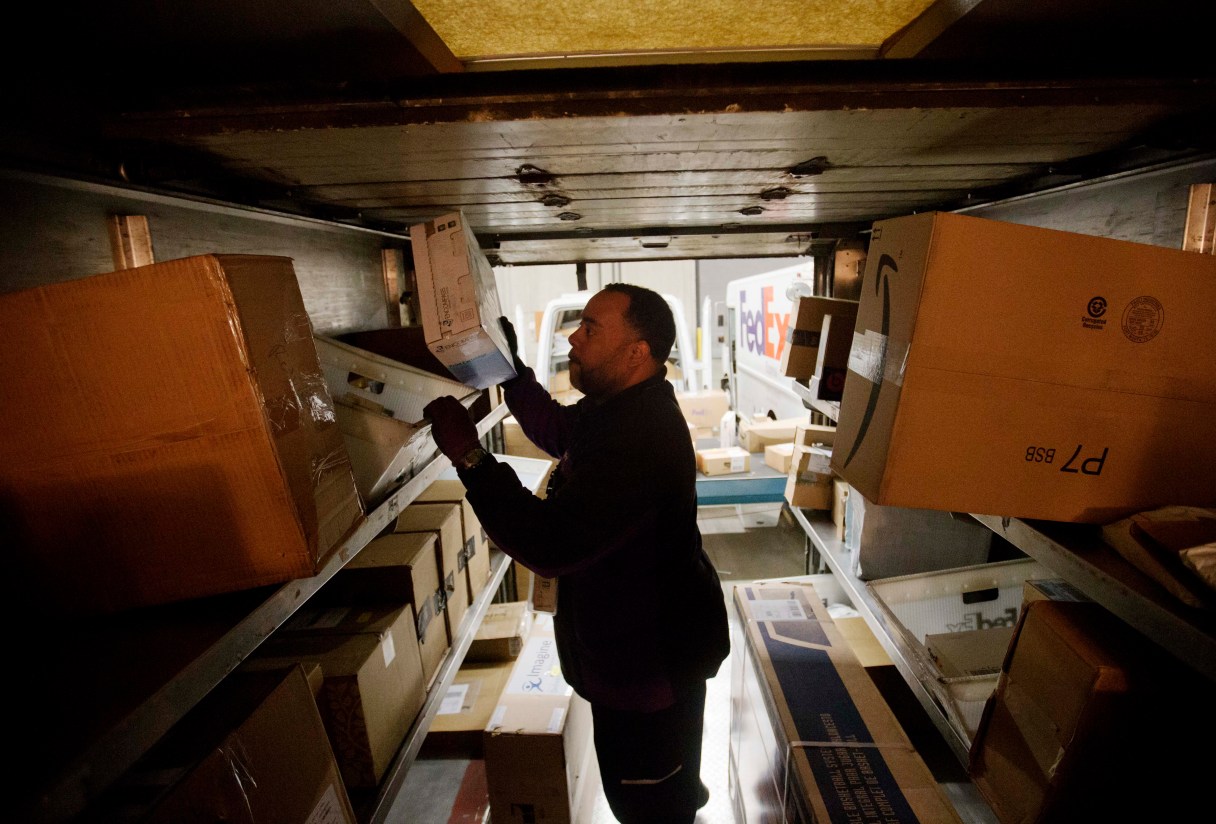
ATLANTA (AP) – As the holiday shopping season winds down, FedEx, UPS and online retailers are using the last few days to try to avoid the problems that occurred last year when severe winter weather and a surge in late orders from shoppers caused delivery delays.
UPS spent $500 million this year upgrading its systems and processes and doubled the number of seasonal workers it hired to 90,000 to 95,000. The company, which pegged Monday as its busiest day of the year, expects to deliver more than 34 million packages on its busiest day ever.
By midday Monday, UPS spokesman Andy McGowan said he expected packages to be delivered as planned. “All UPS air and ground operations are operating smoothly, he said.
FedEx predicted its busiest day would be a week earlier, on Dec. 15, when it expected to move 22.6 million packages. It added 50,000 seasonal workers to help with demand this year and invested in a new software system called Radar for FedEx Express that helps supervisors anticipate fluctuations in package arrivals hours before an airplane carrying cargo lands.
“The fallout from last year was a lot of disappointed customers. They don’t care about the weather if they don’t get their package on time,” said Jeff Wise, managing director of Southeast district operations in Atlanta. “But we’ve had 11-and-a-half months to figure it out and make sure service levels stay high this year.”