
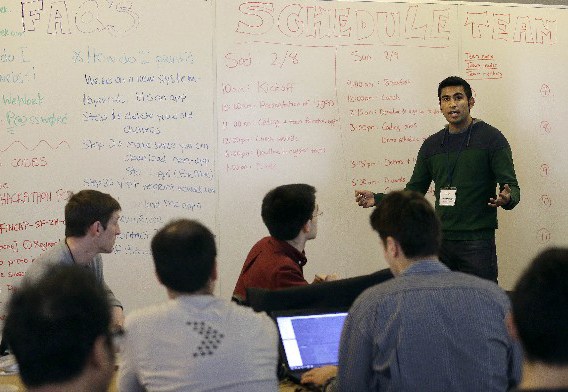
 Karim Bhalwani, manager of API Strategy and Sales at Yodlee Interactive, right, speaks to participants at the FinCapDev San Francisco Hackathon in San Francisco. A record 1,500 hackathons around the world are planned for this year, up from just a few dozen in 2010, and their focus is broadening from developing lucrative apps to solving problems with coding for an array of issues including dental, fashion, immigration, transgender and social justice.
SAN JOSE, Calif.- It used to be that “hacking” was just a type of crime, a computer break-in. But today, the term is also part of a growing — and perfectly legal — mainstay of the tech sector.
Computer programming competitions known as “hackathons” have spread like viruses in recent years as ways for geeks, nerds and designers to get together to eat pizza, lose sleep and create something new.
The formal, marathon group brainstorming sessions are focused on everything from developing lucrative apps to using computer code to solve the world’s problems. This year a record 1,500 hackathons are planned around the globe, up from just a handful in 2010.
“A hackathon is the fastest way to actually do something about an idea,” said Nima Adelkhani, organizer of the weekend-long Hack for Peace in the Middle East competition in San Francisco this month.
Law enforcement has not abandoned the term. Dozens of federally convicted “hackers” are serving prison sentences for computer fraud and other cybercrimes. And the Justice Department’s cybercrime budget this year is $9 million to target offenses that include “hacking.”