
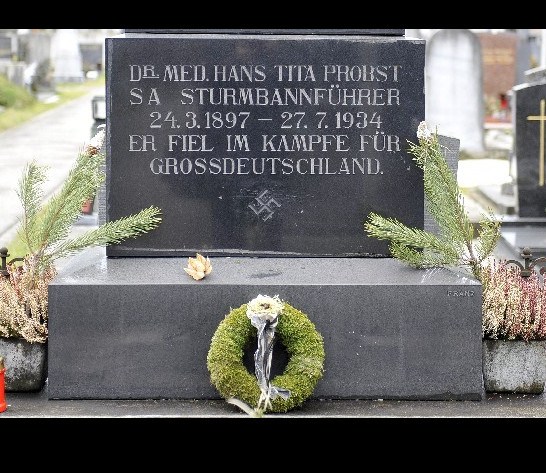
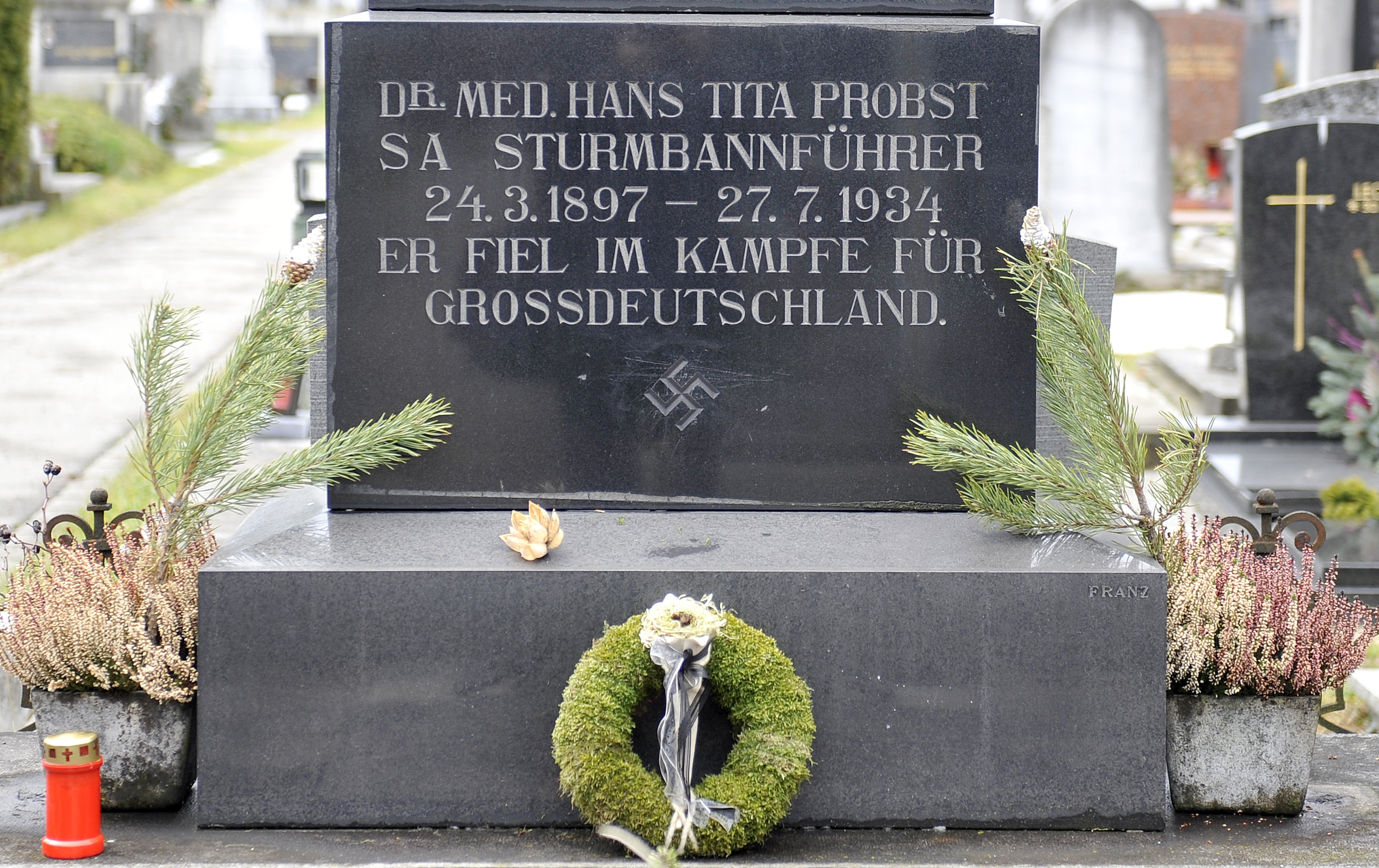
 A marble tombstone is adorned with a swastika and the inscription “He died in the struggle for a Great Germany” at the central cemetery in Graz, Austria. Austrian law bans such symbols, and those displaying them face criminal charges and potential prison terms. Yet the emblems reflecting this country’s darkest chapter in history endure here, and officials here appear either unable or unwilling to do away with them.
GRAZ, Austria- The marble tombstone looks like others dotting the main cemetery of Graz, Austria’s second city — but only at first glance. Carved into it are a swastika and the inscription: “He died in the struggle for a Great Germany.”
Footsteps away, another gravestone is marked with the SS lightning bolts proudly worn by the elite Nazi troops who executed most of the crimes of the Holocaust.
Austrian law bans such symbols, and those displaying them face criminal charges and potential prison terms. Yet the emblems reflecting this country’s darkest chapter in history endure here, and officials appear either unable or unwilling to do away with them — despite complaints from locals.
The controversy reflects Austria’s complex relationship with the Hitler era.
Annexation by Germany in 1938 enabled Austrians to claim after the war that they were Hitler’s first victims. Austria has moved since to acknowledge that it was instead a perpetrator. It has paid out millions of dollars in reparations, restored property to Jewish heirs and misses no public opportunity to ask for forgiveness for its wartime role.